Nikhil Prasad Fact checked by:Thailand Medical News Team Apr 21, 2026 5 months, 1 week, 6 days, 6 hours, 58 minutes ago
Medical News: A growing body of research is challenging what many people think they know about sugar and health. A new scientific report has revealed that fructose, a common type of sugar found in sweetened foods and drinks, may play a far more harmful role in the body than previously understood. The findings suggest that fructose is not just a source of calories but a powerful driver of metabolic disease.
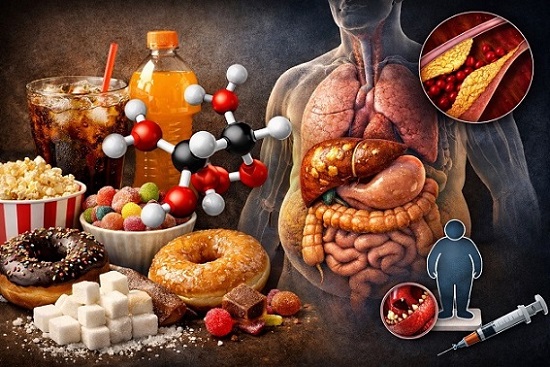 Fructose in processed foods may silently drive obesity and metabolic disease
What Makes Fructose Different?
Fructose in processed foods may silently drive obesity and metabolic disease
What Makes Fructose Different?
Fructose is commonly consumed as part of table sugar, known scientifically as sucrose, and in high-fructose corn syrup, both widely used in processed foods and sugary beverages. While these sweeteners also contain glucose, researchers found that fructose behaves very differently once inside the body.
Unlike glucose, which is tightly regulated by the body, fructose bypasses key control steps in metabolism. This means it can rapidly trigger fat production and storage. According to the study’s lead author, Richard Johnson from the University of Colorado Anschutz Medical Campus, fructose acts more like a biological signal than a simple nutrient, telling the body to store energy as fat.
How Fructose Harms the Body
The research explains that when fructose is broken down, it consumes large amounts of cellular energy, known as ATP. This process can leave cells in a low-energy state, triggering a chain reaction that promotes hunger, fat accumulation, and insulin resistance.
Over time, these effects may lead to a condition known as metabolic syndrome. This includes obesity, high blood sugar, abnormal cholesterol levels, and increased risk of heart disease. This
Medical News report highlights that these risks are especially linked to “free sugars” — meaning added sugars found in processed foods and drinks, rather than the natural sugars present in whole fruits.
A Surprising Internal Source
One of the more unexpected findings is that the body can actually produce fructose on its own. Through a biochemical process, glucose can be converted into fructose inside the body. This suggests that even without consuming large amounts of sugary foods, fructose may still accumulate under certain conditions, potentially contributing to disease.
This internal production adds a new layer of complexity to how metabolic diseases develop and may explain why conditions like obesity and type 2 diabetes continue to rise globally.
From Survival Tool to Health Threat
Researchers believe fructose once played an important role in human evolution. It helped the body store fat efficiently, which would have been useful during times of food scarcity. However, in today’s world of constant food availability, this same mechanism has become harmful.
Regular consumption of sugary drinks, snacks, and processed foods keeps this fat-storage system switched on continu
ously. As a result, the body is pushed toward long-term metabolic imbalance.
Expanding Health Concerns
Beyond obesity and diabetes, emerging evidence suggests that fructose may also be linked to more serious conditions, including certain cancers and even neurodegenerative diseases. Scientists are now investigating how fructose-related metabolic changes might affect brain health and long-term cognitive function.
Conclusion
The findings make it clear that fructose plays a far more active and damaging role in the body than previously believed, acting as a metabolic trigger rather than just a calorie source. Reducing intake of added sugars may therefore be one of the most important steps in preventing chronic disease and improving overall health outcomes in modern populations.
The study findings were published in the peer reviewed journal: Nature Metabolism.
https://www.nature.com/articles/s42255-026-01506-y
For the latest on the health dangers of fructose, keep on logging to Thailand
Medical News.
Read Also:
https://www.thailandmedical.news/articles/diets-and-nutrition




 Share
Share
 Tweet
Tweet
 Share
Share

































