Nikhil Prasad Fact checked by:Thailand Medical News Team Mar 30, 2026 5 months, 3 days, 20 hours, 44 minutes ago
Medical News: A remarkable scientific discovery from Jordan is drawing attention to a little-known Mediterranean plant that may help combat dangerous viral infections. Researchers have found that extracts from the Greek strawberry tree, Arbutus andrachne, demonstrate strong activity against a key enzyme used by avian influenza viruses, offering new hope for future antiviral therapies derived from natural sources.
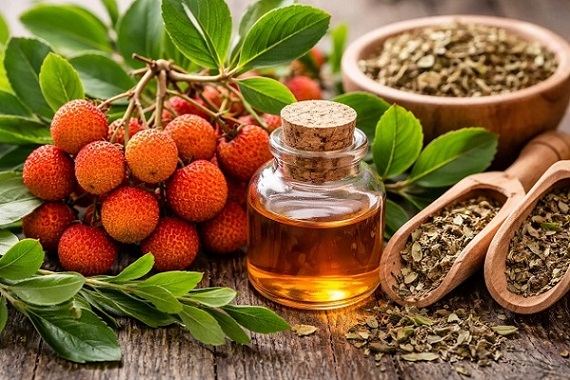 Greek strawberry tree extracts show strong laboratory activity against influenza virus enzymes, pointing to
potential natural antiviral therapies
Rising Need for New Antiviral Solutions
Influenza viruses, particularly avian strains, continue to mutate and challenge global health systems. Existing antiviral drugs are becoming less reliable due to increasing resistance, making the search for new treatments more urgent than ever. Scientists are now exploring plant-based compounds as a promising alternative, especially those rooted in traditional medicine.
The research team included scientists from the Department of Pharmaceutical Sciences, School of Pharmacy, The University of Jordan; the Department of Pharmaceutical Chemistry and Pharmacognosy at Applied Science Private University; the Faculty of Pharmacy at Al-Zaytoonah University of Jordan; and the Department of Chemistry, School of Science, The University of Jordan.
A Standout Plant Among Many Tested
Twelve different plant species were screened for their ability to block neuraminidase, an enzyme essential for influenza virus replication. Among them, Arbutus andrachne clearly stood out as the most potent.
Laboratory findings revealed that extracts from the plant’s leaves and fruits were highly effective. As detailed in the experimental results, the leaf extract achieved about 94.8 percent inhibition of the enzyme, while the fruit extract reached approximately 96.5 percent.
These results are particularly significant because they approach the effectiveness seen with conventional antiviral drugs in similar laboratory settings.
Powerful Compounds Hidden in Nature
Further chemical analysis showed that the plant is rich in flavonoids, a group of natural compounds widely recognized for their antiviral and antioxidant properties. According to the detailed LC-MS analysis, compounds such as hyperoside, astragalin, and robinetin were present in high concentrations.
Interestingly, when tested individually, hyperoside demonstrated antiviral activity but was less potent than the complete plant extract. This suggests that multiple compounds within the plant may work together to enhance its overall effectiveness.
Evidence of Broader Antiviral Activity
The study also found that the plant extracts were effective not only against one type of influenza enzyme but also showed activity against another variant. This indicates potential for broader antiviral applications, which is especially valuable in preparing for future outbreaks involving new or mutated virus strains. It is also worth noting that ethanol-based extracts were significantly more effective than water-based o
nes. This suggests that the most active antiviral compounds are better extracted using alcohol, an important factor for future formulation development.
This
Medical News report highlights that such findings could reshape how researchers approach antiviral drug discovery, especially by turning to nature for complex, multi-compound solutions rather than relying solely on synthetic drugs.
Early Findings with Strong Potential
While the results are highly promising, the study was conducted entirely in laboratory settings using enzyme-based tests. No animal or human trials have yet been carried out, meaning the real-world effectiveness and safety of these extracts are still unknown.
However, the strong inhibitory activity observed suggests that Arbutus andrachne could serve as a valuable starting point for developing new antiviral treatments. The findings also reinforce the importance of preserving and studying traditional medicinal plants.
Conclusion
The study reveals that extracts from Arbutus andrachne possess powerful inhibitory effects against a critical influenza enzyme, with potency comparable to existing antiviral strategies in laboratory conditions. Although further research is required to confirm clinical relevance, these findings highlight the plant’s potential as a natural source for future antiviral drug development and underscore the growing importance of plant-based compounds in modern medicine.
The study findings were published in the peer reviewed journal: Life.
https://www.mdpi.com/2075-1729/16/4/560
For the latest on combating avian flu virus, keep on logging to Thailand
Medical News.
Read Also:
https://www.thailandmedical.news/articles/h5n1-avian-flu
https://www.thailandmedical.news/articles/herbs-and-phytochemicals
https://www.thailandmedical.news/articles/influenza-or-flu




 Share
Share
 Tweet
Tweet
 Share
Share