Nikhil Prasad Fact checked by:Thailand Medical News Team Jun 22, 2026 3 months, 1 week, 4 days, 21 hours, 26 minutes ago
Medical News: As the global population ages, one of the biggest health concerns facing older adults is sarcopenia, a condition marked by the gradual loss of muscle mass, strength, and physical function. Scientists are now reporting promising findings that suggest a combination of broccoli-derived peptides and the amino acid leucine could help slow or even reverse some of the damaging effects of age-related muscle decline.
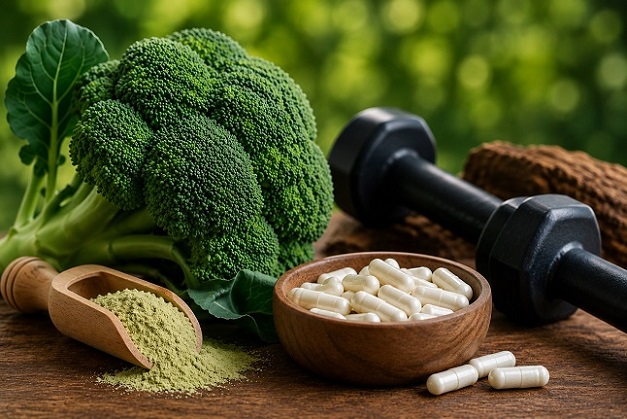 Scientists find that broccoli-derived peptides combined with leucine significantly improve muscle mass, strength, and
endurance in aging mice
Researchers from the Department of Nutrition and Health at China Agricultural University in Beijing, China, investigated whether these two natural nutritional compounds could work together to protect muscles from aging-related deterioration.
A New Nutritional Approach to Sarcopenia
Sarcopenia affects millions of older people worldwide and increases the risk of falls, fractures, disability, frailty, and loss of independence. The condition develops through a complex mix of chronic inflammation, oxidative stress, mitochondrial dysfunction, and an imbalance between muscle protein production and breakdown.
While leucine is already known for its ability to stimulate muscle protein synthesis, broccoli-derived peptides have attracted attention because of their anti-inflammatory and antioxidant properties. The research team wanted to determine whether combining the two could produce stronger benefits than using either one alone.
Testing the Combination in Aging Mice
The scientists used a well-established aging mouse model in which animals develop muscle deterioration similar to sarcopenia. Over an eight-week period, the mice received broccoli-derived peptides, leucine, or a combination of both.
The untreated aging mice experienced significant reductions in lean muscle mass, muscle strength, endurance, and overall physical performance. Their muscle fibers also became smaller, weaker, and more disorganized.
However, mice receiving the nutritional interventions showed noticeable improvements. While both broccoli peptides and leucine individually helped reduce muscle decline, the combined treatment consistently delivered the strongest results.
Bigger Muscles, Greater Strength and Better Endurance
The combination treatment restored lean body mass and increased the weight of important leg muscles. Measurements of grip strength showed that treated mice were considerably stronger than untreated animals.
The benefits extended beyond strength alone. Mice receiving both nutrients were able to hang longer during endurance tests and run significantly longer on treadmills before becoming exhausted.
Microscopic examination of muscle tissue revealed additional improvements. Muscle fibers became larger and more orderly, indicating healthier muscle structure and reduced muscle wasting.
How the Nutrients Protected Aging Muscles
To understand why the combination worked so well, researchers examined change
s in gene activity within muscle tissue. The analysis revealed that the combined treatment activated several pathways involved in muscle growth, repair, metabolism, and inflammation control.
This
Medical News report notes that the combination boosted important muscle-building genes including Myod1, Myog, and Mef2c, all of which are essential for muscle regeneration and development.
At the same time, the treatment reduced levels of inflammatory and muscle-damaging factors such as TNF, Cxcl10, and myostatin. It also improved genes linked to mitochondrial function, energy production, and cellular protection against oxidative stress.
Researchers found that the combination uniquely influenced the MAPK signaling pathway, a critical regulator of muscle repair and adaptation, which may help explain its superior performance.
A Promising Future for Healthy Aging
The findings suggest that combining broccoli-derived peptides with leucine may offer a powerful plant-based nutritional strategy for combating age-related muscle loss. By simultaneously promoting muscle growth, reducing inflammation, improving cellular energy production, and limiting muscle breakdown, the combination appears to target several major causes of sarcopenia at once.
Although the research was conducted in mice and human studies are still needed, the results provide encouraging evidence that carefully designed nutritional interventions could play an important role in helping older adults maintain strength, mobility, and independence as they age.
The study findings were published in the peer reviewed journal: Nutrients.
https://www.mdpi.com/2072-6643/18/12/1997
For the latest on preventing muscle loss, keep on logging to Thailand
Medical News.
Read Also:
https://www.thailandmedical.news/articles/anti-aging




 Share
Share
 Tweet
Tweet
 Share
Share

































