Nikhil Prasad Fact checked by:Thailand Medical News Team May 09, 2026 4 months, 3 weeks, 4 days, 23 hours, 43 minutes ago
Health News: A new international study has revealed that sharp cheddar cheese contains specialized molecules that scientists believe could potentially contribute to chronic inflammation in humans. The findings are drawing fresh attention to Neu5Gc, a little-known animal-derived compound that has already been linked in previous research to conditions such as cancer, atherosclerosis, and metabolic disease.
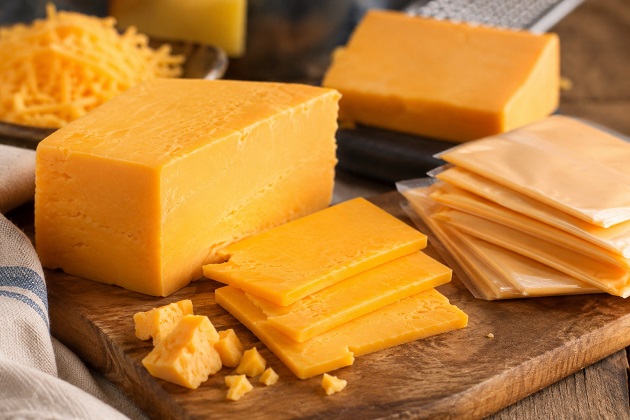 Scientists discover inflammation-associated Neu5Gc molecules in sharp cheddar cheese while processed cheese slices
showed none under laboratory testing.
The research was conducted by scientists from the Department of Food Biochemistry at the University of Warmia and Mazury in Olsztyn, Poland, and the Department of Chemistry and Biochemistry at Texas Tech University in Lubbock, Texas, USA. The team included researchers Damir Mogut, Anna Iwaniak, Mona Goli, Cristian D. Gutierrez Reyes, and Yehia Mechref.
Researchers Focus on Neu5Gc in Cheese
Neu5Gc, short for N-glycolylneuraminic acid, is a sugar molecule naturally found in most mammals. Humans, however, lost the ability to produce Neu5Gc during evolution. Despite this, the molecule can still enter the human body through foods derived from animals, especially red meat and dairy products.
Scientists have long suspected that when Neu5Gc becomes incorporated into human tissues, the immune system may recognize it as foreign. This can lead to the production of anti-Neu5Gc antibodies that may trigger low-grade chronic inflammation over time.
Although Neu5Gc has been heavily studied in red meat, very little research has focused on how much of the compound exists in processed dairy products such as cheese. To investigate this, the researchers analyzed commercially available sharp cheddar cheese and processed cheddar cheese slices using advanced ultra-high-resolution mass spectrometry technology capable of identifying extremely tiny molecular structures.
Sharp Cheddar Contained Multiple Neu5Gc Structures
The results surprised the researchers. The natural sharp cheddar cheese contained several Neu5Gc-containing N-glycans, which are complex sugar structures attached to proteins. One particular Neu5Gc-positive glycan appeared in especially high amounts, suggesting that these molecules are not simply trace contaminants but may represent a significant part of cheddar cheese’s molecular composition.
The researchers identified several distinct Neu5Gc-related structures that appeared during laboratory analysis between 31 and 36 minutes of testing time. The most abundant structure was a complex-type N-glycan known scientifically as HexNAc4Hex4Fuc1Neu5Gc1.
According to the researchers, the discovery demonstrates that advanced glycan analysis techniques can successfully detect potentially important food-derived molecules in highly complex dairy products.
Processed Cheese Slices Showed Different Results
Interestingly, the processed cheddar cheese slices showed no detectable Neu5Gc-containing N-glycans under the testing conditions used in the study. Scientists believe this difference could be related to how processed cheese product
s are manufactured.
Natural sharp cheddar cheese is produced through traditional fermentation and aging processes using relatively simple ingredients such as pasteurized milk, cultures, salt, and enzymes. Processed cheese products, on the other hand, undergo additional heating, blending, emulsification, and ingredient modification.
The processed cheese slices examined in the study also contained additives such as modified food starch, sodium citrate, citric acid, whey, milk protein concentrate, and preservatives. Researchers believe these manufacturing processes and altered ingredient compositions may reduce or eliminate detectable Neu5Gc structures.
However, the scientists cautioned that the findings are preliminary because only two products were examined. They stressed that larger studies involving many cheese brands and manufacturing styles are urgently needed.
Why Neu5Gc Matters to Human Health
Scientists remain divided about the exact health implications of Neu5Gc. Some studies suggest that continuous exposure to the molecule may fuel a type of persistent inflammation known as “xenosialitis.” Chronic inflammation itself is widely recognized as a contributor to numerous diseases including cardiovascular disorders, diabetes, and cancer.
Other research has suggested that anti-Neu5Gc antibodies may sometimes help the immune system recognize abnormal cells, meaning the biological effects could vary depending on dose, genetics, and immune system activity.
This
Health News report notes that researchers are increasingly interested in understanding whether certain food processing methods might reduce exposure to inflammatory compounds without significantly affecting nutrition or taste.
Advanced Technology Opened a New Window into Food Science
The study relied on nano-UHPLC–ESI–MS/MS, a highly sophisticated analytical platform capable of identifying microscopic glycan structures with extraordinary precision. Researchers explained that this technology may become increasingly important in future food safety investigations and nutritional science studies.
The scientists also emphasized that their work was only the first step. Future research will need to determine how much Neu5Gc humans actually absorb from cheese, whether it survives digestion intact, and how different populations respond immunologically after long-term exposure.
Conclusions
The study provides important new evidence that natural cheddar cheese can contain multiple Neu5Gc-associated molecular structures that may have biological significance in humans. Although the research does not prove that cheddar cheese directly causes inflammatory disease, it raises important questions about how dairy-derived compounds interact with the human immune system over long periods of consumption. The findings also suggest that food processing techniques may dramatically alter the presence of these molecules in dairy products. Researchers say far more extensive investigations are needed before definitive dietary recommendations can be made, but the study opens an important new area of research into food chemistry, inflammation, and chronic disease risk.
The study findings were published in the peer reviewed International Journal of Molecular Sciences.
https://www.mdpi.com/1422-0067/27/10/4200
For the latest
Health News, keep on logging to Thailand Medical News.
Read Also:
https://www.thailandmedical.news/articles/health-news




 Share
Share
 Tweet
Tweet
 Share
Share

































