Nikhil Prasad Fact checked by:Thailand Medical News Team Feb 24, 2026 7 months, 1 week, 23 hours ago
Medical News:
Major Trial Challenges Promise of Multi-Cancer Blood Screening
A highly anticipated blood test designed to detect cancer early has failed to meet its primary goal in a large clinical study, raising serious questions about the future of multi-cancer early detection technologies. The test, known as Galleri and developed by Grail, was expected to transform cancer screening by identifying dozens of cancers from a single blood sample. However, new findings from a major trial involving more than 142,000 participants showed that the test did not significantly reduce the number of people diagnosed with advanced-stage cancers, a result that has surprised researchers and shaken confidence in the rapidly expanding field.
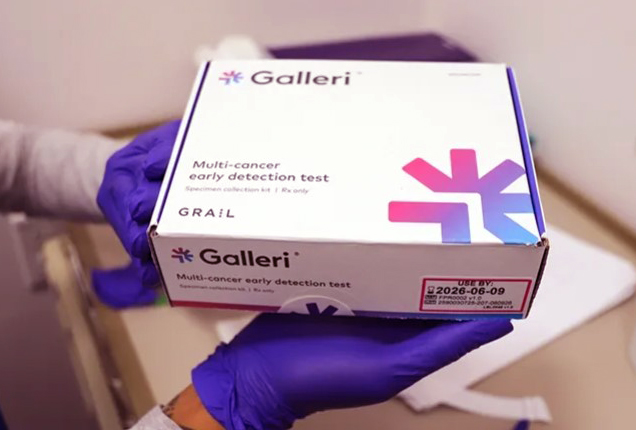 Major clinical trial finds Galleri blood test failed to significantly reduce late-stage cancer diagnoses
Galleri works by detecting tiny fragments of tumor DNA circulating in the bloodstream and is marketed as a screening tool capable of identifying signals from more than 50 different cancer types. Since its commercial launch in the United States in 2021, the test has been widely promoted despite lacking approval from the U.S. Food and Drug Administration. Priced at about $949, the test is typically paid for out of pocket, and the company says nearly half a million tests have already been sold, including over 185,000 in the past year alone.
https://grail.com/galleri-test/
Details of the Large-Scale Study
The new research, conducted in partnership with the U.K.’s National Health Service, followed healthy adults aged 50 to 77 over a three-year period. Participants were divided into groups, with some receiving the Galleri blood test while others continued with standard care. Researchers hoped that by detecting cancers earlier, more patients would be diagnosed at Stage 1 or Stage 2, where treatments are often more effective and survival rates higher.
Yet the study failed to demonstrate a meaningful drop in late-stage diagnoses. The main target was a 20 percent reduction in Stage 3 and Stage 4 cancers, but the results fell short. According to company statements, there was no statistically significant decline in advanced cancers, undermining the key argument that the test could improve outcomes on a population level. This
Medical News report highlights how even promising innovations can face major hurdles when tested in real-world clinical settings.
Mixed Interpretation of Secondary Findings
Despite missing the primary endpoint, Grail executives emphasized what they described as encouraging trends within the data. They pointed to a modest reduction in Stage 4 cases accompanied by an increase in Stage 3 diagnoses, suggesting that some cancers may have been identified slightly earlier than they otherwise would have been. Company officials argued that these patterns could still represent a meaningful clinical benefit, even if the overall statistical target was not reached.
However, many independent experts remained unco
nvinced. Cancer genetics specialist Dr. Richard Houlston stated that the findings do not support broad adoption within healthcare systems, while other researchers were more direct, saying the study clearly failed to deliver the expected breakthrough. Critics argued that if the technology truly worked as hoped, the trial would have shown a stronger and unmistakable signal.
Why Early Detection Is More Complex Than It Seems
The disappointment surrounding the Galleri test also reflects a broader challenge in cancer screening research. While early detection is often assumed to improve survival, experts caution that finding cancer sooner does not automatically mean patients will live longer. Some cancers grow slowly and may never become life-threatening, while others progress rapidly regardless of when they are found.
Blood-based tests also introduce new complications. False positives can leave patients anxious and uncertain, especially when follow-up imaging fails to locate a tumor. On the other hand, false negatives may provide false reassurance. Physicians have described scenarios where a blood test indicates possible cancer activity, yet scans reveal nothing, leaving patients caught in prolonged uncertainty.
Regulatory and Financial Fallout
The trial results arrive at a critical moment for Grail, which is seeking FDA approval and broader insurance coverage. Although a new U.S. law allows Medicare to cover certain cancer detection tests, Galleri is not automatically included. Experts suggest that failing to meet the primary study goal could make regulatory approval more challenging and slow adoption by healthcare systems.
Financial markets reacted sharply, with Grail’s stock reportedly dropping by about 50 percent following the announcement. Since most of the company’s revenue comes from Galleri sales, the findings could have lasting consequences for its business strategy and for investor confidence in similar technologies.
What the Findings Mean for the Future of Cancer Screening
These results underline how difficult it is to prove real-world benefits for new screening tools, even when early data appears promising. Researchers stress that innovation in cancer detection remains essential, particularly for cancers that lack reliable screening methods, but they also emphasize the need for rigorous trials that demonstrate clear patient benefit before widespread use. Moving forward, scientists are expected to reanalyze the data, refine testing strategies, and continue long-term follow-up to determine whether subtle benefits might emerge over time. The current evidence, however, serves as a sobering reminder that technological excitement must always be balanced with scientific proof, careful evaluation, and realistic expectations for patient outcomes in clinical practice.
Reference:
https://grail.com/press-releases/landmark-nhs-galleri-trial-demonstrates-a-substantial-reduction-in-stage-iv-cancer-diagnoses-increased-stage-i-and-ii-detection-of-deadly-cancers-and-four-fold-higher-cancer-detection-rate/
https://clinicaltrials.gov/study/NCT05611632
For the latest on Cancer Diagnostics, keep on logging to Thailand
Medical News.
Read Also:
https://www.thailandmedical.news/articles/cancer
https://www.thailandmedical.news/articles/medical-devices




 Share
Share
 Tweet
Tweet
 Share
Share

































