Orthopedic Experts Warn That Massage Chairs May Trigger Fractures, Nerve Damage and Hidden Spinal Injuries!
James Joish Fact checked by:TMN Jul 14, 2026 1 month, 2 weeks, 5 days, 12 hours, 52 minutes ago
Thailand Medical News: Massage chairs have become a familiar sight in shopping malls, airports, wellness centers, and countless homes, promising quick relief from stress, aching muscles, and chronic back pain. Marketed as convenient alternatives to professional massage therapy, these automated devices are increasingly viewed as harmless wellness tools. However, a growing body of medical evidence is prompting many orthopedic specialists to question whether these machines are as safe as consumers believe. This
Thailand Medical News report examines scientific studies, consumer safety investigations, and documented medical cases that reveal how massage chairs can, under certain circumstances, cause serious injuries instead of relief.
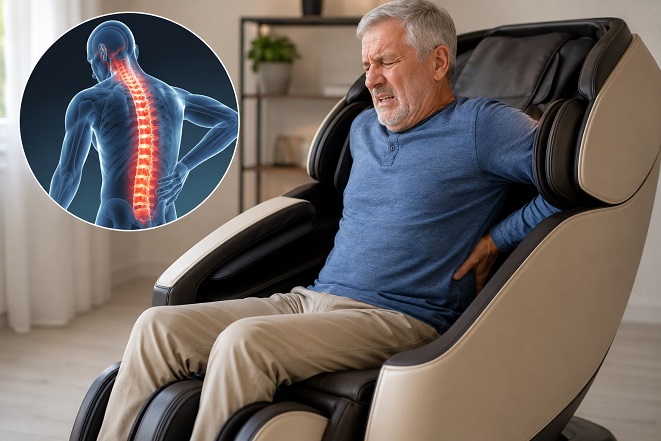 Growing medical evidence suggests massage chairs may pose hidden risks for people with fragile bones, spinal disorders, and circulatory diseases
Medical Literature Raises Serious Questions About Safety
Growing medical evidence suggests massage chairs may pose hidden risks for people with fragile bones, spinal disorders, and circulatory diseases
Medical Literature Raises Serious Questions About Safety
Unlike a trained massage therapist who can continuously assess muscle tension, pain responses, and anatomical differences, massage chairs rely on pre-programmed mechanical movements. Although many modern models include body-scanning technology, researchers note that these systems cannot accurately account for every person's unique spinal anatomy, bone density, or underlying medical conditions.
Studies published through the National Center for Biotechnology Information (NCBI) and other medical journals emphasize that standardized massage algorithms may apply excessive pressure or inappropriate stretching forces, particularly in individuals with spinal disorders. Patients with spinal stenosis, degenerative disc disease, herniated discs, or chronic nerve compression may experience worsening symptoms when subjected to aggressive mechanical kneading or stretching. Instead of relieving discomfort, these movements may narrow already compromised spinal spaces, aggravate inflamed nerves, and intensify pain.
Researchers also caution that many consumers unknowingly use massage chairs despite having undiagnosed spinal abnormalities, increasing the risk of injury.
Fractures and Skeletal Injuries Are Documented in Medical Reports
Among the most alarming findings is evidence that massage chairs can contribute to serious skeletal injuries in vulnerable individuals.
A widely cited PubMed case report described an elderly woman who developed an acute osteoporotic vertebral compression fracture immediately after using an automated electrical massage chair. Investigators concluded that the repetitive mechanical forces generated by the chair were sufficient to fracture weakened vertebrae in a patient with osteoporosis.
Orthopedic specialists warn that individuals with osteoporosis, osteopenia, or other conditions causing reduced bone strength face elevated risks because the rollers and compression mechanisms can deliver substantial force to the ribs, spine, and pelvis. Even when fra
ctures do not occur, repeated high-pressure massage may create microscopic bone damage that accumulates over time.
The Korea Consumer Agency (KCA) has similarly advised against massage chair use in individuals with severe osteoporosis or fragile bones because of the increased likelihood of rib and spinal micro-fractures.
Spinal Disorders May Become Significantly Worse
Medical reviews examining adverse events associated with mechanical and manual therapies have identified numerous spinal complications linked to excessive mechanical force.
Patients suffering from spinal stenosis, degenerative disc disease, scoliosis, or previous spinal injuries may experience worsening nerve compression when massage chair rollers repeatedly press against affected vertebrae. Forceful stretching functions can also increase irritation around inflamed spinal tissues.
Some literature has associated aggressive spinal manipulation with disc herniation, spinal cord irritation, and persistent neurological symptoms. While massage chairs are not identical to chiropractic manipulation, orthopedic experts note that similar mechanical forces may affect vulnerable spinal structures when improperly applied.
Because automated systems cannot recognize localized inflammation or structural instability, they continue applying pressure regardless of patient discomfort unless manually stopped.
Soft Tissue, Nerve, and Circulatory Complications
The dangers extend well beyond the skeleton. Repeated deep-tissue compression may strain muscles, irritate tendons, and compress spinal joints, especially when users select high-intensity settings or undergo prolonged sessions. Overuse has been associated with muscle soreness that progresses beyond normal post-massage discomfort into genuine tissue injury.
Neurological complications have also been documented. Reviews of massage-related injuries describe cases involving direct nerve compression that resulted in numbness, tingling sensations, weakness, and radiating pain. Since massage chairs cannot distinguish nerves from surrounding muscle tissue, they may repeatedly compress already inflamed nerve pathways.
Circulatory complications represent another significant concern. Health reviews indicate that powerful calf and leg compression systems may pose dangers for individuals with deep vein thrombosis (DVT). Mechanical squeezing has the theoretical potential to dislodge existing blood clots, allowing them to travel to the lungs and cause potentially fatal pulmonary embolisms.
Individuals with varicose veins also face increased risks. Heavy compression may damage weakened venous structures, causing bruising, localized bleeding, worsening vein dysfunction, and, in severe cases, skin ulceration.
Hidden Medical Conditions May Go Undetected
Orthopedic physicians also express concern that massage chairs can temporarily mask symptoms without addressing their underlying causes.
Temporary pain relief may encourage individuals to delay seeking medical evaluation for conditions such as spinal tumors, severe scoliosis, infections, inflammatory diseases, or progressive neurological disorders. While symptoms appear improved immediately after massage, the underlying disease process may continue advancing unnoticed.
Experts emphasize that persistent or worsening pain should never be managed solely through repeated massage chair use without appropriate medical assessment.
Consumer Safety Investigations Reveal Additional Hazards
Government safety agencies have documented numerous injuries unrelated to the massage itself.
The U.S. Consumer Product Safety Commission (CPSC) estimates that more than 2,000 emergency department visits over approximately a decade involved massage chair incidents. Reported injuries include pinch wounds, crushed fingers, entrapment beneath reclining mechanisms, and accidents involving moving components.
Children and pets appear particularly vulnerable to entrapment injuries because of the powerful reclining bases and enclosed mechanical assemblies.
Meanwhile, investigations conducted by the Korea Consumer Agency found that manufacturers often include important contraindications only within lengthy instruction manuals or fine print. In public coin-operated massage chair facilities, users frequently receive no health screening, safety guidance, or supervision before use, increasing the likelihood that individuals with medical contraindications unknowingly expose themselves to significant risks.
Individuals Who Should Exercise Extreme Caution
Medical literature consistently recommends avoiding massage chairs or consulting a physician before use if an individual has severe osteoporosis, previous spinal fractures, spinal stenosis, herniated discs, degenerative spinal disease, implanted pacemakers or defibrillators, active blood clots, deep vein thrombosis, severe varicose veins, recent surgery, healing wounds, significant spinal injuries, or pregnancy, particularly because lower back stimulation and abdominal pressure may present additional concerns.
Even otherwise healthy individuals are advised to begin with low-intensity settings, limit session duration, discontinue use immediately if pain develops, and seek medical evaluation if symptoms persist or worsen following treatment.
Stay Away from Wellness Centers, Hospitals or Clinics That use Massage Chairs
If you come across wellness centers, hospitals or clinics that have massage chairs or advocate their usage, stay away from these establishments as it shows that the doctors or medical practitioners there do not have much real knowledge of their own fields and such entities are only interested in only profits etc.
Growing Calls for Greater Awareness
As massage chairs become increasingly sophisticated and widely available, orthopedic experts believe consumer education has not kept pace with expanding adoption. While many users experience temporary relaxation without complications, accumulating evidence demonstrates that these devices are not universally safe. Their inability to adapt dynamically to individual anatomy or recognize underlying disease means that seemingly routine massage sessions can occasionally produce unexpected and serious medical consequences. Greater transparency regarding contraindications, improved safety labeling, enhanced public awareness, and consultation with healthcare professionals before use—particularly among older adults and individuals with chronic musculoskeletal disorders—may significantly reduce preventable injuries while allowing consumers to make more informed decisions about automated massage therapy.
References:
https://link.springer.com/article/10.1007/s00198-019-04961-4
https://onlinelibrary.wiley.com/doi/10.1155/2014/480956
https://mainichi.jp/english/articles/20160410/p2a/00m/0na/002000c
https://www.isafe.go.kr/english/selectBbsNttView.do?key=594&bbsNo=169&nttNo=32446&searchCtgry=&searchCnd=all&searchKrwd=&pageIndex=11&pageUnit=10&integrDeptCode=
https://www.youtube.com/watch?v=rz0zDCHoU98
https://www.youtube.com/watch?v=9zv5nl08nHg
For the latest on massage chairs, keep on logging to
Thailand Medical News.
Read Also:
https://thailandwellness.news/
https://www.thailandmedical.news/articles/health-news




 Share
Share
 Tweet
Tweet
 Share
Share