Nikhil Prasad Fact checked by:Thailand Medical News Team Nov 15, 2026 12 minutes ago
Scientists investigating the biological causes of Long COVID have identified heat shock protein 90 (Hsp90) as a potentially important therapeutic target. The protein appears to influence several processes associated with persistent illness, including viral replication, immune dysfunction, chronic inflammation, and blood vessel damage.
 Researchers identify Hsp90 as a potential Long COVID treatment target because of its involvement in viral
replication, inflammation, and blood vessel damage.
The findings come from a new scientific review involving researchers from the University of South Africa, NexAmins Bio LLC in the United States, Campbell University in North Carolina, and The Benjamin Mkapa Zonal Hospital in Tanzania.
Published in November 2026, the review examines whether targeting Hsp90 could eventually help patients experiencing debilitating symptoms months or years after coronavirus infection.
What Is Hsp90 and Why Does It Matter?
Hsp90, short for heat shock protein 90, is a molecular chaperone that helps other proteins fold correctly, remain stable, and function normally.
It supports hundreds of proteins involved in cellular signaling, immune responses, inflammation, and tissue maintenance.
However, SARS-CoV-2 can exploit this protective machinery to support its own replication and interfere with antiviral defenses.
Researchers believe Hsp90 could therefore represent an important connection between several biological abnormalities associated with Long COVID.
This
Thailand Medical News report examines why Hsp90 has attracted scientific interest and what experimental findings reveal about its therapeutic potential.
Hsp90 Helps Coronavirus Escape Immune Defenses
One particularly important finding concerns two forms of Hsp90, known as Hsp90α and Hsp90β.
Laboratory investigations indicate that Hsp90α stabilizes a coronavirus protein called ORF9b, which interferes with the body's production of interferons, essential molecules that coordinate antiviral immunity.
Without Hsp90 protection, ORF9b becomes vulnerable to cellular degradation, potentially restoring antiviral signaling.
Meanwhile, Hsp90β helps stabilize coronavirus structural proteins, including the nucleocapsid protein required for assembling new viral particles.
Experiments involving human cell cultures demonstrated that inhibiting Hsp90 can reduce coronavirus replication.
However, these findings primarily concern acute infection rather than established Long COVID.
Hsp90 Inhibition May Reduce Inflammation and Vascular Damage
Another important discovery involves inflammatory signaling. Hsp90 supports biological pathways responsible for producing inflammatory molecules, including interleukin-6 (IL-6), tumor necrosis factor (TNF), and interleukin-1β (IL-1β). These molecules contribute to immune activation and tissu
e injury.
Experimental Hsp90 inhibitors reduced inflammatory signaling and helped protect the endothelial barrier, the cellular lining that regulates movement of substances between blood vessels and surrounding tissues.
In laboratory experiments involving human pulmonary microvascular endothelial cells, Hsp90 inhibition partially reversed barrier damage triggered by the coronavirus spike protein.
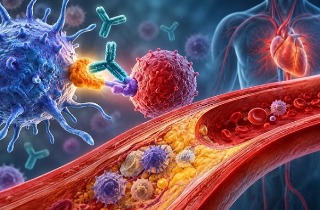
Such findings are significant because vascular dysfunction and persistent inflammation have both been implicated in Long COVID.
Nevertheless, researchers emphasize that laboratory improvements do not establish clinical effectiveness.
Experimental Drugs Show Promise but Also Serious Risks
Several Hsp90 inhibitors have demonstrated potentially useful effects, including geldanamycin, 17-AAG, ganetespib, and SNX-5422.
Laboratory and animal investigations reported reduced viral replication, lower inflammatory activity, and improved vascular protection.
However, conflicting results raise important safety concerns. One inhibitor, RGRN-305, reduced spike protein-induced inflammation in laboratory experiments but failed to reduce viral shedding in infected mice.
More concerningly, treated mice experienced increased mortality. Because Hsp90 also protects healthy cells and supports essential immune functions, broadly suppressing its activity could produce unintended harm.
Researchers suggest that selectively targeting Hsp90α while preserving Hsp90β functions might eventually offer a safer approach.
Other Findings Reveal Why Long COVID Remains Difficult to Treat
The review also highlights evidence suggesting that Long COVID involves several overlapping biological mechanisms.
In one investigation involving 275 participants, researchers identified altered immune cell populations, stronger antibody responses against coronavirus proteins, and reduced morning cortisol levels.
Another study detected circulating coronavirus spike antigen in approximately 60% of Long COVID patients, up to 12 months after infection, although the sample included only 63 participants.
Separate muscle biopsy investigations identified mitochondrial dysfunction and abnormalities that worsened following physical exertion.
These findings may help explain why patients experience fatigue, cognitive difficulties, and post-exertional symptom deterioration.
Importantly, a randomized trial involving 15 days of nirmatrelvir-ritonavir treatment failed to demonstrate symptomatic improvement in established Long COVID.
Conclusions
Hsp90 represents a scientifically compelling target because it participates in several biological processes potentially contributing to Long COVID. However, contradictory animal findings, possible toxicity, and the complete absence of clinical trials involving Hsp90 inhibitors in Long COVID mean that further research is essential before these experimental approaches can be considered safe or effective treatments.
The study findings were published in the peer reviewed journal: Pandemics.
https://www.mdpi.com/3042-9323/1/3/17
Read Also:
https://www.thailandmedical.news/articles/long-covid




 Share
 Tweet
 Share