Nikhil Prasad Fact checked by:Thailand Medical News Team Jun 02, 2026 1 month, 3 weeks, 19 hours, 52 minutes ago
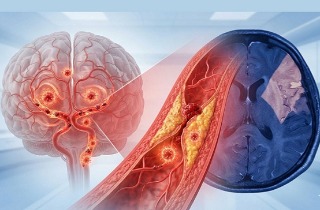
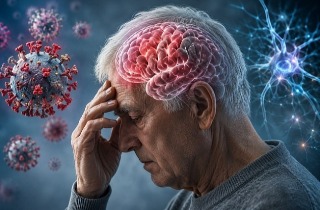
Medical News: A major international study has found that people suffering from long COVID may be showing a significantly higher burden of symptoms commonly associated with the earliest stages of Parkinson’s disease. Researchers also discovered that long COVID patients who develop unusual dream-enactment behaviors during sleep appear to face an even greater accumulation of these warning signs, raising concerns about the possible long-term neurological consequences of COVID-19 infection.
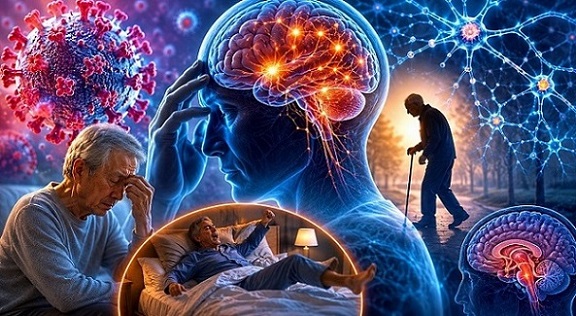 International study finds long COVID patients may experience increased early Parkinson’s disease-like symptoms
While the findings do not prove that long COVID causes Parkinson’s disease, they suggest that the condition may be associated with changes that resemble the early phase of neurodegeneration and warrant closer monitoring in the years ahead.
Large International Investigation Reveals Concerning Trends
The study analyzed data from 11,261 participants across 16 countries and regions as part of the International COVID-19 Sleep Study. Researchers compared individuals who had never been infected with COVID-19, those who had recovered fully, and those experiencing long COVID symptoms that persisted for at least three months after infection.
The research team included scientists from The Chinese University of Hong Kong, Guangzhou Medical University, University of Helsinki, Helsinki Sleep Clinic, Uppsala University, University of Bergen, University of Rome, University of Montpellier, Medical University of Vienna, Bulgarian Academy of Sciences, Ariel University, Universidade Católica Portuguesa, University of Lisbon, Federal University of Rio Grande do Norte, Mississippi State University, University of Toronto, Tokyo Medical University, Akershus University Hospital, University of Oslo, University of Oxford, Université Laval, Charité University Hospital Berlin, IRCCS Institute of Neurological Sciences of Bologna, and the University of Modena and Reggio Emilia.
Their goal was to determine whether long COVID patients exhibited features commonly seen during the prodromal stage of Parkinson’s disease. This stage can begin years before a formal diagnosis and often includes a variety of non-motor symptoms that signal changes occurring within the nervous system.
The Hidden Early Signs of Parkinson’s Disease
Many people associate Parkinson’s disease with tremors and movement difficulties. However, neurologists now recognize that the disease often develops silently for years before these hallmark symptoms appear.
Early warning signs can include loss of smell, constipation, excessive daytime sleepiness, dizziness upon standing, urinary problems, depression, anxiety, memory difficulties, and cognitive impairment often described as brain fog.
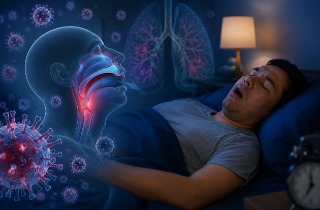
One of the strongest known predictors is REM sleep behavior disorder, a condition in which individuals physically act out their dreams while sleeping. These dream-enactment behaviors may include kicking, punching, flailing movements, shouting, or talking during sleep.
Long COVID Patients Showed More Parkinson&a
mp;rsquo;s-Like Features
The findings revealed that participants with long COVID were significantly more likely to report a wide range of symptoms associated with prodromal Parkinson’s disease.
Compared with individuals who had recovered from COVID-19 and those who had never been infected, long COVID sufferers experienced higher rates of dream-enactment behaviors, smell disturbances, constipation, daytime sleepiness, dizziness when standing, urinary dysfunction, depression, anxiety, and cognitive difficulties.
One of the most striking findings involved cognitive impairment. Nearly half of long COVID participants reported symptoms such as brain fog, attention problems, or memory difficulties, compared with only about one in ten participants in the comparison groups.
Researchers calculated an overall burden score representing the accumulation of Parkinson’s disease-like features. After adjusting for age, sex, sleep habits, medical conditions, stress levels, socioeconomic factors, vaccination status, and other potential influences, long COVID was associated with a 73 percent higher burden of prodromal Parkinson’s disease-like features.
Importantly, when researchers repeated the analyses after removing several overlapping symptoms that could potentially be attributed to long COVID itself, the association remained strong. Long COVID was still linked to a 66 percent higher burden of Parkinson’s-like warning signs.
This
Medical News report notes that the consistency of these findings across multiple statistical analyses strengthens confidence that the observed associations are unlikely to be explained solely by symptom overlap.
Sleep Disturbances May Signal Greater Neurological Risk
The researchers also focused on long COVID patients who reported dream-enactment behaviors that either appeared for the first time after infection or became worse following infection.
These individuals showed substantially higher rates of smell dysfunction, constipation, urinary problems, and cognitive impairment than long COVID patients who did not experience such sleep-related symptoms.
Most importantly, their overall burden of Parkinson’s disease-like features was 38 percent higher.
Researchers emphasize that dream-enactment behaviors are considered one of the most specific early indicators of future Parkinson’s disease and related neurological disorders. The observation that these behaviors became more common or worsened following COVID-19 infection adds another layer of concern.
Possible Biological Explanations
Scientists believe several mechanisms may help explain the association. Previous studies have shown that COVID-19 can trigger inflammation in the brain and nervous system. Autopsy studies have identified inflammatory changes in brain regions involved in movement, sleep regulation, and autonomic functions.
Another possibility involves the virus entering the nervous system through pathways connected to the sense of smell. Loss of smell is a common symptom in both long COVID and Parkinson’s disease, suggesting a potential shared biological pathway.
Experimental laboratory studies have also suggested that SARS-CoV-2 may accelerate the accumulation of alpha-synuclein, a protein that forms abnormal clumps in the brains of Parkinson’s patients. However, researchers caution that much more work is needed before any direct causal link can be established in humans.
Conclusions
The findings from this large multinational study suggest that long COVID is associated with a significantly increased burden of symptoms that resemble the earliest stages of Parkinson’s disease. While the study does not demonstrate that long COVID directly causes Parkinson’s disease, it highlights a concerning pattern of neurological, cognitive, autonomic, and sleep-related abnormalities among those with persistent post-COVID symptoms. Particularly noteworthy is the observation that dream-enactment behaviors, already recognized as a strong predictor of future neurodegenerative disease, appear to amplify this burden even further. The researchers stress that long-term follow-up studies are urgently needed to determine whether these Parkinson’s-like features remain temporary consequences of long COVID or represent the beginning of a more serious neurodegenerative process. Until then, clinicians may need to pay closer attention to neurological symptoms emerging in long COVID patients.
The study findings were published in the peer reviewed Journal of Sleep Research.
https://onlinelibrary.wiley.com/doi/10.1111/jsr.70371
For the latest on Long COVID, keep on logging to Thailand
Medical News.
Read Also:
https://www.thailandmedical.news/articles/long-covid




 Share
Share
 Tweet
Tweet
 Share
Share