Airway Inflammation May Directly Rewire Emotional Circuits and Give Rise to Mental Issues
Nikhil Prasad Fact checked by:Thailand Medical News Team May 21, 2026 3 months, 1 week, 5 days, 21 hours, 21 minutes ago
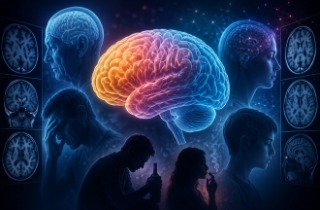
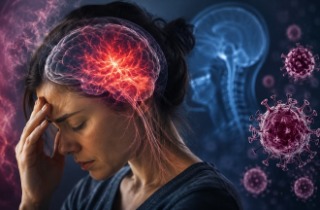
Medical News: A groundbreaking new study has uncovered alarming evidence that severe airway inflammation may directly alter emotional brain circuits and potentially trigger long-term mental health problems such as anxiety disorders and post-traumatic stress disorder (PTSD). The findings provide one of the clearest explanations yet for why patients suffering from severe asthma, COVID-19, pneumonia, and other inflammatory lung diseases often develop lingering emotional and psychological complications.
 Severe airway inflammation may directly alter brain fear circuits and increase the risk of anxiety and PTSD-like disorders
The study was conducted by researchers from the University of Cincinnati, Cincinnati Children’s Hospital Medical Center, University of Illinois Chicago, University of Toledo, University of Texas Southwestern Medical Center, New York University, and the VA Medical Center in Cincinnati.
Scientists Discover a Direct Lung to Brain Connection
Doctors have long noticed that people with chronic inflammatory lung diseases frequently experience depression, panic attacks, anxiety, and PTSD-like symptoms. However, the biological connection between inflamed lungs and emotional disturbances in the brain remained poorly understood.
In this new research, scientists created both mild and severe forms of allergic airway inflammation in laboratory mice using exposure to house dust mites, a common asthma trigger. The results were striking.
Animals with severe airway inflammation showed major difficulty “extinguishing” fear memories. In simple terms, their brains struggled to let go of fear even after the danger was gone. This problem resembles what happens in PTSD patients, where fear memories remain abnormally active for long periods.
Importantly, the same issue was not seen in mice with only mild airway inflammation. This suggests that the severity of inflammation plays a major role in triggering emotional brain dysfunction.
A Tiny Brain Region Became the Main Suspect
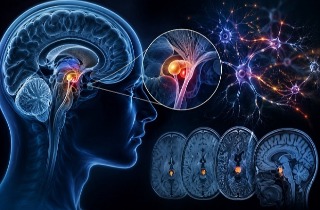
The researchers traced the problem to a small but highly important brain structure called the subfornical organ, or SFO. Unlike most areas of the brain, the SFO lacks a fully protected blood-brain barrier, allowing it to directly monitor inflammatory signals circulating throughout the body.
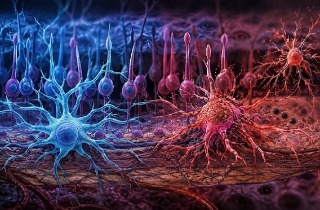
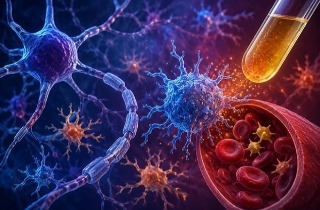
The study showed that severe airway inflammation activated immune cells called microglia inside the SFO. These microglia reacted strongly to an inflammatory molecule known as interleukin-17A (IL-17A), which is known to rise sharply in severe asthma and other inflammatory lung diseases.
Once activated, the SFO began sending abnormal signals to another brain region known as the infralimbic cortex. This area normally helps suppress fear and assists the brain in emotionally recovering after stressful experiences.
When communication between these regions became disrupted, fear recovery mechanisms began to fail.
Researchers Successfully Reversed the Effects
One of the most important
discoveries was that scientists could partially reverse the emotional disturbances by blocking IL-17A activity.
When researchers used antibodies to neutralize IL-17A, fear extinction improved significantly. Similarly, when they genetically altered immune receptors on the SFO microglia, the animals regained a much healthier emotional response pattern.
The team also discovered an entirely new brain communication pathway linking the SFO directly to the infralimbic cortex. When scientists chemically shut down this pathway, the severe fear-related symptoms improved dramatically.
This
Medical News report highlights how inflammation outside the brain can directly reshape emotional processing through specialized immune-sensitive neural circuits.
Why the Findings Matter Beyond Asthma
Although the study focused mainly on allergic airway inflammation and asthma-like disease, the findings may apply to many other illnesses.
Inflammatory molecules such as IL-17A are commonly elevated in severe COVID-19, acute respiratory distress syndrome (ARDS), bacterial pneumonia, chronic obstructive pulmonary disease (COPD), and several autoimmune disorders.
Researchers believe the same inflammatory brain pathway may help explain why many people recovering from serious respiratory infections continue experiencing anxiety, depression, emotional instability, panic attacks, cognitive dysfunction, and PTSD-like symptoms months after recovery.
The findings also suggest that emotional symptoms in inflammatory diseases may not simply be psychological reactions to illness, but rather direct biological consequences of inflammation altering brain function.
A New Frontier in Mental Health Treatment
The study opens the possibility that future treatments for PTSD, anxiety disorders, and emotional disturbances could target immune pathways in the body instead of focusing only on the brain.
Blocking IL-17A signaling, calming activated microglia, or interrupting the newly discovered SFO-to-brain emotional circuit may someday offer entirely new therapeutic strategies for patients suffering from inflammation-driven psychiatric symptoms.
Conclusion
The study provides powerful new evidence that severe airway inflammation can directly interfere with the brain’s emotional control systems. By identifying the crucial roles of IL-17A, microglia within the subfornical organ, and a newly discovered brain circuit linked to fear regulation, researchers have revealed a previously hidden body-to-brain signaling pathway that may contribute to PTSD, anxiety, and other mental health disorders. The findings could dramatically reshape how scientists understand the relationship between chronic inflammatory diseases and psychiatric conditions, while also paving the way for innovative treatments that target inflammation itself to protect emotional and cognitive health.
The study findings were published in the peer reviewed journal: Journal of Neuroinflammation.
https://link.springer.com/article/10.1186/s12974-026-03834-y
For the latest news, keep on logging to Thailand
Medical News.
Read Also:
https://www.thailandmedical.news/articles/coronavirus
https://www.thailandmedical.news/articles/mental-health




 Share
Share
 Tweet
Tweet
 Share
Share