Nikhil Prasad Fact checked by:Thailand Medical News Team May 26, 2026 3 months, 1 week, 18 hours, 37 minutes ago
Medical News: Scientists from the School of Chinese Medicine at Hong Kong Baptist University in Hong Kong and the Department of Microbiology and Immunology at the University of Illinois Chicago College of Medicine in the United States have identified natural compounds from a medicinal plant that may help block Ebola virus infection.
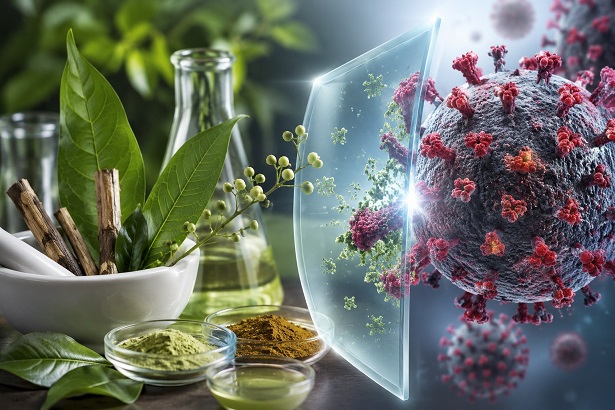 Natural compounds from a traditional medicinal plant were found to strongly block Ebola virus entry into cells in
Laboratory studies
The study focused on Maesa perlarius, a shrub traditionally used in parts of China and Southeast Asia for various folk remedies. Researchers discovered that chemicals extracted from the plant were highly effective at stopping the Ebola virus from entering cells in laboratory experiments.
A Dangerous Virus Still Lacking Treatments
Ebola virus disease is one of the world’s deadliest viral infections. It can trigger severe bleeding, organ failure, and shock, with death rates often exceeding 50 percent during outbreaks. Although some treatments and vaccines now exist, experts say there is still a strong need for safer and more effective antiviral drugs.
To search for new treatment options, researchers screened more than 500 medicinal plant extracts collected from China’s Lingnan region. Among all the plants tested, Maesa perlarius stood out for its powerful anti-Ebola effects.
Plant Extract Blocked Ebola Infection
The research team discovered that a methanol extract made from the stems of the plant strongly inhibited Ebola-virus-pseudotyped particles in laboratory testing. The extract also showed activity against infectious Ebola virus in a high-security biosafety level 4 laboratory.
Importantly, the extract did not appear to damage healthy cells at the tested doses. This suggested that the plant compounds were targeting the virus itself rather than simply killing cells.
The scientists then carefully separated the extract into smaller chemical fractions to identify the active ingredients responsible for the antiviral effect.
Powerful Natural Compounds Identified
The study uncovered several natural polyphenol compounds known as procyanidins and flavan-3-ols. These compounds are commonly found in foods such as grapes, berries, cocoa, apples, and tea.
Among the compounds identified, procyanidin B2 emerged as the strongest Ebola inhibitor. The compound worked at very low concentrations, showing impressive antiviral potency.
Other active compounds included procyanidin B1, EGCG, ECG, catechin, epicatechin, gallocatechin, and epigallocatechin. EGCG is particularly well known as one of the major beneficial compounds found in green tea.
Researchers observed that larger procyanidin structures were generally much more effective against Ebola than smaller single-unit molecules. Small changes in the compounds’ chemical structure also greatly influenced antiviral activity.
This
t-size:16px">Medical News report highlights how natural products continue to provide valuable clues for future antiviral drug development, especially against highly dangerous pathogens such as Ebola virus.
How The Compounds Work
The researchers believe the compounds interfere with the Ebola virus glycoprotein, a key structure on the virus surface that allows the virus to attach to and enter human cells.
Using advanced molecular docking analysis, the scientists showed that procyanidin compounds could fit into an important binding pocket on the Ebola glycoprotein. The binding appeared strong enough to destabilize the viral protein and block infection.
Additional testing using microscale thermophoresis confirmed that procyanidin B2 directly interacted with the Ebola glycoprotein. Interestingly, the binding strength was even better than that of toremifene, a drug already known to target Ebola virus entry mechanisms.
Why The Findings Matter
The discovery is important because it identifies a completely new natural source of anti-Ebola compounds. The findings also suggest that naturally occurring polyphenols may serve as templates for future antiviral drug development.
Scientists emphasized that the compounds are still in the early research stage and have not yet been tested in humans. More studies will be needed to determine safety, effectiveness, proper dosing, and whether the compounds can work in real Ebola infections outside the laboratory.
Still, the results provide hope that plant-derived compounds could eventually contribute to the development of new Ebola therapies. Researchers also noted that the structural diversity of procyanidins offers many opportunities for designing even stronger antiviral molecules in the future.
The conclusions from the study suggest that procyanidins and related flavan-3-ol compounds may represent an important new class of Ebola virus entry inhibitors. By directly targeting the viral glycoprotein, these compounds could potentially prevent the virus from infecting human cells. The findings also reinforce the growing scientific interest in medicinal plants and dietary polyphenols as promising antiviral drug sources. However, extensive clinical and animal studies are still necessary before any therapeutic use can be considered.
The study findings were published in the peer reviewed International Journal of Molecular Sciences.
https://www.mdpi.com/1422-0067/23/5/2620
For the latest on Ebola, keep on logging to Thailand
Medical News.
Read Also:
https://www.thailandmedical.news/articles/ebola




 Share
Share
 Tweet
Tweet
 Share
Share