Nikhil Prasad Fact checked by:Thailand Medical News Team Aug 07, 2026 1 month, 4 weeks, 8 hours, 28 minutes ago
A new scientific review suggests that excessive inflammation may be the key reason why many people continue to struggle with Long COVID months after recovering from the initial infection. Rather than the virus itself, researchers believe an ongoing cycle of immune disruption and inflammation could explain why symptoms such as fatigue, brain fog, muscle pain, and exercise intolerance refuse to disappear.
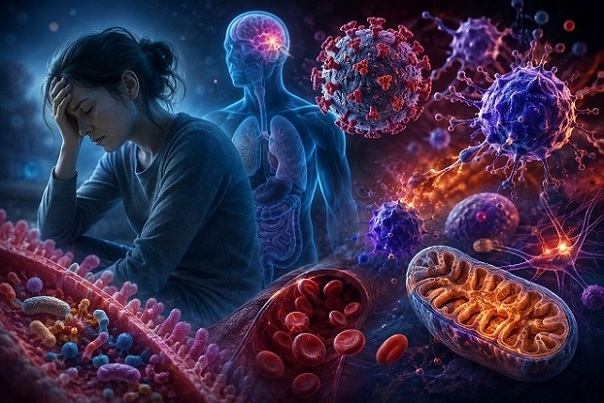 Researchers reveal how persistent inflammation may be the main force keeping Long COVID symptoms alive
long after infection.
The review was conducted by researchers from the Chengdu University of Traditional Chinese Medicine, the Hospital of Chengdu University of Traditional Chinese Medicine, the Affiliated Hospital of Chengdu University of Traditional Chinese Medicine, Sichuan Nursing Vocational College, and the Sichuan Provincial Engineering Research Center of Innovative Re-Development of Famous Classical Formulas, all in China.
Why Long COVID Can Linger
The researchers explain that post-COVID syndrome is most commonly marked by persistent fatigue that cannot be relieved by rest and often lasts for weeks or even months. Many patients also develop breathing problems, poor memory, sleep disturbances, pain, anxiety, depression, and reduced physical endurance.
According to the review, the biggest culprit is not simply lingering viral damage but a long-lasting inflammatory response that continues even after the virus has largely been cleared from the body. In some people, viral fragments may remain in tissues, while in others the immune system appears to stay abnormally activated, creating ongoing low-grade inflammation.
Four Major Biological Problems
This Thailand
Medical News report highlights that the researchers identified four interconnected processes that may fuel Long COVID.
The first is immune dysregulation, in which immune cells continue releasing inflammatory chemicals that damage tissues and prevent proper recovery. The second is mitochondrial dysfunction, where the tiny energy-producing structures inside cells become damaged, reducing ATP production and leaving muscles and the brain starved of energy. This helps explain why many patients experience crushing fatigue, exercise intolerance, and worsening symptoms after physical activity.
The third involves an imbalance in the renin-angiotensin system, a hormone network that normally regulates blood pressure and protects organs. Reduced ACE2 activity after COVID-19 may increase inflammation, blood vessel damage, and organ stress. Finally, the researchers describe gut microbiome disruption, where beneficial bacteria decline, intestinal inflammation increases, and altered gut-brain communication may contribute to brain fog, sleep problems, and cognitive decline.
Promising Treatment Targets
Instead of focusing on a single cause, the review proposes several biological pathways that could become future treatment targets. These include the TLR4 and TLR7 receptors, the JAK/STAT signaling pathway, the NLRP3 inflammasome, the AMPK/NRF2 antioxidant pathway, and the PINK1/Parkin mi
tochondrial repair system.
The researchers also discuss several potential therapies, including JAK inhibitors, Toll-like receptor antagonists, probiotics, mitochondria-targeted treatments, drugs that restore renin-angiotensin balance, coenzyme Q10 with alpha-lipoic acid, fluvoxamine, astragalus root extracts, and other traditional herbal formulations. However, they stress that most remain investigational and require well-designed clinical trials before becoming standard treatments.
Conclusion
The review shows that Long COVID is likely driven by a complex network of persistent inflammation, damaged energy production, disrupted immune regulation, hormone imbalance, and gut microbiome changes rather than a single abnormality. The findings suggest that future therapies will probably need to target multiple biological pathways simultaneously to provide meaningful relief for patients suffering from prolonged symptoms.
The study findings were published in the peer reviewed journal: Frontiers in Pharmacology.
https://www.frontiersin.org/journals/pharmacology/articles/10.3389/fphar.2026.1852220/full
Read Also:
https://www.thailandmedical.news/articles/long-covid 



 Share
Share
 Tweet
Tweet
 Share
Share

































