Nikhil Prasad Fact checked by:Thailand Medical News Team Jan 14, 2026 8 months, 3 weeks, 7 hours, 11 minutes ago
Medical News: A folk remedy plant gets modern scientific attention
A team of botanists and computational scientists from the University of Dhaka- Bangladesh has spotlighted a once-ordinary climbing plant long used in village medicine as a possible answer to high cholesterol. In this
Medical News report, researchers screened nearly one hundred naturally occurring chemicals in Mikania cordata and uncovered surprising contenders that may work like today’s statin drugs — and in some cases appear stronger.
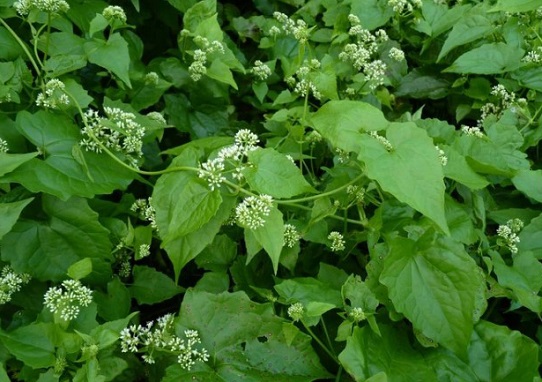 Tropical vine yields compound that may outperform today’s statin drugs
The study began by examining 91 compounds commonly found in M. cordata, a plant used traditionally for wound care, colds, diabetes and inflammatory illnesses. High cholesterol contributes to clogged arteries, heart attacks and strokes, and current drug treatment—especially statins—can cause muscle pain, liver strain and greater diabetes risk. The researchers therefore looked for safer natural alternatives.
Docking tests reveal powerful plant molecules
A computer screening method called molecular docking tested how tightly each plant compound could attach to a key liver enzyme called HMG-CoA reductase, the same target blocked by statins. A tighter grip could mean stronger cholesterol-lowering power.
Three compounds immediately rose to the top: epifriedelanol, taraxasterol and friedelin, all members of the triterpenoid family.
Epifriedelanol proved especially notable. It showed a binding score of −8.6 kcal/mol, better than the widely used drug atorvastatin, which scored −7.7. This trend continued when scientists ran further free-energy calculations — another measure of strength — where epifriedelanol also beat the prescription drug.
Hundreds of experimental look-alikes
Building on that hint of promise, the group generated 451 look-alike versions of epifriedelanol. Out of that giant list, almost half demonstrated stronger docking scores than atorvastatin, with two molecules — called EA2 and EA3 — emerging as clear leaders.
Both posted binding strength scores of −9.3 kcal/mol, placing them comfortably above the standard drug. Computer analyses also suggested these candidate compounds interact with crucial pockets inside the enzyme in ways that mimic statins but rely less on hydrogen bonding and more on natural hydrophobic fit — like pieces of a snug puzzle.
Molecular dynamics simulations confirm stability
To further test whether the compounds stay locked in place, the scientists simulated 500 nanoseconds of molecular movement. Epifriedelanol and both analogs remained firmly seated in the target site, performing comparably or better than atorvastatin in measures of complex stability, compactness and interaction strength. EA3 in particular held a remarkably stable position through the virtual experiment, reinforcing its potential as a chole
sterol controller.
What it means for future patients
Although the findings come from digital laboratory tools rather than human trials, they are highly encouraging. The study shows that a common Asian vine could supply the raw material for new medicines that may equal or outperform statins while potentially avoiding some of their long-term complications. The conclusions suggest that plant-based compounds — especially epifriedelanol and its close analogs EA2 and EA3 — deserve urgent laboratory and animal testing. If future research confirms safety and effectiveness, these molecules could expand treatment choice for millions who struggle with high cholesterol or cannot tolerate statins. Such a development would mark a major advance in accessible and affordable cardiovascular care.
The study findings were published in the peer reviewed journal: PLOS One
https://journals.plos.org/plosone/article?id=10.1371/journal.pone.0340573
For the latest on herbs and phytochemicals, keep on logging to Thailand
Medical News.
Read Also:
https://www.thailandmedical.news/articles/herbs-and-phytochemicals




 Share
Share
 Tweet
Tweet
 Share
Share

































