Nikhil Prasad Fact checked by:Thailand Medical News Team Jul 22, 2026 1 hour, 1 minute ago
Medical News: For years, ketogenic diets have been promoted as a powerful way to lose weight, improve blood sugar control, and even help fight certain diseases. Some earlier studies even suggested that the high-fat, very low-carbohydrate diet could reduce the risk of colon cancer. However, new research now reveals that the story is far more complicated.
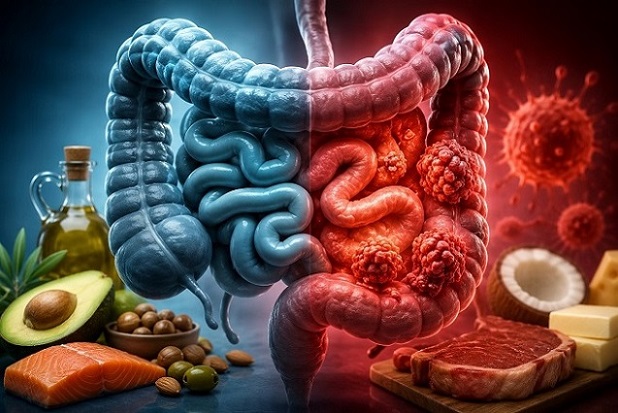 New research shows ketogenic diets may protect the colon while unexpectedly increasing cancer risk in the
small intestine through the effects of dietary fat
Scientists have discovered that while a ketogenic diet may help protect one section of the intestine, it could simultaneously increase the risk of cancer in another. The findings challenge the common belief that a single diet has the same effect throughout the body and suggest that different tissues can respond in dramatically different ways.
Researchers from the Massachusetts Institute of Technology (MIT), including the MIT Stem Cell Initiative and the Koch Institute for Integrative Cancer Research, conducted the study, which provides new insights into how dietary fat influences cancer development.
This
Medical News report examines the important findings and what they could mean for people following ketogenic diets, particularly those already at high genetic risk for intestinal cancers.
Ketogenic Diets Change How the Body Produces Energy
A ketogenic diet contains very high amounts of fat, extremely low levels of carbohydrates, and moderate amounts of protein. Because carbohydrates are scarce, the body cannot rely on glucose as its primary energy source. Instead, it burns fat, producing compounds known as ketone bodies, mainly beta-hydroxybutyrate (BHB) and acetoacetate.
These ketones have attracted scientific interest because they not only provide fuel but also influence inflammation, gene activity, and many cellular functions. Previous studies led researchers to believe that these ketones might also help suppress tumor formation.
Researchers Found an Unexpected Cancer Risk
Earlier work published in 2022 suggested that ketogenic diets reduced the development of tumors in the colon. The MIT team wanted to determine whether the same protective effect extended to the nearby small intestine.
Instead, they discovered exactly the opposite. Using genetically engineered mice that naturally develop intestinal tumors, the researchers compared animals fed a ketogenic diet, a standard control diet, and a calorie-rich high-fat diet that promotes obesity.
The results were striking. Mice eating the ketogenic diet developed significantly more tumors in the small intestine than animals eating the normal diet. Even though the ketogenic mice did not become obese, they developed tumor burdens that matched or even exceeded those seen in mice consuming the obesity-promoting diet.
This surprising discovery demonstrates that avoiding obesity alone does not necessarily eliminate cancer risks associated with certain dietary patterns.
>
Dietary Fat Was the Real Driver, Not Ketones
One of the study's biggest surprises was that ketone bodies themselves were not responsible for the increased cancer risk.
The researchers genetically manipulated the pathways responsible for producing and breaking down ketones. Whether ketone production was increased, reduced, or blocked altogether, tumor development remained largely unchanged.
Instead, the culprit turned out to be the exceptionally large amount of dietary fat consumed during ketogenic dieting.
The intestinal cells responded by dramatically increasing fatty acid oxidation, the process of burning fat for energy. This activated a group of proteins called PPARs (Peroxisome Proliferator-Activated Receptors), which regulate how cells process fats and control cellular metabolism.
Once activated, these proteins stimulated intestinal stem cells to multiply much faster than usual.
More Stem Cells Can Mean Greater Cancer Risk
Stem cells lining the small intestine perform a vital function by constantly replacing damaged or worn-out cells. Since the intestinal lining renews itself rapidly, these stem cells are essential for maintaining healthy tissue.
However, there is an important downside. Every time stem cells divide, there is another opportunity for DNA mistakes and mutations to occur. When stem cell activity becomes excessive, the likelihood of abnormal growth increases, creating conditions that may eventually lead to tumor formation.
Researchers explained that having more active stem cells allows the intestine to repair injuries more efficiently, but this same increased activity also raises the chances of cancer developing.
The study therefore reveals that the body's natural repair mechanisms, when overstimulated by large amounts of dietary fat, may unintentionally encourage tumor growth.
Why the Colon and Small Intestine Behave So Differently
Perhaps the most fascinating aspect of the research is that two neighboring sections of the digestive tract reacted in completely opposite ways.
The earlier 2022 study showed fewer tumors developing in the colon during ketogenic feeding. Yet the new study demonstrated increased tumor formation only a short distance away in the small intestine.
Researchers originally believed ketone bodies such as BHB were responsible for protecting the colon. The new evidence now suggests otherwise.
Instead, ketones appear to be largely inactive in determining cancer risk. The real factor is how individual tissues handle the large amounts of dietary fat entering the digestive system.
Exactly why the colon and small intestine process these fats differently remains one of the team's next major research questions.
Researchers noted that understanding why the same diet produces opposite effects in adjacent parts of the intestine could reveal entirely new aspects of cancer biology.
Important Implications for High-Risk Individuals
The findings may carry particular importance for people with inherited genetic conditions such as familial adenomatous polyposis (FAP), a disorder that greatly increases the lifetime risk of developing intestinal tumors.
As rates of small intestinal cancer have gradually risen over recent decades, understanding how diet influences disease risk has become increasingly important.
The researchers also emphasize that consuming commercial ketone drinks or ketone supplements is unlikely to produce the same effects observed with ketogenic diets. Because the increased cancer risk resulted from processing large quantities of dietary fat rather than from ketone molecules themselves, ketone supplements alone are not expected to accelerate tumor formation in the same way.
A More Complex Picture of Nutrition and Cancer
The study highlights an increasingly important lesson in nutrition research: foods and diets rarely produce identical effects throughout the entire body.
Rather than labeling ketogenic diets as universally beneficial or harmful, the findings suggest that their effects depend heavily on the specific tissue being examined and on an individual's underlying genetic risk.
Scientists believe much more work is needed before dietary recommendations can be personalized for cancer prevention, particularly for individuals with inherited cancer syndromes.
Conclusion
This important research demonstrates that ketogenic diets produce far more complex biological effects than previously appreciated. While earlier evidence suggested benefits against colon tumors, the new findings show that excessive dietary fat can stimulate stem-cell activity in the small intestine, accelerating tumor formation independently of ketone production. These discoveries reinforce the need for carefully tailored dietary advice, especially for genetically susceptible individuals, and remind both physicians and the public that nutrition cannot be evaluated using one-size-fits-all assumptions.
The study findings were published in the peer reviewed journal: Nature.
https://www.nature.com/articles/s41586-026-10779-y
For the latest on keto diets and cancer, keep on logging to Thailand
Medical News.
Read Also:
https://www.thailandmedical.news/articles/cancer
https://www.thailandmedical.news/articles/diets-and-nutrition




 Share
Share
 Tweet
Tweet
 Share
Share