Nikhil Prasad Fact checked by:Thailand Medical News Team Apr 07, 2026 5 months, 3 weeks, 5 days, 18 hours, 32 minutes ago
Medical News:
Scientists uncover how pathogens outsmart the body’s defenses
In a compelling new scientific review, researchers have uncovered how viruses skillfully manipulate the human immune system to survive, multiply, and in many cases remain hidden inside the body for long periods. Rather than simply attacking cells, these pathogens take control of key internal signaling systems, turning the body’s own defenses into tools that support their persistence.
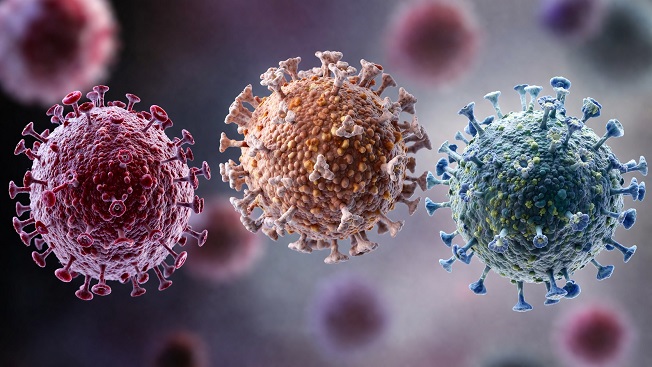 Viruses exploit key immune signaling pathways to evade detection and persist in the human body
The study was conducted by scientists from the Department of Basic Health Sciences, College of Applied Medical Sciences at Qassim University, Saudi Arabia; the Jawaharlal Nehru Medical College and Hospital, Aligarh Muslim University, India; and the Department of Medical Laboratories, College of Applied Medical Sciences at Qassim University, Saudi Arabia.
The Body’s Internal Defense Network
At the center of this discovery are MAPK pathways, which are critical communication networks inside human cells that regulate how the immune system responds to infections. These pathways include ERK, JNK, and p38, and they help control inflammation, activate immune cells, and coordinate the body’s response to invading viruses.
Under normal conditions, these pathways act as an early warning and response system. They trigger the production of antiviral molecules and guide immune cells to infected tissues. They also help determine how strong or controlled the immune response should be.
However, viruses have evolved sophisticated strategies to interfere with these pathways.
Turning Defense into Opportunity
Instead of being eliminated, many viruses, including SARS-CoV-2, hepatitis viruses, and herpes viruses, have learned to manipulate MAPK signaling to their advantage.
In the early phase of infection, viruses often activate these pathways to assist in entering cells, rearranging cellular structures, and initiating replication. Later, they may suppress or redirect the same signals to avoid detection and weaken immune responses.
This
Medical News report highlights that this dynamic manipulation allows viruses to carefully balance immune activation and suppression. This balance helps ensure their survival while reducing the chances of being destroyed by the host.
Why Some Viral Infections Become Chronic?
One of the most significant findings is how prolonged disruption of these immune pathways can lead to immune exhaustion. Over time, immune cells, particularly T cells, lose their ability to function effectively.
This weakened state reduces the body’s ability to clear infections and contributes to chronic diseases such as hepatitis B and C, as well as other persistent viral infections.
In addition, altered MAPK signaling disru
pts communication between immune cells. This impairs antigen presentation and reduces the ability of the immune system to recognize infected cells.
A Critical Weak Point in Early Immunity
The research also highlights the role of a lesser-known immune mechanism involving CD1d molecules and invariant natural killer T cells. This system acts as a rapid response unit that detects infected cells early and triggers immune activation.
Viruses can interfere with this pathway by altering MAPK signaling. They prevent CD1d molecules from reaching the cell surface where they are needed. As a result, infected cells remain hidden from immune surveillance.
This delay gives viruses a crucial advantage and allows them to spread before the immune system can respond effectively.
New Directions for Treatment
Although these findings reveal a concerning level of viral sophistication, they also offer new opportunities for developing treatments. By targeting MAPK pathways, scientists may be able to restore proper immune function and improve the body’s ability to fight infections.
However, researchers caution that these pathways are essential for normal immune activity. Broadly blocking them could weaken the immune system or cause unintended side effects.
Future therapies are likely to focus on precise modulation. The goal is to fine tune immune responses rather than shut them down completely.
Conclusion
The study provides important insight into the complex interaction between viruses and the human immune system. By manipulating MAPK signaling pathways, viruses can evade detection, disrupt immune coordination, and establish long term infections. These findings highlight the need for carefully designed therapies that restore immune balance without compromising essential defense mechanisms. A deeper understanding of these processes could lead to more effective treatments that not only target viruses directly but also strengthen the body’s natural ability to fight back in a controlled and sustainable way.
The study findings were published in the peer reviewed journal: Pathogens.
https://www.mdpi.com/2076-0817/15/4/384
For the latest on viruses, keep on logging to Thailand
Medical News.
Read Also:
https://www.thailandmedical.news/articles/coronavirus
https://www.thailandmedical.news/articles/stds




 Share
Share
 Tweet
Tweet
 Share
Share

































