Nikhil Prasad Fact checked by:Thailand Medical News Team Jun 17, 2026 3 months, 2 weeks, 3 days, 13 minutes ago
Medical News: One of the greatest obstacles in modern cancer treatment is the ability of tumors to become resistant to multiple drugs. Even when chemotherapy initially works, many cancers eventually develop mechanisms that allow them to survive and continue growing. A new comprehensive review has revealed that a class of targeted cancer drugs known as protein kinase inhibitors may hold the key to overcoming this challenge by disabling the molecular pumps that help cancer cells evade treatment.
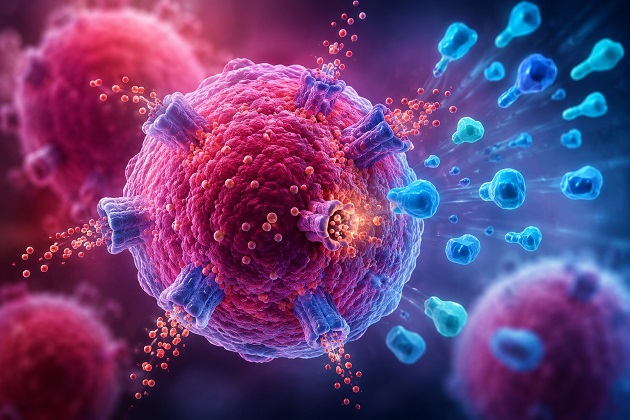 Scientists find that kinase inhibitors can block drug-export pumps in cancer cells, potentially restoring the effectiveness
of chemotherapy
The review was conducted by researchers from the Medicinal and Natural Products Chemistry Research Center at Shiraz University of Medical Sciences in Shiraz, Iran; the Department of Biochemistry at the Medical University of Gdansk in Gdansk, Poland; and the Department of Medical Oncology at Amsterdam University Medical Centers, Cancer Center Amsterdam, Vrije Universiteit, in Amsterdam, the Netherlands.
The Hidden Reason Many Cancer Treatments Fail
Cancer drug resistance remains one of the biggest reasons for treatment failure worldwide. While chemotherapy drugs are designed to kill rapidly dividing cancer cells, some tumors develop sophisticated defense mechanisms that allow them to survive repeated treatment.
One of the most important resistance mechanisms involves a family of proteins known as ATP-binding cassette (ABC) transporters. These proteins function like microscopic pumps embedded in the outer membrane of cancer cells. Their role is to identify potentially harmful substances and expel them from the cell.
Unfortunately, many chemotherapy drugs are recognized as targets by these transporters. As a result, cancer cells can actively pump anticancer medications back out before the drugs have enough time to work. This reduces drug concentrations inside the tumor and significantly weakens treatment effectiveness.
The three most important transporters linked to multidrug resistance are ABCB1, also known as P-glycoprotein, members of the ABCC family, and ABCG2, often called the breast cancer resistance protein.
Targeted Cancer Drugs Show Unexpected Benefits
Protein kinase inhibitors were originally developed to block abnormal signaling pathways that drive cancer growth and spread. Today, dozens of these drugs are approved for treating various cancers, targeting molecules such as EGFR, VEGFR, ALK, BCR-ABL, JAK, FGFR, MET, RET, BRAF, BTK, CDK4/6, and MEK.
However, scientists have increasingly discovered that these targeted therapies may have a second powerful function. Beyond slowing tumor growth, many kinase inhibitors can directly interfere with ABC transporters and prevent them from removing chemotherapy drugs from cancer cells.
The review analyzed studies published between 2018 and 2025 and found extensive evidence that numerous kinase inhibitors can restore the effectiveness of conventional anticancer drugs in resistant tumors.
Three Ways Kinase Inhibitors Fight Resistance
;
The researchers identified three major mechanisms through which kinase inhibitors regulate ABC transporters.
The first involves altering the expression of transporter genes, reducing the amount of pump proteins produced by cancer cells.
The second involves disrupting the normal localization of transporter proteins, preventing them from functioning efficiently on the cell surface.
The third and most important mechanism involves direct inhibition of drug efflux activity. Many kinase inhibitors physically interact with transporter proteins and block their ability to expel chemotherapy agents.
This
Medical News report highlights that the vast majority of evidence points toward direct efflux inhibition as the dominant mechanism. In many experimental studies, kinase inhibitors significantly increased the accumulation of chemotherapy drugs inside resistant cancer cells, making the cancer cells vulnerable once again.
New Structural Insights Strengthen the Evidence
Recent advances in cryo-electron microscopy have provided scientists with detailed images of ABC transporters at near-atomic resolution. These studies have revealed exactly how transporter proteins bind and export drugs.
Researchers have been able to visualize the structures of ABCB1, ABCG2, and ABCC transporters in different functional states. These discoveries show that many kinase inhibitors bind within the same cavities used by chemotherapy drugs, effectively blocking the transport process.
Several kinase inhibitors including agents targeting EGFR, ALK, and other cancer-driving kinases were found to interact strongly with transporter binding pockets, preventing the pumps from functioning normally.
A Promising Future for Combination Cancer Therapy
The findings suggest that protein kinase inhibitors could become valuable partners for conventional chemotherapy. By blocking the drug-removal systems used by cancer cells, these agents may help restore sensitivity to treatments that had previously stopped working. The review also emphasizes that careful evaluation of safety remains important because ABC transporters play essential protective roles in normal tissues such as the intestine, liver, kidneys, and blood-brain barrier. Nevertheless, the growing body of evidence indicates that combining kinase inhibitors with traditional anticancer drugs could provide a powerful new strategy for overcoming multidrug resistance and improving outcomes for cancer patients worldwide. As researchers continue to uncover the structural and molecular details behind these interactions, new therapies may emerge that transform the way resistant cancers are treated.
The study findings were published in the peer reviewed journal: Cancers.
https://www.mdpi.com/2072-6694/18/12/1957
For the latest cancer research, keep on logging to Thailand
Medical News.
Read Also:
https://www.thailandmedical.news/articles/cancer




 Share
Share
 Tweet
Tweet
 Share
Share

































