Nikhil Prasad Fact checked by:Thailand Medical News Team Apr 21, 2026 5 months, 1 week, 6 days, 6 hours, 21 minutes ago
Medical News: A molecule once dismissed as a simple waste product is now being recognized as a powerful regulator in the human body. New research shows that lactate - long associated with muscle fatigue - plays a central role in controlling gene activity and may significantly contribute to the development of cardiovascular diseases.
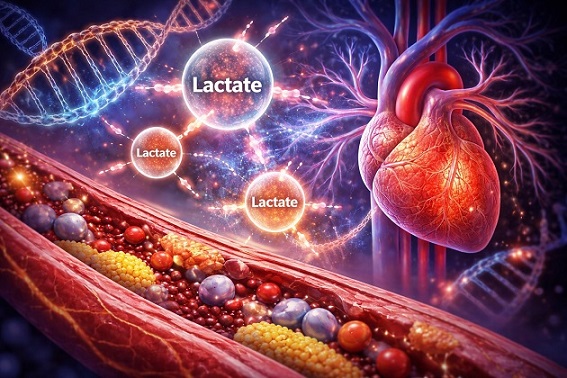 New research reveals lactate as a crucial regulator driving cardiovascular disease and gene activity
From Metabolic Waste to Biological Powerhouse
New research reveals lactate as a crucial regulator driving cardiovascular disease and gene activity
From Metabolic Waste to Biological Powerhouse
For many years, lactate was believed to be nothing more than a byproduct of energy production. However, scientists from the Yale Cardiovascular Research Center and the Yale University School of Medicine in the United States have revealed a dramatic shift in understanding.
Lactate is now known to function as both an energy source and a signaling molecule. It moves between organs, fuels tissues like the heart and brain, and helps regulate key biological processes. This discovery is reshaping how researchers view metabolism and its link to disease.
The Discovery of Lactylation
One of the most important breakthroughs is the identification of “lactylation,” a process where lactate attaches to proteins that control gene expression. This mechanism allows lactate to directly influence which genes are turned on or off. In simple terms, the body’s metabolic state can now be seen as directly controlling genetic behavior. This insight has profound implications for understanding how diseases develop and progress.
When Balance Is Lost
Under normal conditions, lactate is produced and cleared efficiently. However, in disease states, this balance is disrupted. Excess lactate begins to accumulate, triggering harmful effects throughout the body.
High lactate levels can lead to inflammation, oxidative stress, and abnormal changes in blood vessel cells. These changes can damage the vascular system and contribute to the progression of serious cardiovascular conditions.
Role in Major Heart Diseases
The research highlights the involvement of lactate and lactylation in several major cardiovascular diseases.
In atherosclerosis, elevated lactate promotes inflammation and accelerates plaque formation in arteries. In pulmonary hypertension, it contributes to the thickening of blood vessel walls, restricting blood flow.
During heart attacks, the lack of oxygen forces cells to produce large amounts of lactate, worsening tissue damage. In heart failure, persistently high lactate levels are linked to poor outcomes and reduced survival rates.
This
Medical News report emphasizes that lactate is not merely a marker of disease severity but an active participant in disease progression.
New Opportunities for Treatment
These findings open the door to new therapeutic strategies. Instead of
only treating symptoms, researchers are now exploring ways to target lactate metabolism and lactylation processes.
Potential approaches include controlling lactate production, blocking its transport, or regulating the enzymes involved in lactylation. Early experimental evidence suggests that these strategies could reduce inflammation and slow disease progression.
However, because lactate also plays essential roles in normal physiology, any treatments must be carefully designed to avoid unintended consequences.
Conclusion
The growing body of evidence firmly establishes lactate as a central player in cardiovascular biology. No longer viewed as metabolic waste, it is now recognized as a molecule that links metabolism, gene regulation, and disease development.
The discovery of lactylation further highlights how deeply metabolism is intertwined with genetic control. As research advances, targeting the lactate–lactylation axis could revolutionize the prevention and treatment of cardiovascular diseases. While challenges remain, this new understanding offers a promising path toward more precise and effective therapies.
The study findings were published in the peer reviewed journal: Biology.
https://www.mdpi.com/2079-7737/15/8/642
For the latest on cardiovascular diseases, keep on logging to Thailand
Medical News.
Read Also:
https://www.thailandmedical.news/articles/cardiology




 Share
Share
 Tweet
Tweet
 Share
Share

































