Nikhil Prasad Fact checked by:Thailand Medical News Team Jun 27, 2026 1 month, 3 weeks, 1 day, 22 hours, 54 minutes ago
Medical News: Advanced Brain Mapping Reveals New Clues Behind Long COVID Symptoms
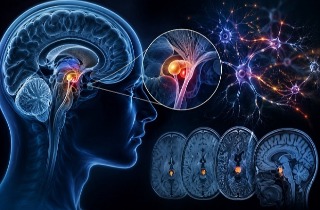
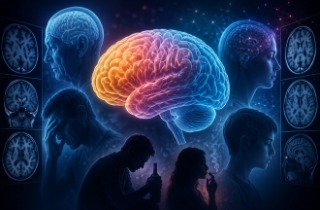
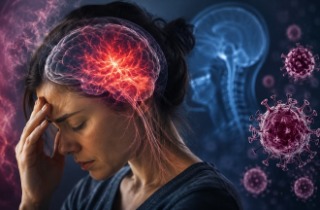
Researchers from King's College London, King's College Hospital NHS Foundation Trust, the University of Porto in Portugal, RISE-HEALTH at the University of Porto, and the University of Padova in Italy have uncovered important evidence that Post-COVID syndrome is associated with subtle but distinct changes in the brain. Their findings suggest that these changes are not randomly scattered but occur within interconnected brain networks that may help explain why many people continue to experience fatigue, memory problems, poor concentration and other neurological symptoms months after recovering from COVID-19.
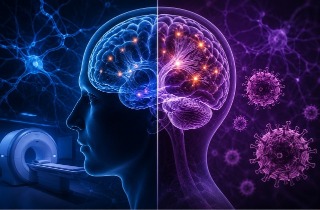
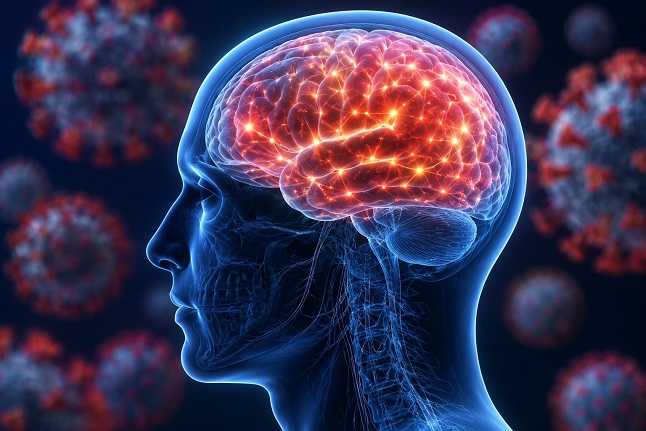 Advanced brain mapping reveals interconnected brain network changes that may help explain persistent
neurological symptoms in people with Post-COVID syndrome
The research focused on people who had only mild COVID-19 during their initial infection but later developed persistent fatigue, one of the most common and disabling symptoms of Post-COVID syndrome. Rather than relying on traditional brain scan comparisons, the researchers used a sophisticated analytical tool known as CentileBrain, which compares an individual's brain structure against reference data from tens of thousands of healthy people. This allowed them to detect subtle abnormalities that conventional approaches may overlook.
Brain Changes Extend Beyond Individual Regions
The study examined 20 patients with persistent Post-COVID fatigue and compared them with 20 recovered individuals who no longer had symptoms. Although the overall brain changes were relatively modest, the researchers discovered clear differences in the thickness of the brain's outer layer, known as the cerebral cortex.
Several regions involved in decision-making, emotional regulation and higher thinking, particularly parts of the orbitofrontal cortex, showed reduced cortical thickness. At the same time, areas involved in sensory processing and visual function, including parts of the occipital cortex and postcentral gyrus, showed increased cortical thickness.
Perhaps even more importantly, these structural differences rarely occurred in isolation. Instead, they clustered within interconnected brain circuits. When the researchers examined entire brain networks rather than individual regions, they found that these abnormal circuits affected up to 50 percent more people with Post-COVID syndrome than healthy recovered controls. This suggests that Long COVID may disrupt communication between multiple brain regions instead of damaging just one specific area.
This
Medical News report highlights how this network-based approach provides a far more comprehensive understanding of the neurological effects of Post-COVID syndrome than previous studies that focused on isolated brain abnormalities.
Gene Associated with Viral Entry Emerges as A Key Player
One of the study's most intriguing discoveries involved TMPRSS2, a protein that helps SARS-CoV-2 enter human cell
s. Brain regions with naturally higher levels of TMPRSS2 expression were significantly more likely to show the structural abnormalities identified by the researchers.
Other viral entry-related genes, including FURIN, NRP1 and TLR4, demonstrated much weaker associations. The findings suggest that TMPRSS2 could contribute to making certain brain regions more vulnerable to the long-term effects of COVID-19, although further research will be needed to determine exactly how this occurs.
Brain Immune Cells and Neurotransmitters May Also Be Involved
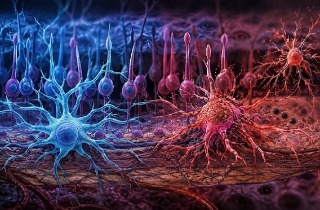
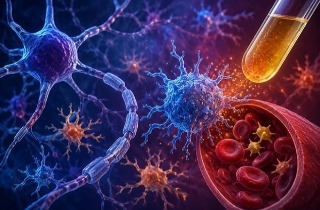
The researchers also discovered strong links between the observed brain changes and the distribution of neurons and microglia, the brain's resident immune cells.
This finding supports growing evidence that neuroinflammation may contribute to persistent neurological symptoms following COVID-19.
In addition, several important neurotransmitter systems were associated with the structural changes. These included serotonin, glutamate, cannabinoid and cholinergic pathways, all of which play critical roles in regulating memory, attention, mood, learning and fatigue. The researchers believe these biological pathways may represent promising targets for future therapies aimed at treating persistent Post-COVID neurological symptoms.
Advanced computer modelling further suggested that many of the observed brain changes may be centered around posterior temporoparietal regions before extending through interconnected neural pathways. Although this modelling does not prove disease progression, it offers an important framework for understanding how relatively small structural changes could ultimately affect multiple brain functions.
Conclusion
This study provides some of the strongest evidence to date that Post-COVID syndrome involves measurable alterations across interconnected brain networks rather than isolated areas of damage. By combining advanced brain imaging with genetic, cellular and neurochemical analyses, the researchers have identified several biological mechanisms that may contribute to persistent fatigue and cognitive dysfunction. While the study involved a relatively small number of participants and larger investigations are still needed, the findings offer valuable new insights into the neurological basis of Long COVID and identify several promising directions for future diagnostic research and therapeutic development.
The study findings were published in the peer reviewed journal: Brain, Behavior, & Immunity - Health.
https://www.sciencedirect.com/science/article/pii/S2666354626001250
For the latest on Long COVID, keep on logging to Thailand
Medical News.
Read Also:
https://www.thailandmedical.news/articles/long-covid




 Share
Share
 Tweet
Tweet
 Share
Share