Nikhil Prasad Fact checked by:Thailand Medical News Team Jun 16, 2026 3 months, 2 weeks, 4 days, 2 hours, 46 minutes ago
Medical News: Chronic liver fibrosis, a progressive condition that can eventually lead to liver failure and cirrhosis, affects millions worldwide and remains notoriously difficult to treat. While liver transplantation is often the only effective option for advanced cases, researchers have now uncovered promising evidence that a specific type of stem cell therapy may help the liver heal itself more effectively over the long term.
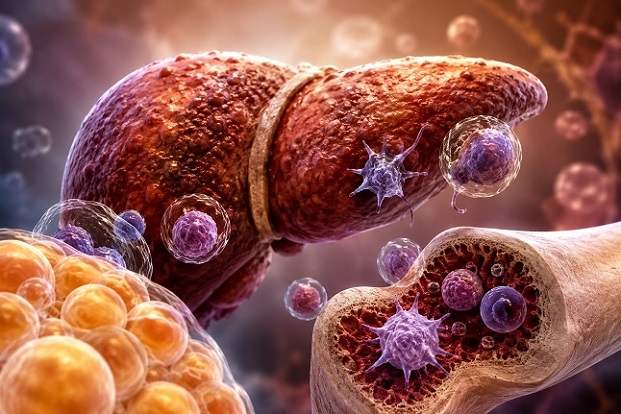 Researchers find that fat-derived stem cells may promote better long-term liver repair than bone marrow stem cells
in chronic liver fibrosis
A new study has found that mesenchymal stem cells derived from body fat, known as adipose-derived mesenchymal stem cells (AdMSCs), may outperform bone marrow-derived mesenchymal stem cells (BMSCs) in promoting liver regeneration months after treatment.
Comparing Two Powerful Stem Cell Sources
The research was conducted by scientists from the Shumakov National Medical Research Center of Transplantology and Artificial Organs, Sechenov First Moscow State Medical University, and Bauman Moscow State Technical University in Moscow, Russia.
Mesenchymal stem cells have attracted significant attention in regenerative medicine because they can reduce inflammation, support tissue repair, and stimulate healing. However, scientists have long debated whether stem cells taken from fat tissue or bone marrow provide better results for chronic liver disease.
To investigate this question, researchers induced severe liver fibrosis in male Wistar rats using carbon tetrachloride, a chemical known to cause extensive liver damage. The animals were then treated with either adipose-derived stem cells, bone marrow-derived stem cells, or a placebo solution and monitored for an impressive nine-month period.
Stem Cell Treatment Improved Survival
One of the most striking findings involved survival rates. Animals that received only placebo treatment experienced additional deaths during the first two weeks after fibrosis induction. In contrast, no extra mortality occurred among rats treated with either type of stem cell. This suggests that both stem cell therapies helped protect the animals from severe complications associated with liver injury.
The researchers also monitored blood markers commonly used to evaluate liver health, including albumin, alanine aminotransferase (ALT), aspartate aminotransferase (AST), and alkaline phosphatase (ALP).
Both stem cell treatments promoted recovery of these important indicators. Liver function gradually improved, and by later stages of the study there were few major differences between the two treatment groups in standard blood tests.
Fat-Derived Stem Cells Showed Better Tissue Regeneration
Although blood tests appeared similar between the groups, deeper examination of liver tissue revealed important differences.
Microscopic analysis showed that animals receiving adipose-derived stem cells displayed a more favorable pattern of liver repair. These rats had lower levels of damaging reticular fibers, structures that contribute t
o scar tissue formation in fibrosis. They also showed higher numbers of Ki67-positive cells, an important marker indicating active cell growth and regeneration.
The findings suggest that fat-derived stem cells may encourage healthier rebuilding of liver tissue long after treatment has been administered.
Interestingly, some short-term measurements initially favored bone marrow-derived stem cells. However, these advantages faded over time. By the end of the nine-month observation period, adipose-derived stem cells appeared to provide stronger support for long-term liver regeneration.
Why Fat-Derived Stem Cells May Work Better
Scientists believe adipose-derived stem cells may influence several biological pathways involved in tissue healing. Previous research has shown that these cells can reduce inflammation, regulate abnormal cell activity, decrease oxidative stress, and release regenerative molecules that help damaged liver cells recover.
An additional practical advantage is accessibility. Fat tissue is abundant in many individuals and can be obtained through relatively simple procedures, making adipose-derived stem cells easier to collect than bone marrow stem cells.
This
Medical News report highlights how stem cell source selection could become an important factor in designing future regenerative treatments for chronic liver diseases.
Conclusions
The study provides encouraging evidence that both adipose-derived and bone marrow-derived mesenchymal stem cells can help combat chronic liver fibrosis and improve survival following severe liver injury. However, the long-term results suggest that adipose-derived stem cells may offer superior regenerative benefits. Their ability to reduce fibrotic tissue changes and stimulate liver cell proliferation months after treatment indicates a stronger potential for sustained healing. While these findings were obtained in animal models and human studies are still needed, the results strengthen the growing belief that fat-derived stem cells could become a valuable future therapy for chronic liver fibrosis and other forms of progressive liver disease.
The study findings were published in the peer reviewed International Journal of Molecular Sciences.
https://www.mdpi.com/1422-0067/27/12/5340
For the latest on stem cell therapeutics, keep on logging to Thailand
Medical News.
Read Also:
https://www.thailandmedical.news/articles/stem-cell-therapies




 Share
Share
 Tweet
Tweet
 Share
Share

































