Nikhil Prasad Fact checked by:Thailand Medical News Team Jun 29, 2026 2 months, 3 days, 8 hours, 11 minutes ago
Medical News: A newly emerging sexually transmitted infection is quietly spreading across parts of the United States, raising concerns among public health experts and infectious disease specialists.
The condition, caused by a fungus known as Trichophyton mentagrophytes genotype VII (TMvii), has already triggered outbreaks and is proving more difficult to detect and treat than many common infections.
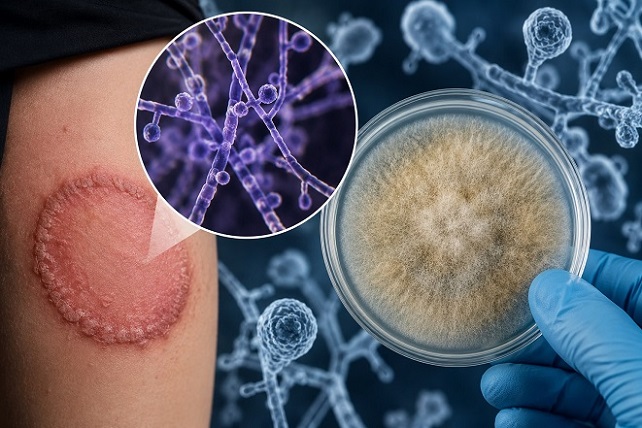 A newly emerging fungal STI called TMVII is spreading in the U.S., causing painful skin infections and raising concerns
among health experts
A Growing Health Concern
Researchers and infectious disease experts from the Duke Global Health Institute (DGHI), based at Duke University in North Carolina, along with collaboration from the U.S. Centers for Disease Control and Prevention (CDC), are closely monitoring the situation. Their efforts focus on raising awareness among clinicians and the general public about this unusual and potentially underdiagnosed infection.
The largest outbreak so far has been reported in Minnesota, where at least 30 confirmed cases have emerged since July 2025.
However, additional infections have also been detected in cities such as New York, suggesting that the fungus is spreading beyond localized clusters.
This
Medical News report highlights why experts believe the situation could escalate if early detection and awareness are not improved.
What Exactly Is TMviiI?
TMvii is not entirely new, but it is a recently recognized strain of a fungus that causes a type of ringworm infection. Unlike the mild ringworm many people are familiar with, TMvii infections tend to be far more aggressive and inflammatory.
The fungus primarily affects the skin and tends to produce painful, itchy, and inflamed lesions. These can appear as round, coin-shaped rashes or scaly patches and are often found on sensitive areas such as the genitals, buttocks, groin, arms, and legs.
Experts believe that the fungus may have been circulating undetected for some time, particularly in Southeast Asia, before being formally identified in 2023 among travelers returning to Europe.
How the Infection Spreads
One of the main concerns surrounding TMvii is how easily it spreads. The infection is primarily transmitted through direct skin-to-skin contact, especially during intimate or sexual activity. This makes it particularly prevalent among close-contact networks.
In addition, the fungus can also spread through contaminated personal items such as towels, clothing, bedding, razors, or shared objects used during sexual activity. While this form of transmission is considered less common, it still poses a risk, especially in shared living environments.
Although many of the reported cases have involved men who have sex with men, health experts strongly emphasize that anyone can become infected if exposed.
Symptoms
That Should Not Be Ignored
Symptoms of TMVviican vary widely, making it difficult to recognize without proper medical evaluation. Some individuals may initially develop mild redness or irritation that resembles common skin conditions. However, in more severe cases, the infection can progress into painful, pus-filled lesions or thick, inflamed rashes.
These symptoms can appear within a few days to several weeks after exposure.
Common warning signs include:
-Persistent or worsening rash
-Itching and burning sensation
-Painful or swollen skin lesions
-Rash in the genital or groin area
-Failure of over-the-counter creams to improve symptoms
Because TMvii can closely resemble other skin infections or sexually transmitted diseases, misdiagnosis is a major concern.
Challenges in Diagnosis and Treatment
Diagnosing TMVII is not always straightforward. Initial tests, such as a potassium hydroxide (KOH) preparation, can confirm a fungal infection, but identifying the exact strain often requires advanced molecular testing.
Treatment usually involves oral antifungal medications, particularly terbinafine. However, unlike typical fungal infections that may clear up quickly, TMvii often requires prolonged treatment. In some cases, patients may need medication for up to three months.
If left untreated or improperly managed, the infection can lead to scarring, persistent discomfort, and more severe complications.
Why Experts Are Concerned
According to researchers at DGHI, the biggest threat posed by TMvii is not just the infection itself, but the lack of awareness surrounding it. Many individuals may not recognize the symptoms or may delay seeking medical care due to stigma or misunderstanding.
Healthcare providers also face challenges due to limited testing capabilities and the rarity of the infection, which can lead to underreporting. Without accurate data, it becomes difficult for public health officials to track the spread and respond effectively.
Experts warn that these factors could allow the infection to spread quietly and potentially escalate into a larger public health issue.
Public Health Response and Prevention
Public health authorities, including the CDC and state health departments, are urging both clinicians and the public to remain vigilant. Early diagnosis and prompt treatment are key to controlling the spread.
Preventive measures include:
-Avoiding direct contact with suspicious skin lesions
-Not sharing personal items like towels or clothing
-Practicing good hygiene
-Seeking medical care for unusual or persistent rashes
Equally important is reducing stigma. Health officials stress that open communication and awareness are essential to encourage people to seek care without fear or embarrassment.
The Importance of Awareness
Raising awareness among both healthcare providers and the general public is considered the most effective strategy for preventing further spread.
Dermatology and sexual health clinics are being encouraged to strengthen surveillance and reporting systems.
Educational campaigns are also being developed to help people recognize symptoms early and understand when to seek medical attention.
Conclusion
The emergence of TMVII highlights how infectious diseases continue to evolve and challenge existing healthcare systems. While the infection is treatable, its ability to mimic other conditions, combined with limited awareness, makes it particularly concerning. Public health experts emphasize that early detection, proper diagnosis, and timely treatment are essential to prevent complications and reduce transmission. At the same time, addressing stigma and improving education will play a critical role in ensuring individuals seek care promptly. Without these measures, there is a real risk that TMVII could spread further and become a more significant public health threat in the near future.
References:
https://globalhealth.duke.edu/news/new-sti-spreading-us-what-you-should-know
https://www.sciencedirect.com/science/article/abs/pii/S073288932600177X
https://beaconbio.org/en/report/?reportid=a695c6bc-0b9d-423f-9e21-c1c780bf3116&eventid=a4bf9b08-ffb0-4182-8292-01ca90d0d728
https://onlinelibrary.wiley.com/doi/10.1111/ijd.17876
https://www.cdc.gov/ringworm/hcp/clinical-overview/tmvii.html
https://onlinelibrary.wiley.com/doi/10.1111/ddg.15837
For the latest on STIs, keep on logging to Thailand
Medical News.
Read Also:
https://www.thailandmedical.news/articles/stds




 Share
Share
 Tweet
Tweet
 Share
Share

































