Passion Fruit Leaf Extract Shows Powerful Effects Against Fatty Liver Disease in New Laboratory Study
Nikhil Prasad Fact checked by:Thailand Medical News Team Mar 26, 2026 6 months, 1 week, 3 days, 7 hours, 45 minutes ago
Medical News: A new scientific study is shedding light on the hidden medicinal potential of passion fruit leaves, revealing that compounds found in Passiflora edulis may help reduce fat buildup in the liver. This discovery could have major implications for tackling non-alcoholic fatty liver disease, a growing global health concern linked to obesity, poor diet, and sedentary lifestyles.
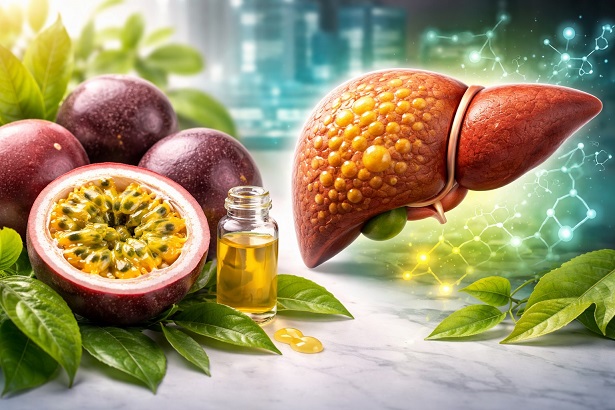 Passion fruit leaf extract shows strong potential in reducing liver fat and improving metabolic balance
Natural Plant Compounds Under Scientific Spotlight
Passion fruit leaf extract shows strong potential in reducing liver fat and improving metabolic balance
Natural Plant Compounds Under Scientific Spotlight
Researchers from the Research Group in Basic and Educational Sciences, Faculty of Basic Sciences and Technologies, University of Quindío, Colombia, and the Cardiovascular and Metabolic Diseases Biochemistry Research Group, Faculty of Health Sciences, University of Quindío, Colombia, conducted a detailed investigation into the effects of passion fruit leaf extract on liver cells.
The study focused on an ethanolic extract derived from the leaves, which was found to contain high levels of beneficial plant compounds. These included phenols, flavonoids, polysaccharides, tannins, and alkaloids. Among these, phenolic compounds were present in the highest concentration, highlighting strong antioxidant potential that may help protect liver cells and influence fat metabolism.
Strong Reduction in Liver Fat Accumulation
Using a laboratory model that mimics fatty liver disease, the researchers exposed liver cells to excess fat and then treated them with the plant extract. The results were striking and consistent across multiple tests.
Cells treated with the extract showed a significant reduction in fat accumulation compared to untreated cells. Intracellular triglyceride levels dropped by approximately 37.8 percent after 24 hours and increased further to about 53.7 percent after 48 hours. In addition, the amount of fat released by the cells into their surroundings was reduced by as much as 65.8 percent, indicating a strong regulatory effect on lipid handling.
This
Medical News report highlights that even cells treated only with the extract, without additional fat exposure, showed lower triglyceride levels than normal cells, suggesting that the extract actively improves how liver cells process fats.
Cholesterol Levels Also Significantly Lowered
Beyond triglycerides, the extract demonstrated a notable ability to reduce cholesterol levels. Intracellular cholesterol decreased by about 46 percent, while cholesterol released from the cells into the surrounding environment dropped by nearly 50 percent under certain conditions.
These findings are important because both triglycerides and cholesterol contribute to the progression of fatty liver disease. By lowering both, the extract may help slow or even prevent disease advancement.
How the Extract Targets Key Metabolic Pathways
To better u
nderstand how the extract works, researchers explored its interaction with proteins involved in fat metabolism. The results suggest that compounds in the extract activate PPARα, a key regulator that helps the liver break down fatty acids and use them for energy.
At the same time, the extract appears to suppress SREBP-1, a protein responsible for promoting fat production in the liver. By reducing the activity of this protein, the extract may help limit the formation of new fat within liver cells.
Several natural compounds such as luteolin, kaempferol, isoorientin, and lonicerin were identified as key contributors to these effects, showing strong potential in influencing these metabolic pathways.
Selective Effects and Safety Observations
The study also examined how the extract affects different cell types. Results showed that liver cancer cells were more sensitive to the extract compared to healthy cells, particularly after longer exposure periods. This suggests a level of selectivity that could be beneficial, although more research is needed.
While the laboratory model used provides valuable insights, it does not fully replicate human liver function. Therefore, further studies in animals and humans will be necessary to confirm these findings and determine practical applications.
Conclusion
The findings from this study provide compelling evidence that passion fruit leaf extract has strong lipid-lowering effects in liver cells. By significantly reducing triglycerides and cholesterol while influencing key metabolic regulators, the extract demonstrates a dual action of limiting fat production and enhancing fat breakdown. Although these results are promising, they are based on early-stage laboratory research, and further studies are needed to confirm safety and effectiveness in real-world human conditions.
The study findings were published in the peer reviewed journal: International Journal of Molecular Sciences.
https://www.mdpi.com/1422-0067/27/7/3003
For the latest on Herbs and Phytochemicals, keep on logging to Thailand
Medical News.
Read Also:
https://www.thailandmedical.news/articles/herbs-and-phytochemicals




 Share
Share
 Tweet
Tweet
 Share
Share