Nikhil Prasad Fact checked by:Thailand Medical News Team Apr 20, 2026 5 months, 2 weeks, 2 hours, 10 minutes ago
Medical News: A new scientific review is shedding light on a surprising player in the fight against one of the deadliest brain cancers—tiny biological particles known as extracellular vesicles. These microscopic carriers, loaded with genetic material, may hold the key to earlier diagnosis, better monitoring, and even more effective treatment of glioblastoma, the most aggressive form of brain cancer.
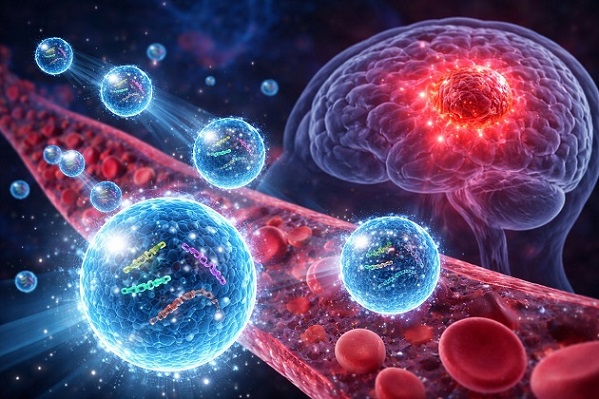 Tiny vesicles carrying genetic signals could revolutionize how deadly brain cancer is detected and treated
Understanding a Deadly Cancer
Tiny vesicles carrying genetic signals could revolutionize how deadly brain cancer is detected and treated
Understanding a Deadly Cancer
Glioblastoma is a fast-growing brain tumor with a grim outlook. Even with surgery, radiation, and chemotherapy, most patients survive only about 15 months. One of the biggest challenges doctors face is that current imaging tools like MRI scans cannot reliably tell whether a tumor is truly growing or just reacting to treatment.
On top of that, the brain has a natural defense system called the blood–brain barrier, which blocks many drugs from reaching tumors. This makes treatment even harder and contributes to resistance.
What Are Extracellular Vesicles?
Extracellular vesicles, or EVs, are tiny bubble-like structures released by cells. Think of them as microscopic delivery vehicles that travel through the body carrying important biological messages.
Inside these vesicles are molecules called microRNAs (miRNAs), which can switch genes on or off. These miRNAs are powerful regulators and can influence how cancer grows, spreads, and resists treatment.
How These Tiny Messengers Drive Cancer
Researchers have found that certain miRNAs inside EVs actually help glioblastoma become more aggressive. For example, one molecule called miR-21 promotes tumor growth, blood vessel formation, and even suppresses the immune system, allowing cancer to thrive.
Other miRNAs help cancer cells invade surrounding brain tissue or become resistant to chemotherapy. Some even reprogram nearby immune cells to support tumor growth instead of fighting it.
At the same time, there are “good” miRNAs that act as tumor suppressors. These can slow cancer growth, reduce spread, and make treatments more effective. Unfortunately, these beneficial molecules are often reduced in glioblastoma patients.
A Breakthrough in Diagnosis Without Surgery
One of the most exciting findings is the potential to use EV-associated miRNAs as biomarkers. Because these vesicles circulate in blood and cerebrospinal fluid, doctors may be able to detect brain tumors using simple liquid biopsies instead of invasive surgery.
For instance, levels of miR-21 in cerebrospinal fluid can be up to 10 times higher in glioblastoma patients and can identify the disease with high accuracy.
This
Medical News report highlights that combining multiple miRNAs into a panel could further improve diagnosis
and even help track how well treatments are working over time.
A New Way to Deliver Treatment
Beyond diagnosis, EVs could also be used as treatment tools. Scientists are exploring ways to engineer these vesicles to carry therapeutic molecules directly into the brain.
Because EVs can naturally cross the blood–brain barrier, they offer a major advantage over traditional drug delivery methods. Researchers are testing ways to load them with tumor-suppressing miRNAs or molecules that block harmful ones.
In early studies, engineered EVs delivering beneficial miRNAs have slowed tumor growth and even improved survival in animal models.
Links to Brain Diseases Beyond Cancer
Interestingly, some of the same miRNAs involved in glioblastoma are also linked to neurodegenerative diseases like Alzheimer’s and Parkinson’s. This suggests that common biological pathways may connect these conditions, opening the door for broader medical breakthroughs.
Challenges Still Remain
Despite the promise, several hurdles must be overcome. Scientists still need to standardize how EVs are collected and analyzed. Large clinical trials are required to confirm their effectiveness, and manufacturing these vesicles at scale remains a challenge.
There are also safety concerns, such as how the body’s immune system might react to engineered vesicles.
Conclusion
The discovery of extracellular vesicle-associated microRNAs marks a significant shift in how scientists understand and potentially treat glioblastoma. These tiny biological messengers could revolutionize cancer care by enabling non-invasive diagnosis, real-time disease monitoring, and highly targeted therapies that can cross the brain’s protective barrier. While much of the research is still in early stages, the growing body of evidence suggests that EV-based strategies may eventually transform outcomes for patients facing this devastating disease. Continued research, collaboration, and clinical validation will be essential to bring these promising innovations from the laboratory into real-world medical practice.
The study findings were published in the peer reviewed journal: Cancers.
https://www.mdpi.com/2072-6694/18/8/1269
For the latest cancer research, keep on logging to Thailand
Medical News.
Read Also:
https://www.thailandmedical.news/articles/cancer




 Share
Share
 Tweet
Tweet
 Share
Share

































