Nikhil Prasad Fact checked by:Thailand Medical News Team Apr 05, 2026 4 months, 3 weeks, 6 days, 11 hours, 38 minutes ago
Medical News: A new scientific discovery is shedding light on how COVID-19 may quietly disrupt the body at a cellular level, even beyond the lungs. Researchers have found that a small viral component known as the “envelope protein” can directly interfere with the energy systems inside human cells, potentially helping the virus survive and multiply more efficiently.
 Scientists uncover how a tiny COVID-19 protein disrupts cell energy and metabolism
A Hidden Player Inside Cells
Scientists uncover how a tiny COVID-19 protein disrupts cell energy and metabolism
A Hidden Player Inside Cells
The study focused on a structural component of the SARS-CoV-2 virus called the envelope or “E” protein. Although tiny, this protein appears to play a surprisingly powerful role in damaging human cells. Scientists discovered that once inside the body, this protein does not just assist in building new virus particles—it actively targets mitochondria, the structures inside cells responsible for producing energy.
The research team, led by experts from the Borch Department of Medicinal Chemistry and Molecular Pharmacology at Purdue University, the Purdue Institute of Inflammation, Immunology, and Infectious Disease, the University of Virginia School of Medicine’s Division of Hematology and Oncology, and the Richmond Veterans Administration Medical Center, conducted a series of advanced imaging and metabolic studies to understand this process.
Mitochondria Under Attack
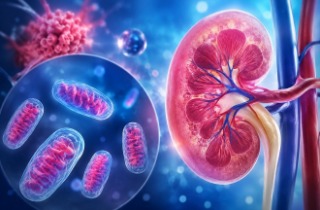
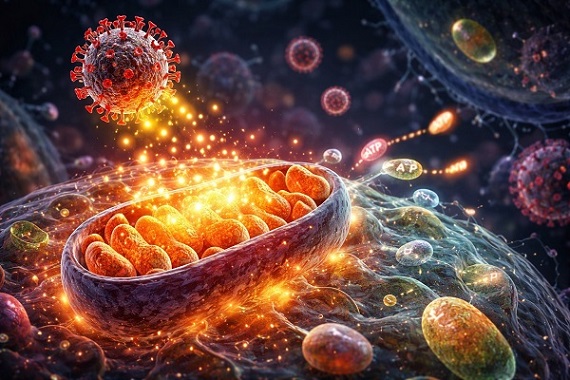
Mitochondria are often described as the “power plants” of cells because they generate the energy needed for survival and function. The researchers found that the viral E protein attaches itself to these structures and alters their shape and function.
This
Medical News report highlights that the protein reduces the efficiency of energy production by disrupting what is known as the electron transport chain. This system is essential for producing ATP, the molecule that fuels most cellular activities. When this process is disturbed, cells struggle to maintain normal function.
The study also showed that mitochondria exposed to the viral protein had a lower membrane potential, meaning they were less capable of generating energy. At the same time, harmful molecules called reactive oxygen species (ROS) increased significantly.
Dangerous Stress Without Cell Death
Interestingly, while the viral protein increased oxidative stress inside the mitochondria, it did not immediately kill the cells. Instead, the damage appeared to remain contained within the mitochondria.
This finding is important because it suggests the virus may be keeping host cells alive just long enough to continue replicating. By avoiding immediate cell death, the virus can maintain a stable environment to produce more copies of itself.
Metabolism Rewired for Viral Survival
One of the most striking findings from the study was how deeply the virus can reprogram the way human cells genera
te and use energy. Instead of simply damaging cells, the SARS-CoV-2 envelope protein appears to strategically reshape metabolic pathways to favor viral survival and replication.
The researchers observed clear disruptions in glycolysis, the process by which cells break down glucose to produce quick energy. Several key intermediates in this pathway—including phosphoenolpyruvate and other phosphorylated sugar molecules—were significantly reduced. These molecules are not only vital for energy production but also serve as building blocks for many essential cellular functions. Their depletion suggests that the virus is interfering with the normal flow of energy production at a very early stage.
At the same time, the tricarboxylic acid (TCA) cycle, which takes place inside the mitochondria and generates long-term energy, was also impaired. Critical intermediates such as 2-oxoglutarate were found to be reduced, indicating that the mitochondria were no longer functioning at full capacity. This disruption creates a kind of metabolic bottleneck, where cells cannot efficiently convert nutrients into usable energy.
To compensate for this energy shortfall, cells appear to shift their metabolic strategy. The study found a noticeable increase in glutamine levels, an amino acid that can act as an alternative fuel source. Glutamine can feed into the TCA cycle and help replenish depleted intermediates, a process known as anaplerosis. This suggests that cells are attempting to adapt to the viral attack by rerouting their metabolism. However, this adaptation may actually benefit the virus, as glutamine-driven metabolism is often associated with rapid cell activity and viral replication.
In addition to these changes, the researchers detected widespread disturbances in lipid metabolism, which plays a crucial role in maintaining cellular structure and energy balance. One of the most important findings was a significant reduction in cardiolipin, a specialized lipid found almost exclusively in the inner membrane of mitochondria. Cardiolipin is essential for maintaining the structure and stability of the electron transport chain, the system responsible for producing most of the cell’s energy.
With lower cardiolipin levels, the integrity of the mitochondrial membrane is compromised, leading to inefficient energy production and further weakening of the cell. Beyond cardiolipin, multiple other lipid classes—including lysophospholipids and phosphatidylcholines—were also reduced, indicating a broad collapse in lipid homeostasis.
The study also revealed subtle but important shifts in the cell’s antioxidant systems. While some protective molecules like glutathione increased, others such as vitamin C-related compounds decreased. This imbalance suggests that cells are under oxidative stress but are struggling to maintain proper defense mechanisms.
Taken together, these findings paint a picture of a virus that does not simply hijack cells but re-engineers their internal chemistry. By disrupting normal energy pathways, forcing reliance on alternative fuels like glutamine, and weakening mitochondrial structure through lipid depletion, the virus creates an environment that supports its replication while gradually exhausting the host cell.
Broader Implications for COVID-19 and Long COVID
These findings help explain why COVID-19 can affect multiple organs and lead to long-term symptoms. By disrupting mitochondrial function, the virus may cause widespread energy deficits in the body, contributing to fatigue, inflammation, and prolonged illness.
The study also suggests that targeting the E protein could be a promising strategy for future treatments. By blocking its interaction with mitochondria, scientists may be able to reduce the virus’s ability to manipulate host cells.
Conclusion
The discovery that a small viral protein can directly sabotage the energy systems of human cells represents a major step forward in understanding COVID-19. It reveals how the virus goes beyond simple infection and actively reshapes cellular function to its advantage. By interfering with metabolism, increasing oxidative stress, and preserving host cells for replication, the virus creates an environment that supports its survival while weakening the body. These insights could pave the way for new therapies aimed at protecting cellular energy systems and reducing long-term complications.
The study findings were published in the peer reviewed Journal of Biological Chemistry
https://www.jbc.org/article/S0021-9258(26)00289-9/fulltext
For the latest COVID-19 News, keep on logging to Thailand
Medical News.
Read Also:
https://www.thailandmedical.news/articles/coronavirus
https://www.thailandmedical.news/articles/long-covid




 Share
Share
 Tweet
Tweet
 Share
Share