Nikhil Prasad Fact checked by:Thailand Medical News Team Feb 08, 2026 6 months, 3 weeks, 1 day, 11 hours, 19 minutes ago
Medical News: Glioblastoma is one of the most aggressive and deadly forms of brain cancer, with limited treatment options and very poor survival rates. Now, new research suggests that metformin, a widely used and inexpensive diabetes drug, could help slow down this deadly cancer by switching off key survival signals inside tumor cells.
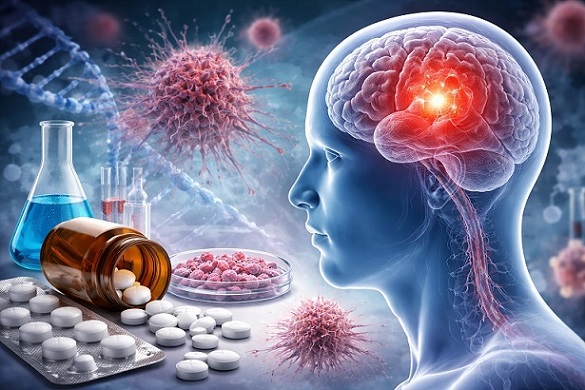 Metformin may slow aggressive brain cancer by blocking key survival signals inside tumor cells.
Study Led by International Research Teams
Metformin may slow aggressive brain cancer by blocking key survival signals inside tumor cells.
Study Led by International Research Teams
The research was carried out by scientists from the Department of Pharmacy, Health and Nutritional Sciences at the University of Calabria in Italy, the Department of Neurosurgery at St. Vincent’s Hospital, College of Medicine, The Catholic University of Korea, and the IRCCS Istituto delle Scienze Neurologiche di Bologna in Italy. Their findings shed new light on how metformin interferes with glioblastoma growth and spread.
Why Glioblastoma Is So Hard to Treat
Glioblastoma grows rapidly, spreads into surrounding brain tissue, and almost always returns after surgery, radiation, and chemotherapy. Most patients survive only about 15 months after diagnosis. A major reason for this poor outcome is that glioblastoma cells activate powerful internal systems that help them resist treatment and avoid cell death.
How Metformin Affects Cancer Cells
In this
Medical News report, researchers focused on survivin, a protein that helps cancer cells stay alive, multiply, and resist chemotherapy and radiation. Survivin levels are especially high in glioblastoma and are linked to faster tumor growth and treatment failure.
Laboratory experiments using human glioblastoma cells showed that metformin significantly reduced cancer cell growth, movement, and ability to invade nearby tissue. The drug activated a natural energy-sensing pathway in cells known as AMPK. Once AMPK was switched on, it activated another protective protein called FoxO3a.
Shutting Down a Key Survival Protein
FoxO3a then moved into the cell nucleus, where it directly blocked the gene that produces survivin. As survivin levels dropped, glioblastoma cells lost their ability to survive, spread, and resist treatment. When researchers artificially blocked FoxO3a, survivin levels rose again and the cancer cells regained strength, confirming how critical this pathway is.
Evidence From Animal Studies
The team also tested metformin in mice implanted with human glioblastoma tumors. Brain tissue from metformin-treated mice showed higher FoxO3a levels and much lower survivin levels compared to untreated mice. Importantly, the dose of metformin used was similar to doses already prescribed safely to people with diabetes.
What This Means for Patients
Because metformin can cross the blood–brain barrier and has a long safety record, researchers believe it could be repurposed as an add-on therapy alongs
ide existing treatments like chemotherapy and radiation. It may also work well with newer survivin-targeting vaccines currently being tested in clinical trials.
Conclusions
The findings reveal that metformin weakens glioblastoma by activating a natural tumor-suppressing pathway that shuts down survivin, a key protein cancer cells depend on to survive and spread. This discovery provides a clearer explanation of how metformin slows tumor growth and highlights survivin as an important treatment target. While more clinical studies are needed, the research strongly supports further testing of metformin as a low-cost, widely available addition to glioblastoma therapy.
The study findings were published in the peer reviewed journal: Cells
https://www.mdpi.com/2073-4409/15/3/310
For the latest research on Glioblastoma, keep on logging to Thailand
Medical News.
Read Also:
https://www.thailandmedical.news/articles/med-news
https://www.thailandmedical.news/articles/cancer




 Share
Share
 Tweet
Tweet
 Share
Share

































