Nikhil Prasad Fact checked by:Thailand Medical News Team Apr 21, 2026 5 months, 1 week, 5 days, 23 hours, 32 minutes ago
Medical News: A new study has uncovered how inflammation during pregnancy may silently reshape a baby’s brain at the genetic level, potentially increasing the risk of lifelong neurological problems. The findings provide fresh insight into why some newborns develop serious brain injuries even before or during birth.
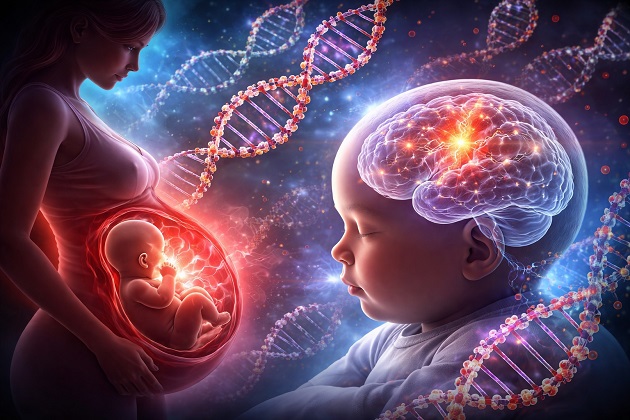 Maternal inflammation triggers deep genetic changes in newborn brain cells, raising long-term neurological risks
Hidden Changes Begin Before Birth
Maternal inflammation triggers deep genetic changes in newborn brain cells, raising long-term neurological risks
Hidden Changes Begin Before Birth
Scientists have long known that infections or inflammation in pregnant mothers can raise the risk of conditions like hypoxic ischemic encephalopathy (HIE), a type of brain injury caused by lack of oxygen. However, the exact biological mechanisms have remained unclear.
In this new research, scientists examined brain immune cells - called monocytes -in newborn mice exposed to maternal inflammation. What they discovered was striking: widespread changes in DNA methylation, a process that controls how genes are switched on or off without altering the DNA sequence itself. These changes were not minor. They affected both nuclear DNA and mitochondrial DNA, suggesting that maternal inflammation leaves a deep molecular imprint on the developing brain.
A Shift in Brain and Immune Function
The study revealed that more than 140 genes were altered through methylation changes. Most of these genes were “hypermethylated,” meaning their activity was likely suppressed.
Many of these genes are crucial for:
-Brain development
-Immune system responses
-Structural formation of tissues
-Cellular stress regulation
Key genes involved in inflammation and immune signaling - such as those linked to microglial activation and cytokine regulation - were significantly affected. These immune cells are the brain’s first responders to injury, and altering their behavior could make the brain more vulnerable to damage.
This
Medical News report highlights that such epigenetic changes may explain why babies exposed to maternal inflammation have a much higher risk of neurological disorders, including cerebral palsy, epilepsy, and developmental delays.
Mitochondria Also Take a Hit
One of the most surprising findings was the impact on mitochondrial DNA. Mitochondria are the energy-producing structures inside cells, and their proper function is essential for brain development.
The researchers found that most mitochondrial DNA sites showed increased methylation after maternal inflammation. This suggests a potential disruption in energy production and cellular metabolism in the newborn brain.
Such changes could weaken the brain’s ability to cope with stress, particularly during oxygen deprivation events like birth complications.
Inflammation’s Lasting Imprint
Interestingly,
when researchers compared simple maternal inflammation to cases where inflammation was combined with oxygen deprivation, they found very little difference in DNA methylation patterns.
This suggests that inflammation alone may be the primary driver of these genetic changes. In other words, the damage may begin even before any birth-related complications occur.
Further analysis showed that affected genes were linked to:
-Craniofacial development
-Neural differentiation
-Cellular growth and repair
-Stress and inflammatory signaling pathways
These findings indicate that maternal inflammation may disrupt multiple systems at once, creating a cascade of developmental risks.
Why This Matters
The implications of this research are significant. Current treatments for neonatal brain injury, such as therapeutic hypothermia, are limited and must be applied within a narrow time window after birth.
By identifying early molecular changes caused by maternal inflammation, scientists may be able to develop preventive strategies or targeted therapies that intervene before irreversible damage occurs.
Conclusion
This study provides compelling evidence that maternal inflammation can fundamentally alter the genetic regulation of brain cells in newborns. By triggering widespread DNA methylation changes in both nuclear and mitochondrial genomes, inflammation may prime the brain for injury and long-term dysfunction. These findings deepen our understanding of how prenatal conditions shape neurological outcomes and highlight the urgent need for early detection and intervention strategies. Future research will be crucial in determining whether these epigenetic changes can be reversed or prevented, offering hope for reducing the burden of neurodevelopmental disorders linked to maternal health.
The researchers involved in this study were from Nemours Children’s Hospital, Nemours Children’s Health, Sidney Kimmel Medical College at Thomas Jefferson University, University of Delaware, Delaware Data Science Institute, Center for Bioinformatics and Computational Biology, and the School of Marine Science and Policy at the University of Delaware.
The study findings were published in the peer reviewed journal: Cells.
https://www.mdpi.com/2073-4409/15/8/714
For the latest on maternal inflammation and its effects on the unborn, keep on logging to Thailand
Medical News.
Read Also:
https://www.thailandmedical.news/articles/news




 Share
Share
 Tweet
Tweet
 Share
Share

































