Nikhil Prasad Fact checked by:Thailand Medical News Team Mar 31, 2026 6 months, 4 days, 1 hour, 41 minutes ago
Medical News: A new scientific study has uncovered promising evidence that a natural plant extract derived from bitter melon may help protect the gut from the harsh side effects of chemotherapy. The research focuses on Momordica charantia, a plant widely consumed across Asia, and its potential to reduce intestinal damage caused by the widely used cancer drug 5-fluorouracil (5-FU).
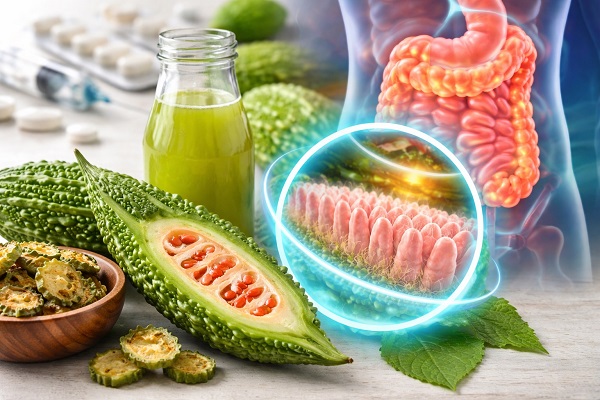 Natural bitter melon extract shows powerful protection against chemotherapy-related intestinal damage
Why Chemotherapy Damages the Gut
Natural bitter melon extract shows powerful protection against chemotherapy-related intestinal damage
Why Chemotherapy Damages the Gut
Chemotherapy drugs like 5-FU are designed to kill rapidly dividing cancer cells, but they also harm healthy cells—especially those lining the digestive tract. This leads to a painful condition known as intestinal mucositis, which affects up to 80 percent of patients. Symptoms include diarrhea, inflammation, and severe discomfort that can even force doctors to reduce or stop treatment.
According to the study, this damage occurs through a combination of oxidative stress, inflammation, and breakdown of the intestinal barrier. The gut lining becomes fragile, allowing harmful substances to pass through more easily.
Researchers and Study Design
The research was conducted by scientists from multiple institutions including China Medical University (Taiwan), the Chinese Medicine Research Center at China Medical University (Taiwan), Nihon Pharmaceutical University (Japan), and Asia University (Taiwan).
To investigate, researchers used a mouse model where intestinal injury was triggered using 5-FU. They then administered an ethanolic extract of bitter melon fruit at different doses to evaluate its protective effects.
Remarkable Improvements in Symptoms
The results were striking. Mice treated with the bitter melon extract showed significantly less weight loss, reduced diarrhea, and improved overall condition compared to untreated mice.
As seen in the experimental observations, untreated mice experienced rapid weight loss and severe diarrhea, while treated mice maintained better health and activity levels.
The extract also helped prevent shortening of the colon, a clear sign of inflammation-related damage.
Healing the Gut Structure
Microscopic analysis revealed that chemotherapy caused severe destruction of intestinal structures, including collapsed villi and damaged epithelial cells. However, treatment with the bitter melon extract helped restore these structures.
Treated mice had longer, healthier intestinal villi and increased cell regeneration. This indicates that the extract not only protects but may actively support healing of the gut lining.
Powerful Anti-Inflammatory Effects
Inflammation plays a central role in chemotherapy-induced damage. The study found that bitter melon extract significantly reduced levels of key inflammatory molecules such as TNF-α, IL-1β, and IL-6.
This
Medical News report highlights that the extract works by suppressing major inflammatory pathways, including NF-κB and MAPK signaling, which are known to drive tissue damage during chemotherapy.
Fighting Oxidative Stress at Its Source
Another key finding was the extract’s ability to combat oxidative stress. Chemotherapy increases harmful reactive oxygen species (ROS), which damage cells.
The study showed that bitter melon extract reduced markers of oxidative damage while boosting natural antioxidants like glutathione. It also activated protective pathways such as Nrf2 and HO-1, which help cells defend themselves against stress.
Protecting Cells from Death
Chemotherapy triggers cell death in the gut lining. The researchers found that the extract reduced levels of pro-apoptotic proteins while increasing protective ones. This means fewer cells were dying, helping preserve the integrity of the intestinal barrier.
Conclusion
The findings suggest that bitter melon extract offers a multi-layered defense against chemotherapy-induced intestinal injury by reducing inflammation, controlling oxidative stress, preserving gut structure, and preventing excessive cell death. Importantly, these protective effects were achieved without interfering with the intended action of chemotherapy, making it a promising supportive therapy. However, while the results are highly encouraging, further clinical studies in humans are necessary to confirm safety, optimal dosing, and real-world effectiveness before it can be widely recommended in cancer care.
The study findings were published in the peer reviewed journal: Antioxidants.
https://www.mdpi.com/2076-3921/15/4/431
For the latest on treating adverse effects form chemotherapy, keep on logging to Thailand
Medical News.
Read Also:
https://www.thailandmedical.news/articles/cancer
https://www.thailandmedical.news/articles/herbs-and-phytochemicals
Medical Disclaimer: All content published by Thailand Medical News is based on scientific research and is intended for informational and educational purposes only. It is not medical advice, diagnosis, or treatment. Readers must not attempt to use, apply, or experiment with any protocols, compounds, or therapies mentioned without first consulting a qualified and licensed medical doctor. Many findings discussed are experimental or preliminary, and only a licensed healthcare professional can determine what is safe and appropriate for an individual’s specific medical condition.




 Share
Share
 Tweet
Tweet
 Share
Share

































