Nikhil Prasad Fact checked by:Thailand Medical News Team Jan 23, 2026 8 months, 1 week, 5 days, 8 hours, 21 minutes ago
Medical News: A new scientific review has uncovered a surprisingly simple molecule that may explain why regular physical activity and good quality sleep are both so powerful for brain health. Researchers have identified lactate, once wrongly dismissed as a useless waste product, as a central biological link connecting exercise, sleep, and improved thinking and memory. This
Medical News report highlights findings that could reshape how people understand daily habits that protect the brain.
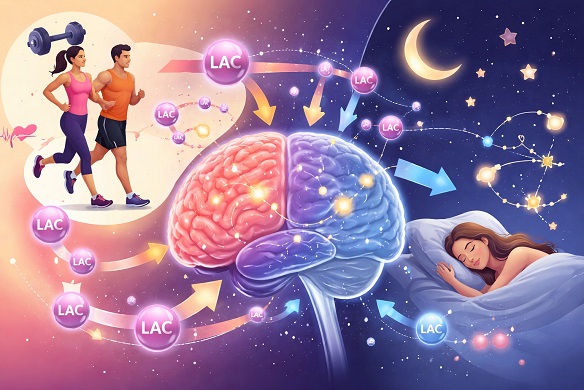 New research shows how exercise and sleep work together through lactate to protect memory and brain health
Researchers Behind the Discovery
New research shows how exercise and sleep work together through lactate to protect memory and brain health
Researchers Behind the Discovery
The study was conducted by scientists from the Division of Sports Science and Physical Education at Tsinghua University in Beijing, the IDG McGovern Institute for Brain Research at Tsinghua University, and the Saw Swee Hock School of Public Health at the National University of Singapore. Their work brings together neuroscience, exercise science, and sleep biology into a single unifying framework.
Lactate No Longer Just a Waste Product
For decades, lactate was blamed for muscle fatigue and soreness after exercise. The new review explains that lactate is actually a valuable fuel and signaling molecule in the brain. During physical activity, muscles produce lactate that travels through the bloodstream and enters the brain. At the same time, brain support cells known as astrocytes also produce lactate locally. Neurons then use this lactate as a fast and efficient energy source, especially during intense mental activity.
How Exercise Primes the Brain
The researchers explain that moderate to high intensity exercise causes a surge of lactate that switches on brain growth pathways. Lactate helps increase levels of brain derived neurotrophic factor, a key protein that strengthens connections between brain cells and supports learning and memory. It also reduces harmful brain inflammation by calming immune cells in the brain. Importantly, exercise increases the brain’s ability to transport and use lactate, effectively preparing it for later recovery during sleep.
The Hidden Role of Lactate During Sleep
Sleep is not a passive resting state. The review shows that during deep slow wave sleep, lactate levels in the brain naturally rise again. This nighttime lactate supply fuels memory consolidation, allowing the brain to stabilize and store information learned during the day. Lactate also supports the brain’s waste clearance system, which removes toxic byproducts linked to conditions like Alzheimer’s disease.
A Powerful 24-Hour Brain Cycle
The scientists describe this interaction as the Lactate Nexus. Exercise during the day produces a strong lactate signal that primes the brain’s energy systems and gene activity. Sleep at night then uses lactate to repair, clean, and reorganize brain networks. Together, these processes create a continuous cycle that supports long term cognitive resilience a
nd healthier brain aging.
Conclusions
The findings strongly suggest that the brain benefits of exercise and sleep are deeply connected at a molecular level. Lactate acts as a bridge that links movement and rest into a single protective system for memory and cognition. Understanding this connection may help shape future lifestyle guidelines and treatments aimed at preventing cognitive decline, especially as populations age worldwide.
The study findings were published in the peer reviewed journal: Biomedicines.
https://www.mdpi.com/2227-9059/14/1/253
For the latest on Brain Health, keep on logging to Thailand
Medical News.
Read Also:
https://www.thailandmedical.news/articles/health-news




 Share
Share
 Tweet
Tweet
 Share
Share

































