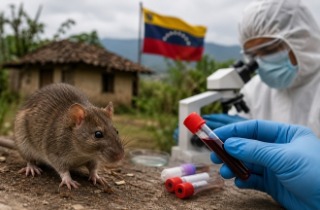
Study Finds That Mites Can Be Vectors for Hantaviruses from Rodents and Can Also Serve as Long-Term Viral Reservoirs
Nikhil Prasad Fact checked by:Thailand Medical News Team May 14, 2026 3 months, 5 days, 10 hours, 39 minutes ago
Medical News: Scientists in South Korea have made a surprising and potentially troubling discovery after detecting dangerous hantaviruses inside tiny parasitic mites collected from wild rodents. The finding is raising new concerns that these mites may play a much larger role in spreading deadly diseases than previously believed.
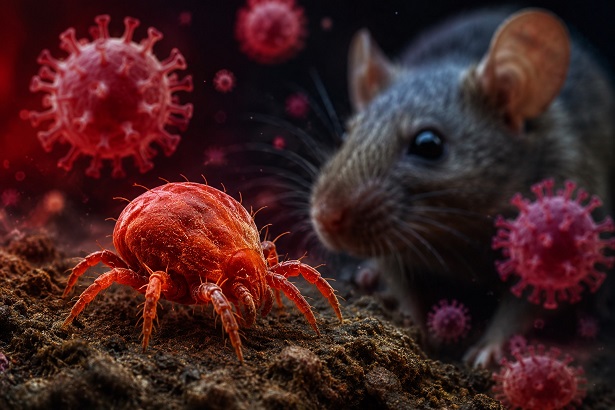 Scientists discover dangerous hantaviruses hiding inside parasitic mites in South Korea, raising fears of a new
transmission pathway
Researchers from the Korea Disease Control and Prevention Agency, the Armed Forces Medical Research Institute, and the Division of Vectors and Parasitic Diseases in the Republic of Korea conducted the nationwide investigation after collecting thousands of trombiculid mites from wild rodents across 17 regions of South Korea.
The study focused on Orthohantaviruses, a group of viruses known to cause hemorrhagic fever with renal syndrome (HFRS), a serious disease that can damage the kidneys and lead to internal bleeding. In severe cases, hantavirus infections can become fatal.
Tiny Mites Carrying Dangerous Viruses
The researchers collected 4,963 mites from 128 wild rodents during field studies conducted in April 2025. Out of 1,660 mites tested, seven pools were found carrying hantavirus genetic material. The viruses identified included Orthohantavirus hantanense and Orthohantavirus jejuense.
What shocked researchers most was that some infected mites were found on rodents that tested negative for the virus. This suggests the mites may be capable of carrying and maintaining the virus independently rather than simply picking it up from infected animals.
Scientists say this discovery could point to an entirely new transmission cycle for hantaviruses.
Traditionally, hantaviruses are believed to spread mainly through exposure to infected rodent urine, saliva, or droppings that become airborne. Humans can become infected when they inhale contaminated particles. However, the new findings indicate that mites themselves could potentially act as reservoirs or vectors for the virus.
Why This Discovery Matters
South Korea reports hundreds of HFRS cases every year. According to the study, more than 400 cases are reported annually on average, with infections peaking between October and December. While the fatality rate is relatively low compared to some other viral diseases, severe cases can still be deadly and require hospitalization.
The mites involved in the study are already well known as carriers of scrub typhus, another dangerous infectious disease common in Asia. These parasites feed on rodents during their larval stage before dropping into soil to continue their life cycle.
Researchers now believe the same mites may also be silently helping hantaviruses survive and spread in nature.
One especially concerning detail was the relatively high infection rate found in the mites. The researchers said the hantavirus infection rate detected in the mites was higher than infection rates previously reported for some other maj
or vector-borne diseases in Korea. That means the virus may be more widespread in mite populations than scientists had realized.
This
Medical News report highlights how the discovery could force experts to rethink the way hantaviruses circulate between animals, insects, and humans.
Host Independent Infection Raises New Questions
The study found evidence suggesting that the mites may maintain the virus even without infected rodents nearby. Researchers described this as “host-independent infection.”
This finding is important because the mites only feed on a host once during their larval stage. Scientists suspect the virus could possibly be passed from one generation of mites to the next through eggs, a process known as transovarial transmission.
If confirmed in future studies, this would mean the mites themselves could serve as long-term viral reservoirs in the environment.
The researchers also noted that similar findings have previously been reported in China and the United States, where hantaviruses were detected in mites collected from soil and wild rodents.
More Research Still Needed
Although the discovery is significant, scientists cautioned that many questions remain unanswered. The study only detected viral RNA and did not prove whether the virus inside the mites was fully infectious.
Researchers also said further studies are needed to determine whether these mites can directly transmit hantaviruses to humans or animals.
Still, the findings are considered highly important because they challenge long-standing assumptions about how hantaviruses spread in nature. Scientists now plan to investigate free-living mites in soil environments and study whether the virus can survive through multiple mite generations.
The conclusions of the study strongly suggest that trombiculid mites may play a far more important role in hantavirus ecology than previously recognized. If future research confirms that these mites can independently maintain and spread the virus, public health strategies for hantavirus prevention may need major revisions. The findings also raise concerns about hidden environmental transmission routes that could increase human exposure risks, especially in rural farming regions where contact with rodents and mites is common.
The study findings were published in the peer reviewed journal: Pathogens.
https://www.mdpi.com/2076-0817/14/12/1260
For the latest hantavirus news, keep on logging to Thailand
Medical News.
Read Also:
https://www.thailandmedical.news/articles/hantavirus-news




 Share
Share
 Tweet
Tweet
 Share
Share