Nikhil Prasad Fact checked by:Thailand Medical News Team May 29, 2026 3 months, 4 days, 12 hours, 31 minutes ago
Medical News: Scientists in China have discovered that a drug already approved for Parkinson’s disease could help block the sexual transmission of Ebola virus, opening up a possible new strategy against one of the world’s deadliest infections. The drug, called tolcapone, was found to interfere with special protein fibers in semen that help the Ebola virus infect human cells more efficiently.
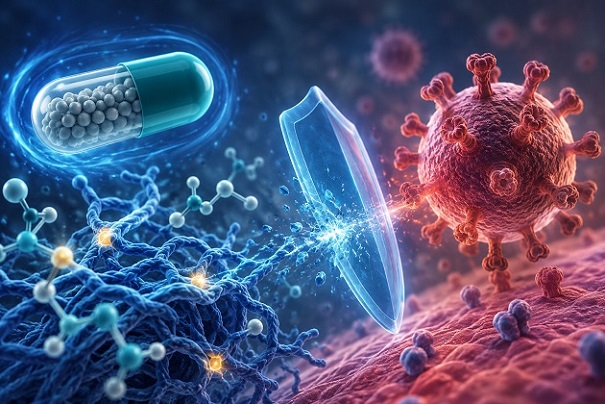 Scientists discover that the Parkinson’s drug tolcapone may block Ebola transmission by targeting virus-enhancing
proteins found in semen
The research was carried out by scientists from the Guangdong Provincial Key Laboratory of New Drug Screening, School of Pharmaceutical Sciences at Southern Medical University in Guangzhou, the Laboratory Medicine Center at Nanfang Hospital of Southern Medical University in Guangzhou, and the School of Pharmacy at Guangdong Medical University in Dongguan, China.
Why Sexual Transmission of Ebola Matters
Ebola virus is best known for spreading through direct contact with infected bodily fluids during outbreaks. However, scientists have increasingly become concerned about another route of infection—sexual transmission. Studies have shown that Ebola virus can remain in semen for months or even years after a person appears to recover.
This long persistence creates a hidden danger because survivors who no longer feel sick may still unknowingly spread the virus. Health experts have warned that sexual transmission could trigger new outbreaks even after epidemics officially end.
Researchers have also discovered that semen contains naturally occurring amyloid fibers that can dramatically boost viral infections. One of the most important of these fibers is known as SEVI, short for “semen-derived enhancer of viral infection.” These fibers help viruses attach to human cells and invade them more easily.
Tolcapone Blocks Dangerous Amyloid Fibers
The scientists found that tolcapone strongly prevented the formation of SEVI fibers. Laboratory tests showed that the drug stopped the proteins from clumping together into the long sticky fibers that normally help Ebola infect cells.
Microscopic imaging revealed that untreated samples formed thick mature fibrils, while samples exposed to tolcapone produced only tiny fragments and disorganized particles. The drug also delayed the entire fibril formation process, showing that it interrupted the earliest stages of fiber growth.
Further experiments showed that tolcapone changed the electrical surface charge of the amyloid fibers. Normally, these fibers carry a positive charge that helps pull viruses toward human cells. Tolcapone weakened this charge, making it harder for Ebola particles to bind and enter cells.
The researchers discovered that the drug attached itself directly to important regions of the SEVI protein, preventing the proteins from assembling into infection-enhancing structures.
Ebola Infection Was Dramatically Reduced
The study found that when tolcapone was added, Ebola pseudoviruses lo
st much of their ability to infect different types of human cells, including cervical cells, lung cells, immune cells, and liver cells.
Importantly, the drug not only blocked the formation of new amyloid fibers but also weakened the harmful activity of fibers that had already formed. That means tolcapone may work both as a preventive treatment and as a therapy after exposure.
The researchers observed that the drug sharply reduced Ebola virus binding and internalization into cells. In simple terms, the virus struggled both to stick to cells and to penetrate them.
This
Medical News report highlights that tolcapone appeared to attack Ebola in two separate ways at once. First, it stopped the semen amyloid fibers from assisting infection. Second, it directly interfered with the Ebola virus itself, especially its surface glycoprotein that the virus uses to enter cells.
Combination Therapy Produced Even Better Results
Another major finding was that tolcapone worked especially well when combined with other Ebola entry inhibitors such as bepridil and sertraline. The combinations produced synergistic effects, meaning the drugs became more powerful together than individually.
Researchers believe this could eventually lead to combination microbicide treatments designed to reduce sexual transmission risks in outbreak regions.
Because tolcapone is already FDA-approved for Parkinson’s disease, scientists say its safety profile is already partly understood, which may help speed future development. However, they stressed that further animal studies and human clinical trials are still necessary before the drug can be used for Ebola prevention or treatment.
Conclusions
The findings suggest that tolcapone may represent a highly promising dual-action anti-Ebola candidate. By both disrupting semen-derived amyloid fibrils and directly blocking Ebola viral entry, the drug demonstrated a unique ability to interfere with several critical stages of infection. Researchers believe this approach could become especially valuable in reducing sexual transmission from Ebola survivors who continue to carry the virus in semen long after recovery. Although much more testing is needed, the study offers hope for a practical and affordable preventive strategy that could help limit future Ebola outbreaks worldwide.
The study findings were published in the peer reviewed journal: Frontiers in Microbiology.
https://www.frontiersin.org/journals/microbiology/articles/10.3389/fmicb.2020.00504/full
For the latest on Ebola, keep on logging to
Thailand Medical News.
Read Also:
https://www.thailandmedical.news/articles/ebola
Medical Disclaimer: All content published by Thailand Medical News is based on scientific research and is intended for informational and educational purposes only. It is not medical advice, diagnosis, or treatment. Readers must not attempt to use, apply, or experiment with any protocols, compounds, or therapies mentioned without first consulting a qualified and licensed medical doctor. Many findings discussed are experimental or preliminary, and only a licensed healthcare professional can determine what is safe and appropriate for an individual’s specific medical condition.




 Share
Share
 Tweet
Tweet
 Share
Share