Nikhil Prasad Fact checked by:Thailand Medical News Team Jun 27, 2026 1 month, 3 weeks, 1 day, 19 hours, 57 minutes ago
Medical News: Scientists Uncover Shared Disease Mechanism That Could Open the Door to New Treatments
Researchers from the Intelligent Nanohybrid Materials Laboratory (INML), Department of Chemistry, College of Science and Technology, Dankook University, Republic of Korea; the Division of Natural Sciences, The National Academy of Sciences, Republic of Korea; and the R&D Center of Hyundai Bioscience Co. Ltd., Republic of Korea have identified a surprising biological connection between long COVID-related lung damage and cancer. Their work suggests that both conditions may develop a similar form of treatment resistance caused not by genetic mutations, but by changes in the tissues surrounding diseased cells.
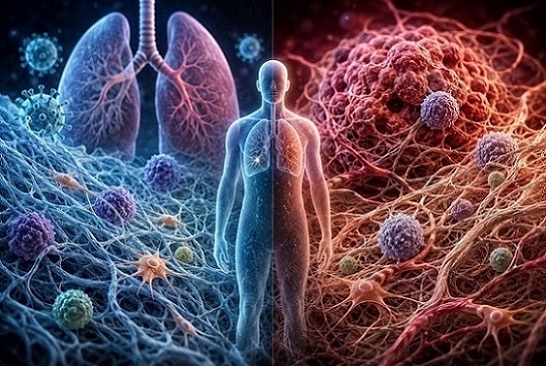 Scientists discover that abnormal tissue remodeling may explain why both long COVID and cancer
can become resistant to treatment, offering new hope through nanotechnology-based therapies
The researchers describe this process as extracellular matrix (ECM)-driven pseudo-resistance, a potentially reversible condition that may explain why some patients fail to respond well to available therapies.
The Body's Support Structure Can Become a Barrier
The extracellular matrix is a network of proteins and other molecules that surrounds cells and helps provide structural support. Under healthy conditions, it plays a vital role in tissue repair and immune defense.
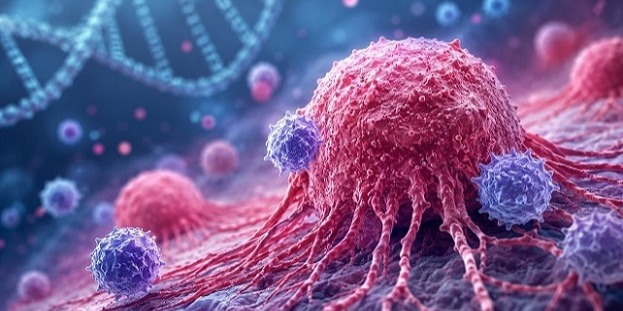
However, after severe COVID-19 infection or during cancer progression, this support system can become abnormally thick, stiff and inflamed. Instead of helping tissues recover, it creates a protective environment that shields diseased cells from medicines and immune attacks.
According to the researchers, this abnormal tissue remodeling traps inflammatory signals, blocks immune cells from reaching damaged areas and prevents drugs from penetrating deeply enough to work effectively. Unlike traditional drug resistance caused by permanent genetic changes, this barrier is created by the surrounding tissue, meaning it may be reversible.
Why Long COVID and Cancer Behave So Similarly
The team found remarkable similarities between lung fibrosis seen in long COVID and the dense tissue surrounding many solid tumors. In both conditions, excessive collagen production, abnormal tissue stiffening and persistent inflammatory signaling create an environment where therapies become much less effective.
The researchers also highlighted growing evidence suggesting that severe viral infections may disturb previously dormant cancer cells. Inflammatory changes caused by viral infections can remodel surrounding tissues and potentially awaken inactive cancer cells without directly causing cancer themselves.
This
Medical News report highlights how these discoveries could reshape scientists' understanding of treatment failure across multiple diseases.
Nanotechnology Could Break Through the Barrier
Rather than attacking diseased cells alone, the researchers b
elieve future therapies should also target the damaged extracellular matrix itself.
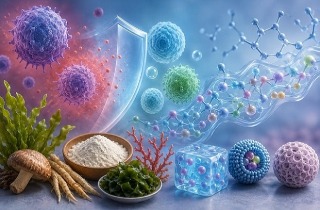
They describe several nanotechnology-based strategies designed to soften the hardened tissue, reduce excessive collagen cross-linking, improve drug penetration and restore normal immune cell movement. Experimental nanoparticle systems that inhibit proteins such as LOXL2 or disrupt abnormal mechanical signaling have already shown encouraging results in laboratory studies by making cancer cells more responsive to chemotherapy and radiotherapy.
The review also discusses nanoengineered niclosamide formulations that may suppress the energy-demanding processes needed to maintain chronic fibrosis without destroying healthy tissue. These approaches could potentially improve treatment responses not only in cancer but also in long COVID-related pulmonary fibrosis and other chronic inflammatory diseases.
A New Way of Looking at Treatment Failure
Instead of viewing treatment resistance solely as a problem caused by diseased cells, the researchers argue that the surrounding tissue environment deserves equal attention. By restoring the extracellular matrix to a healthier state, existing drugs may become more effective while immune cells regain access to damaged tissues.
The scientists emphasize that although many ECM-targeting nanotechnologies remain in preclinical development, several related approaches are already progressing through clinical evaluation, offering hope that these concepts may eventually translate into new treatment options.
Conclusion
The study presents a compelling new framework linking long COVID, pulmonary fibrosis and cancer through a common microenvironmental mechanism. By identifying ECM-driven pseudo-resistance as a reversible process rather than a permanent genetic defect, the researchers open the possibility of improving existing therapies instead of replacing them. Although substantial clinical testing remains necessary, targeting abnormal tissue remodeling alongside conventional treatments could become an important strategy for overcoming persistent disease and improving outcomes across a wide range of chronic illnesses.
The study findings were published in the peer reviewed journal: Chemical Communications.
https://pubs.rsc.org/en/content/articlelanding/2026/cc/d5cc07234d
For the latest on COVID-19 and cancer research, keep on logging to Thailand
Medical News.
Read Also:
https://www.thailandmedical.news/articles/coronavirus
https://www.thailandmedical.news/articles/cancer




 Share
Share
 Tweet
Tweet
 Share
Share