Nikhil Prasad Fact checked by:Thailand Medical News Team Mar 02, 2026 7 months, 1 day, 22 hours, 30 minutes ago
Medical News: A new Mexican study has found that young adults who experienced moderate or severe COVID-19 infections are far more likely to suffer lasting memory problems, anxiety, depression and stress nearly two years after recovery, even though standard blood markers of brain injury appear normal.
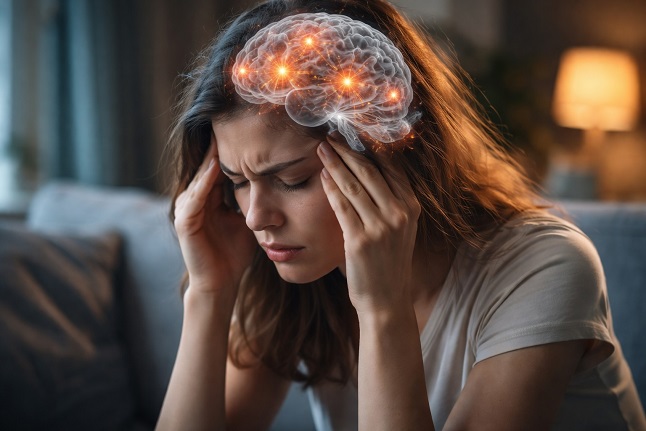 Lasting memory and emotional problems found in young COVID-19 survivors despite normal brain injury blood tests
The research was conducted by scientists from the Cardiometabolism Laboratory and the Metabolic Disease Biochemistry Unit at the Research Center of the Health Sciences Academic Division (DACS), Juarez Autonomous University of Tabasco (UJAT); the High Specialty Regional Hospital for Mental Health Villahermosa (HRAESMV); and the Microbiology Laboratory of the Research Department at Nuevo Leon Autonomous University (UANL) in Monterrey, Mexico.
Young Survivors Still Struggling
The study examined 41 adults who had previously tested positive for SARS-CoV-2. Their average age was just 26 years, and they were assessed approximately 22 months after infection. Participants were divided into two groups: those who had mild or asymptomatic infections and those who had moderate or severe disease requiring hospitalization or advanced treatments.
The findings were alarming. Among individuals who had moderate or severe COVID-19, 64.5 percent showed measurable cognitive impairment using the Montreal Cognitive Assessment test. In contrast, only 10 percent of those with mild infections showed similar impairment. The statistical risk difference was striking, with moderate to severe patients being more than 16 times more likely to have cognitive problems.
Emotional and psychological symptoms were even more widespread. In the moderate to severe group, 74 percent reported depressive symptoms, 87 percent experienced anxiety, and 87 percent reported significant stress levels. Many cases were categorized as severe or extremely severe. None of the individuals in the mild group showed severe depressive symptoms, and anxiety and stress were dramatically lower.
This
Medical News report highlights that these symptoms were not mild complaints but clinically significant levels of psychological distress that could interfere with daily life, work and academic performance.
Biomarkers Tell a Different Story
To determine whether these long-term symptoms were linked to ongoing brain damage, researchers measured two proteins in the blood: neurofilament light chain (NfL), a marker of nerve fiber injury, and glial fibrillary acidic protein (GFAP), a marker of stress to brain support cells.
During acute COVID-19, these markers often rise in severe cases. However, nearly two years later, the study found no significant differences in NfL or GFAP levels between the moderate to severe group and the mild group. Average levels were within expected ranges for healthy adults.
There was only a weak association between NfL levels and the presence of post-COVID condition. Overall, the data suggest that persistent symptoms
are not caused by ongoing large-scale destruction of brain cells.
A Disorder of Brain Function Not Brain Death
The researchers propose that long-term symptoms may result from subtle changes in brain function rather than structural damage. Immune system overactivation during acute infection may disrupt brain signaling, stress regulation and mood circuits in ways that linger long after the virus clears.
Women in the study were more likely to experience persistent symptoms, supporting other global findings that long COVID may disproportionately affect females.
Conclusion
The study strongly indicates that moderate to severe COVID-19 infection can leave lasting cognitive and emotional consequences even in young adults nearly two years after recovery. While traditional blood markers of brain injury return to normal, significant symptoms persist, suggesting that the underlying mechanisms involve functional brain network disruption and immune related changes rather than ongoing neurodegeneration. These findings reinforce the need for long term monitoring, mental health screening and targeted rehabilitation for COVID survivors who experienced more serious initial illness.
The study findings were published in the peer reviewed journal: Brain Sciences.
https://www.mdpi.com/2076-3425/16/3/276
For the latest COVID-19 News, keep on logging to Thailand
Medical News.
Read Also:
https://www.thailandmedical.news/articles/coronavirus
https://www.thailandmedical.news/articles/long-covid




 Share
Share
 Tweet
Tweet
 Share
Share

































