Nikhil Prasad Fact checked by:Thailand Medical News Team Feb 11, 2026 6 months, 2 weeks, 5 days, 18 hours ago
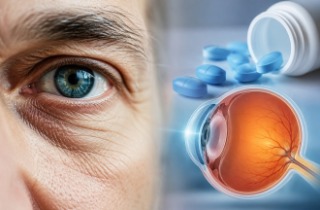
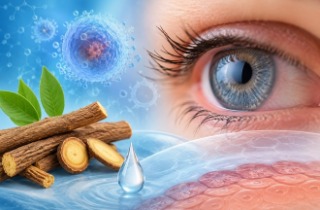
Medical News: COVID-19 is widely known for damaging the lungs, but new research now shows that the virus can also quietly harm the eyes in serious and lasting ways. Scientists have uncovered how COVID-19 can trigger a previously undefined form of retinal disease driven by abnormal blood vessel growth, raising concerns for survivors experiencing vision problems after infection.
 Growing Evidence of COVID-19-Related Eye Damage
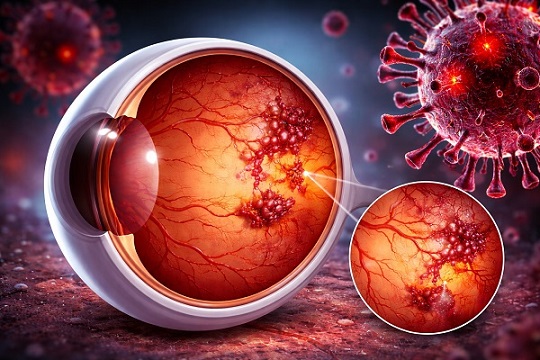
Doctors around the world have reported an unusually high number of retinal disorders among people who have had COVID-19. These problems include blurred vision, bleeding in the retina, and abnormal blood vessel growth. However, until now, the exact biological cause behind this eye damage was unclear. This new study offers the strongest evidence yet explaining how COVID-19 directly leads to retinal injury.
How Lung Damage Leads to Eye Disease
Using a clinically relevant mouse model of COVID-19, researchers discovered that infection with SARS-CoV-2 causes severe lung damage that reduces oxygen levels in the blood. This oxygen shortage, known as systemic hypoxia, does not remain limited to the lungs. Instead, it affects the entire body, including the delicate tissues of the eye. The retina, which requires high oxygen levels to function properly, responds to this stress by releasing large amounts of a protein called vascular endothelial growth factor, or VEGF.
VEGF Identified as the Main Culprit
VEGF plays an important role in normal blood vessel growth, but excessive amounts can be harmful. The study found that COVID-19 caused dramatic increases in VEGF levels both in the bloodstream and inside the retina. Elevated VEGF disrupted the normal structure of retinal blood vessels, leading to chaotic vessel growth, leakage, and abnormal new vessel formation. These changes closely resemble severe retinopathy seen in other vascular eye diseases.
Introducing Coviretinopathy
To clearly describe this condition, the researchers introduced a new term, “coviretinopathy,” referring specifically to COVID-19-induced retinal vascular disease. This
Medical News report highlights that coviretinopathy is driven by VEGF-dependent mechanisms rather than direct viral infection of the eye, which helps clarify why eye symptoms may appear even after respiratory symptoms improve.
Blocking VEGF Reverses Retinal Damage
Perhaps the most significant finding was that blocking VEGF completely prevented retinal damage in infected animals. When researchers administered a VEGF-neutralizing antibody, all abnormal blood vessel growth, leakage, and structural damage in the retina disappeared. This suggests that existing anti-VEGF drugs, already used for conditions such as diabetic retinopathy and macular degeneration, could be rapidly repurposed to treat COVID-19-related eye disease.
Researchers and Institutions
The study was conducted by scientists from Karolinska Institutet in Stockholm, Sweden; The Affiliated Wuxi People’s Hospital of Nanjing Medical University, Wuxi Medica
l Center in China; and West China Hospital of Sichuan University, China.
Conclusions and Clinical Implications
This research provides strong mechanistic evidence linking COVID-19 to serious retinal disease through oxygen deprivation and VEGF overproduction. Importantly, it identifies a realistic and immediately actionable treatment strategy. By targeting VEGF, doctors may be able to prevent long-term vision loss in COVID-19 patients, making early eye screening and timely intervention increasingly important in post-COVID care.
The study findings were published in the peer reviewed journal: PNAS
https://www.pnas.org/doi/10.1073/pnas.2516405123
For the latest COVID-19 news, keep on logging to Thailand
Medical News.
Read Also:
https://www.thailandmedical.news/articles/coronavirus
https://www.thailandmedical.news/articles/long-covid




 Share
Share
 Tweet
Tweet
 Share
Share