Nikhil Prasad Fact checked by:Thailand Medical News Team Jun 10, 2026 3 months, 3 weeks, 3 days, 4 hours, 33 minutes ago
Medical News: Diabetes continues to be one of the fastest-growing health challenges worldwide, affecting millions of people and placing immense pressure on healthcare systems. While medications such as insulin and metformin remain essential for managing the disease, researchers are increasingly searching for safer and more natural ways to help control blood sugar levels and improve overall metabolic health. Exciting new research suggests that tiny compounds naturally found in food proteins could become an important part of that solution.
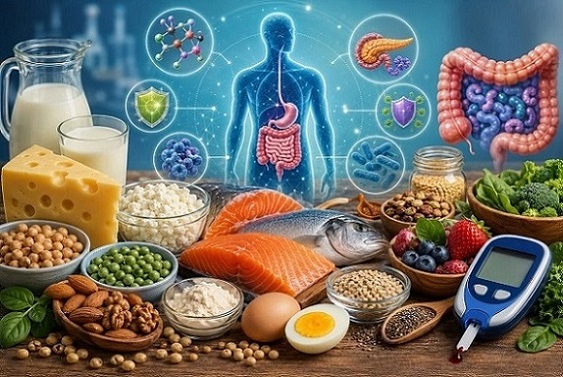 Scientists identify food-derived peptides that may help manage diabetes by improving insulin function,
reducing inflammation, controlling blood sugar, and supporting gut health
A new comprehensive review by scientists from the College of Food Science and Engineering, Ningbo University, Ningbo, China, has highlighted the remarkable potential of food-derived antidiabetic peptides. The research team, comprising Yiwei Yang, Ziwei Niu, Xiaohu Luo, Kang Chen, Xin Zhang, and Lingling Jia, examined the latest evidence on how these naturally occurring compounds may help combat diabetes through multiple biological pathways simultaneously.
Tiny Protein Fragments with Powerful Biological Effects
Food-derived peptides are short chains of amino acids released when proteins found in foods are broken down through digestion, fermentation, cooking, or specialized enzymatic processing. Unlike conventional diabetes drugs that often target a single mechanism, these peptides appear capable of influencing several important systems involved in blood sugar control.
The review introduces a new three-tier framework that explains how these peptides work throughout the body. Rather than simply lowering blood glucose, they appear to act as systemic regulators that influence digestion, insulin function, inflammation, oxidative stress, and even the gut microbiome.
Researchers identified promising antidiabetic peptides from a surprisingly wide range of food sources, including milk, cheese, legumes, cereals, fish, seafood by-products, eggs, seeds, fruits, vegetables, and even edible insects.
Slowing Blood Sugar Surges After Meals
The first layer of action involves controlling the rise in blood sugar that occurs after eating.
Many food-derived peptides can inhibit digestive enzymes such as alpha-amylase and alpha-glucosidase. These enzymes normally break down carbohydrates into glucose that is rapidly absorbed into the bloodstream. By slowing their activity, the peptides help reduce post-meal blood sugar spikes.
One particularly interesting example is a peptide called PIE, derived from salmon bones. Researchers found that it can strongly inhibit alpha-amylase activity, reducing the enzyme's ability to digest carbohydrates.
Other peptides target an enzyme known as DPP-IV. This enzyme rapidly destroys glucagon-like peptide-1, or GLP-1, a hormone that stimulates insulin release and helps regulate blood sugar. By blocking DPP-IV, food-derived peptides may help prolong the beneficial effects of GLP-1.
Promising DPP-IV inhibitory peptides have been iden
tified in wheat, quinoa, goat milk, camel milk, tuna, salmon skin, fish collagen, and numerous other food sources.
Helping the Body Respond Better to Insulin
The second level of protection focuses on one of the root causes of type 2 diabetes: insulin resistance.
Insulin resistance occurs when cells become less responsive to insulin, forcing the body to produce increasing amounts of the hormone to keep blood sugar under control. Over time, this can contribute to worsening diabetes and damage to the pancreas.
The review found evidence that certain food-derived peptides can activate critical cellular pathways involved in glucose regulation, including PI3K/Akt and AMPK signaling pathways. These pathways help cells absorb glucose more effectively and maintain healthy energy metabolism.
Among the most promising examples is Vglycin, a peptide derived from peas. Animal studies showed that it improved insulin sensitivity and enhanced glucose tolerance.
Another peptide, LGP9 from milk proteins, demonstrated an ability to protect pancreatic beta cells and support their recovery in diabetic models.
Some peptides may even bypass defective insulin signaling mechanisms and directly stimulate downstream metabolic pathways, offering potential benefits for individuals with severe insulin resistance.
Fighting Inflammation and Oxidative Stress
Chronic inflammation and oxidative stress are increasingly recognized as major drivers of diabetes progression and its complications.
Many of the peptides examined in the review displayed powerful antioxidant and anti-inflammatory properties. These effects may help protect tissues from damage caused by prolonged high blood sugar levels.
Researchers highlighted collagen peptides derived from Bombay duck fish bones that activate the Nrf2 pathway, one of the body's most important antioxidant defense systems. Other peptides obtained from camel whey proteins were shown to reduce inflammatory molecules such as TNF-alpha while promoting beneficial immune responses.
By reducing inflammation and oxidative stress, these peptides may help create a healthier metabolic environment and improve the body's response to insulin.
The Gut Microbiome May Hold the Key
Perhaps the most fascinating findings involve the relationship between food-derived peptides and the gut microbiome.
Scientists now understand that gut bacteria play a central role in metabolic health. Disturbances in the gut microbiome have been linked to obesity, insulin resistance, inflammation, and diabetes.
This
Medical News report highlights how certain food-derived peptides appear capable of selectively encouraging the growth of beneficial bacteria while suppressing harmful microbial populations.
Ginseng-derived peptides were found to increase levels of beneficial butyrate-producing bacteria such as Ruminococcus. Similarly, walnut protein peptides promoted the growth of other health-supporting bacterial groups.
These beneficial microbes produce short-chain fatty acids such as butyrate, which help strengthen the intestinal barrier, reduce inflammation, support insulin sensitivity, and improve communication between the gut, liver, and pancreas. Researchers believe this gut-centered mechanism may become one of the most important areas of future diabetes research.
Looking Toward the Future
Despite the exciting findings, the authors caution that many challenges remain. Most studies have been conducted in laboratory models or animals, and large-scale human clinical trials are still limited. In addition, scientists must overcome issues related to peptide stability, absorption, manufacturing consistency, and regulatory approval.
The researchers believe future progress will depend on three major advances: artificial intelligence-assisted peptide discovery, improved oral delivery technologies, and high-quality clinical studies involving human participants.
Conclusions
The evidence gathered in this extensive review suggests that food-derived peptides may represent a promising new frontier in diabetes management. Unlike many current therapies that focus on a single target, these naturally occurring compounds appear capable of influencing multiple biological systems simultaneously, including digestive enzymes, insulin signaling pathways, inflammatory responses, antioxidant defenses, and the gut microbiome. While substantial clinical research is still needed before these compounds can be widely adopted, the findings indicate that naturally sourced peptides could eventually become valuable tools in precision nutrition strategies aimed at preventing and managing diabetes. Their ability to support the body's own metabolic systems while potentially offering a favorable safety profile makes them an especially attractive area for future investigation.
The study findings were published in the peer reviewed journal: Foods.
https://www.mdpi.com/2304-8158/15/12/2086
For the latest on food peptides to fight diabetes, keep on logging to Thailand
Medical News.
Read Also:
https://www.thailandmedical.news/articles/peptides
https://www.thailandmedical.news/articles/herbs-and-phytochemicals




 Share
Share
 Tweet
Tweet
 Share
Share

































