Nikhil Prasad Fact checked by:Thailand Medical News Team Apr 22, 2026 5 months, 1 week, 4 days, 21 hours, 59 minutes ago
Medical News: A new scientific investigation has revealed that mothers who had COVID-19 during pregnancy may pass on important biological signals to their babies through early breast milk, potentially influencing immunity and development in ways scientists are only beginning to understand.
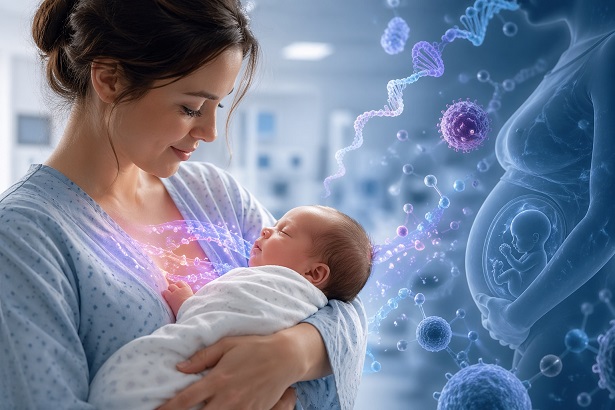 COVID-19 during pregnancy linked to key molecular changes in early breast milk affecting infant development
What the Study Looked At
COVID-19 during pregnancy linked to key molecular changes in early breast milk affecting infant development
What the Study Looked At
Researchers from the Medical University of Lublin (Poland), its Doctoral School, the Student Scientific Society of Clinical Genetics, the Department of Obstetrics and Pathology of Pregnancy, the Department of Cardiology, and the University of Life Sciences in Lublin examined breast milk samples from 40 women shortly after childbirth.
The study compared 19 mothers who had COVID-19 during pregnancy with 21 healthy mothers. Scientists focused on three key molecules: SOX1, miR-155, and miR-21, all of which play roles in immune regulation, inflammation, and early brain development.
Striking Changes Found in Breast Milk
The results were clear and significant. Mothers who had COVID-19 showed:
-Over 3 times higher SOX1 levels
-More than double the levels of miR-155
-Up to 10 times higher levels of miR-21
These molecules are not random. They are part of a complex communication system within breast milk that helps guide a newborn’s immune system and organ development.
Why These Molecules Matter
SOX1 is especially important because it is linked to brain development and nerve cell formation. Higher levels could suggest that the mother’s body is trying to support the baby’s neurological development after exposure to stress during pregnancy.
Meanwhile:
-miR-155 is strongly linked to inflammation and antiviral defense
-miR-21 helps regulate immune balance and tissue repair
Together, these molecules may act as a “biological message,” telling the baby’s body how to adapt after being exposed to a viral environment before birth.
Connections to Newborn Health
Interestingly, the study also found that higher SOX1 levels were linked to:
-Increased inflammation markers (CRP)
-Higher lactate levels (a sign of metabolic stress)
-Lower glucose levels in newborns
This
Medical News report highlights how these changes may reflect a deeper biological adjustment between mother and child. Rather than being harmful, researchers believe this could be a compensatory response, where the mother’s body tries to prepare the infant for challenges.
What
Higher miR-155, miR-21, and SOX1 Could Mean
Elevated levels of these markers could have both positive and complex effects:
-Stronger immune training: Babies may develop more responsive immune systems early in life
-Inflammation risk: Excessive miR-155 could potentially increase inflammatory tendencies
-Brain development support: Higher SOX1 may promote neuron growth and protection
-Metabolic adjustments: Changes in glucose and lactate suggest shifts in how newborns manage energy
However, scientists caution that these effects are not fully understood and may vary from child to child.
A New View of Breast Milk
The findings reinforce the idea that breast milk is far more than nutrition. It is a dynamic biological system that carries genetic signals, immune instructions, and developmental cues shaped by the mother’s health.
Even mild COVID-19 infections were enough to trigger these molecular changes, suggesting that the effects of the virus on pregnancy may extend beyond visible symptoms.
Conclusion
This study provides compelling evidence that COVID-19 during pregnancy can reshape the molecular composition of early breast milk in meaningful ways. The increased expression of SOX1, miR-155, and miR-21 appears to reflect a coordinated biological response that may help newborns adapt to a challenging prenatal environment. While these changes could support immune defense and brain development, they also raise important questions about inflammation and long-term metabolic effects. More large-scale and long-term studies are needed to determine whether these molecular shifts ultimately benefit or pose risks to infant health, but the findings clearly show that maternal infections leave lasting biological signals that extend into early life.
The study findings were published in the peer reviewed journal: Scientific Reports.
https://www.nature.com/articles/s41598-026-49964-4
For the latest COVID-19 news, keep on logging to Thailand
Medical News.
Read Also:
https://www.thailandmedical.news/articles/coronavirus
https://www.thailandmedical.news/articles/long-covid




 Share
Share
 Tweet
Tweet
 Share
Share

































