Nikhil Prasad Fact checked by:Thailand Medical News Team Aug 26, 2026 56 minutes ago
A new case report has documented unusual differences in brain perfusion in a woman experiencing persistent brain fog, dizziness, vertigo, and balance problems following COVID-19, raising further questions about how Long COVID may affect brain function even when conventional examinations provide few answers.
 Brain SPECT imaging revealed a mixed pattern of relative perfusion differences in a patient experiencing persistent brain
fog and balance problems after COVID-19.
Years of Brain Fog and Balance Problems
The report involved a 67-year-old woman who developed persistent symptoms after SARS-CoV-2 infection in 2022. Before COVID-19, she was physically active, cognitively well, independent, and regularly played golf.
After infection, she experienced difficulty concentrating, short-term memory problems, slower thinking, trouble multitasking, and mental fatigue. She also developed dizziness, vertigo, sensitivity to movement, visual disturbances, poor balance, severe fatigue, nausea, and occasional vomiting.
Despite these complaints, neurological examination found no focal abnormalities. A brief cognitive screening test produced a normal score of 22 out of 22, while routine blood tests failed to identify a significant metabolic, thyroid, nutritional, inflammatory, or blood-related explanation for her symptoms.
Brain Scan Revealed a Mixed Pattern
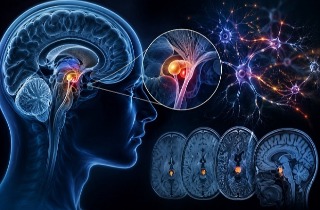
Doctors subsequently used brain perfusion single-photon emission computed tomography, commonly called SPECT. Rather than directly measuring absolute blood flow, this scan shows the relative distribution of a radioactive tracer across different brain regions.
The scan revealed a complex mixture of relatively increased and decreased tracer activity. Increased activity appeared in areas including both parietal cortices, the posterior cingulate region, and right lateral prefrontal cortex. Lower activity appeared in both temporal lobes, the inferior orbitofrontal cortex, prefrontal poles, and internal cerebellum.
Deeper brain images also showed relatively increased activity involving the anterior cingulate region, thalamus, basal ganglia, insular cortices, and portions of the temporal lobes. Importantly, these findings were nonspecific and cannot be considered proof that Long COVID caused the abnormalities.
Symptoms Improved Over Several Months
As this
Thailand Medical News report highlights, the patient received several interventions simultaneously, including vestibular rehabilitation, a Mediterranean-style anti-inflammatory diet, gradual aerobic and strength exercise, sleep optimization, nutritional supplements, stress management, and supportive care.
After approximately two months, she reported improvements in brain fog, attention, memory, processing speed, balance, and everyday functioning. She eventually returned to recreational golf and remained physically active. About three months later, those improvements were reportedly sustained. However, objective neuropsychological and specialized vestibular follow-up testing was not performed, making the improvement primarily patient-
reported.
Important Questions Remain
The researchers were from Amen Clinics in Costa Mesa, California, specifically its Sleep Medicine and Integrative Medicine departments.
The findings are intriguing but should be interpreted cautiously. This was only one patient, and factors including age, hypertension, previous mild head injuries, medications, sleep problems, or other unidentified influences could potentially affect SPECT findings.
Conclusions
The case suggests that measurable differences in relative brain tracer distribution can accompany persistent cognitive and balance-related Long COVID symptoms even when conventional evaluations are unrevealing. However, larger controlled studies using standardized quantitative imaging and objective cognitive testing are needed before brain perfusion SPECT can be considered a reliable diagnostic or treatment-guiding tool.
The study findings were published in the peer reviewed journal: Cureus.
https://www.cureus.com/articles/521377-relative-brain-perfusion-differences-in-a-patient-with-persistent-neurocognitive-and-vestibular-symptoms-associated-with-post-covid-19-condition-a-case-report#!/
Read Also:
https://www.thailandmedical.news/articles/long-covid 



 Share
Share
 Tweet
Tweet
 Share
Share