Nikhil Prasad Fact checked by:Thailand Medical News Team Mar 31, 2026 5 months, 2 days, 17 hours, 36 minutes ago
Medical News: A growing body of scientific evidence is shedding light on how viruses cleverly hijack key human cellular systems to survive, multiply, and spread. One of the most important targets appears to be a group of enzymes known as CMGC kinases - critical regulators that control how cells grow, respond to stress, and defend themselves. A new review by researchers from the Department of Microbiology and Immunology at Louisiana State University Health Shreveport, USA, highlights just how central these enzymes are in both health and disease.
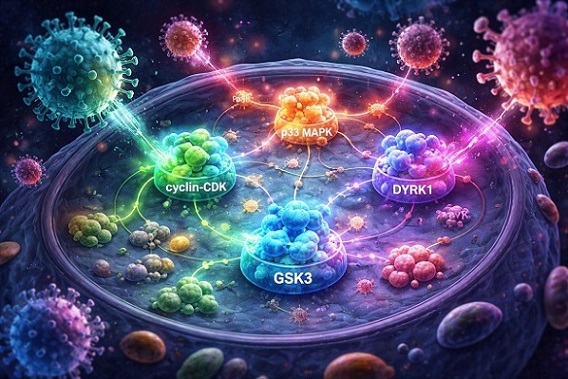 Viruses exploit key human enzymes to control cells and boost their survival
What Are CMGC Kinases and Why They Matter
Viruses exploit key human enzymes to control cells and boost their survival
What Are CMGC Kinases and Why They Matter
CMGC kinases are a large family of enzymes found in human cells that regulate essential processes such as cell division, metabolism, gene expression, and stress responses. These enzymes act like switches, turning cellular activities on or off through a process called phosphorylation. The family includes several subgroups such as cyclin-dependent kinases (CDKs), MAP kinases (MAPKs), and glycogen synthase kinases (GSKs), all of which play distinct yet interconnected roles in maintaining normal cell function.
Importantly, these kinases do not work in isolation. They form a highly coordinated network that allows cells to respond dynamically to changes in their environment. This makes them extremely valuable - but also vulnerable - targets for viruses.
How Viruses Take Control of Cellular Machinery
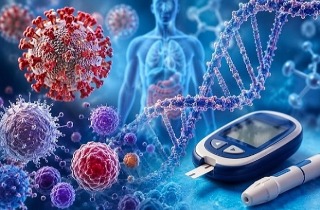
Viruses cannot reproduce on their own. Instead, they must enter human cells and reprogram them to produce viral components. The study reveals that many viruses, including both DNA and RNA types, exploit CMGC kinases to create favorable conditions for replication. For example, some viruses manipulate CDKs to push cells into a state that supports viral DNA replication. Others activate stress-related kinases like p38 MAPK to alter immune responses or promote viral survival. In some cases, viruses even mimic or interfere with normal signaling pathways to maintain long-term infections.
This
Medical News report highlights that viruses are not simply passive invaders but highly adaptive entities that actively reshape host cell biology. By targeting CMGC kinases, they can control cell cycle progression, suppress immune defenses, and enhance their own replication efficiency.
A Complex Network with Opposing Roles
Interestingly, CMGC kinases can have both beneficial and harmful effects during infections. Some kinase activities help the body fight viruses by triggering antiviral responses. However, many viruses have evolved ways to turn these same pathways to their advantage.
For instance, the p38 MAPK pathway can act as a “brake” on cell growth during stress, helping prevent damage. Yet certain viruses activate this pathway to support their replication. Similarly, GSK3 can regulate cell survival and death, but viruses may exploit it to enhance viral assembly or disrupt normal cellular balance.
>
This dual nature makes CMGC kinases particularly challenging targets for treatment, as blocking them could have unintended effects on normal cellular functions.
Implications for Future Treatments
Understanding how viruses interact with CMGC kinases opens new possibilities for developing antiviral therapies. Instead of targeting the virus directly, scientists may be able to disrupt the host pathways that viruses depend on. This approach could reduce the risk of drug resistance, a major issue with traditional antiviral drugs.
Additionally, since these kinases are also involved in diseases such as cancer and neurodegeneration, the findings could have broader implications beyond infectious diseases. Drugs designed to modulate CMGC kinase activity may one day serve multiple therapeutic purposes.
Conclusion
The discovery that viruses extensively exploit CMGC kinases underscores the complexity of host–pathogen interactions. These enzymes are not just passive components but central players in determining whether a cell survives, adapts, or becomes a viral factory. The intricate balance between antiviral defense and viral manipulation highlights the need for carefully designed therapies that can selectively target harmful pathways without disrupting essential cellular functions. Continued research into CMGC kinases could pave the way for innovative treatments that address both viral infections and other major human diseases.
The study findings were published in the peer reviewed journal: Pathogens.
https://www.mdpi.com/2076-0817/15/4/366
For the latest on viruses and how they target human kinases, keep on logging to Thailand
Medical News.
Read Also:
https://www.thailandmedical.news/articles/coronavirus




 Share
Share
 Tweet
Tweet
 Share
Share