Nikhil Prasad Fact checked by:Thailand Medical News Team Mar 05, 2026 6 months, 4 weeks, 2 days, 5 hours, 26 minutes ago
Thailand Medical: A major scientific review is shedding new light on how stem cell therapies could transform the treatment of joint injuries, cartilage damage, and other musculoskeletal disorders that affect millions of people worldwide. Scientists say regenerative medicine is rapidly evolving, and stem cells are now being explored as powerful tools capable of repairing tissues that the human body normally struggles to heal.
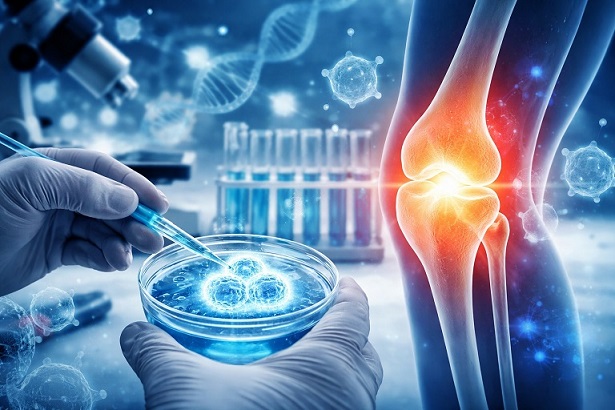 Large Thailand Medical scientific review highlights growing evidence that stem cell therapies may revolutionize treatment for joint damage and musculoskeletal diseases
The research was conducted by
Thailand Medical scientists from the Center of Multidisciplinary Technology for Advanced Medicine (CMUTEAM), Faculty of Medicine, Chiang Mai University, the Clinical Research Center for Food and Herbal Product Trials and Development (CR-FAH), Department of Pharmacology, Faculty of Medicine, Chiang Mai University, and the Department of Orthopedics, Faculty of Medicine, Chiang Mai University, all based in Thailand.
The Growing Burden of Musculoskeletal Diseases
Musculoskeletal conditions such as osteoarthritis, cartilage degeneration, tendon injuries, and ligament tears are among the most common causes of disability globally. These conditions are particularly challenging to treat because many tissues within joints have limited blood supply, which severely restricts their ability to heal naturally.
Cartilage is one of the most problematic tissues in this regard. Once damaged, it rarely regenerates effectively. Conventional treatments like pain medications, physical therapy, and surgical repair procedures often provide temporary relief but rarely restore full biological function.
Because of these limitations, researchers have increasingly turned to regenerative medicine strategies that aim to repair tissues at the cellular level.
Stem Cells Offer a New Regenerative Approach
Stem cells possess the unique ability to transform into different types of specialized cells, including bone, cartilage, and tendon cells. In orthopedic research, scientists have focused particularly on mesenchymal stem cells (MSCs) because of their versatility and powerful healing properties.
The researchers analyzed 500 preclinical and clinical studies investigating stem cell therapies for musculoskeletal regeneration. Their review revealed that stem cells derived from bone marrow and adipose (fat) tissue remain the most widely studied and utilized in orthopedic applications.
These cells not only have the potential to develop into new structural tissues but also release biological signals that reduce inflammation, stimulate tissue repair, and improve the local healing environment.
Knee Osteoarthritis Emerges as The Primary Target
Among all conditions studied, knee osteoarthritis emerged as the most common focus of stem cell research. This reflects the enormous global burden of knee joint degeneration, particularly in aging po
pulations.
Researchers found that the most frequently used treatment approach involves injecting stem cells directly into the joint space, a method known as intra-articular injection. This technique allows the cells to act directly within the damaged environment, where they may promote tissue repair and reduce inflammatory damage.
The knee joint was also identified as the most frequently targeted anatomical site across both experimental animal studies and human clinical trials.
New Stem Cell Sources Are Expanding Treatment Possibilities
While bone marrow stem cells have historically dominated the field, the study found increasing interest in stem cells derived from fat tissue and perinatal sources such as umbilical cord tissue.
These newer sources may provide advantages because they can potentially be produced in larger quantities and developed as standardized therapies. Scientists are particularly interested in these cells as “off-the-shelf” regenerative treatments that could be used without requiring cell extraction from each patient.
This Medical News report highlights how stem cell research is rapidly evolving as scientists search for scalable and clinically practical regenerative therapies.
Future Promise and Remaining Challenges
The researchers conclude that stem cell therapy has the potential to significantly reshape orthopedic medicine by enabling real biological repair of damaged tissues rather than simply treating symptoms.
However, they emphasize that important challenges remain before these therapies become widely available. More long-term studies are needed to confirm safety and effectiveness, and researchers must determine the most effective stem cell sources, dosing strategies, and delivery techniques.
Despite these uncertainties, the expanding body of research clearly indicates that regenerative stem cell therapies could eventually provide new hope for patients suffering from chronic joint diseases, cartilage damage, and other musculoskeletal disorders that currently have limited treatment options.
The study findings were published in the peer reviewed journal: Cells.
https://www.mdpi.com/2073-4409/15/5/456
For the latest news, keep on logging to
Thailand Medical News.
Read Also:
https://www.thailandmedical.news/articles/stem-cell-therapies
https://www.thailandmedical.news/articles/arthritis
https://www.thailandmedical.news/articles/thailand-medical




 Share
Share
 Tweet
Tweet
 Share
Share

































