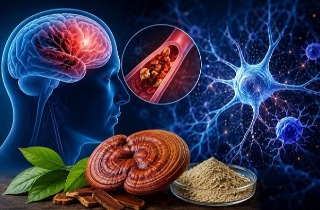
Importance of Dietary N6 Fatty Acids for The Brain Health of Middle-Aged and Elderly Adults
Nikhil Prasad Fact checked by:Thailand Medical News Team Dec 13, 2024 1 year, 8 months, 3 weeks, 5 days, 16 minutes ago
Medical News: A recent study conducted by researchers from Shanghai Jiao Tong University School of Medicine, the National Center for Mental Health in Beijing, and Xi'an Jiaotong-Liverpool University in Suzhou-China explored the intricate relationship between dietary omega-6 (n-6) polyunsaturated fatty acids (PUFAs) and brain health. The study targeted middle-aged and elderly populations, emphasizing the growing global burden of neurodegenerative diseases such as dementia, Parkinson's disease (PD), and multiple sclerosis (MS).
 Importance of Dietary N6 Fatty Acids for The Brain Health of Middle-Aged and Elderly Adults
Image -AI-Generated (Yes we know the capsule looks to be big and the guy will likely die chocking on
it but a drawback of using AI for images sometimes!...lol!)
Understanding the Significance of N6 Fatty Acids
Omega-6 PUFAs, found in dietary sources like vegetable oils, nuts, and seeds, are essential nutrients that contribute to brain structure and function. While the neuroprotective roles of omega-3 PUFAs are well-documented, the impact of omega-6 PUFAs remains a topic of debate. Some studies suggest that high levels may promote neuroinflammation, whereas others argue that insufficient intake could impair neuronal functions. This
Medical News report delves into the findings of a large-scale study that aimed to resolve these contradictions by investigating the associations between dietary n-6 PUFA intake and both brain health and neurodegenerative conditions.
Methodology in Focus
The research leveraged data from 169,295 participants of the UK Biobank, a large cohort study. Participants' dietary intake of n-6 PUFAs was assessed using detailed food frequency questionnaires. The team then categorized participants into low-intake and high-intake groups. Advanced neuroimaging data and health records were analyzed to assess the impact of n-6 PUFA consumption on brain structure and risks of neurodegenerative diseases. Statistical models adjusted for variables such as age, sex, genetic risks, and lifestyle factors to ensure robust results.
Key Findings from the Study
Increased Risk of Neurodegenerative Diseases
One of the significant findings was the association between low n-6 PUFA intake and higher risks of dementia, Parkinson's disease, and multiple sclerosis. The study reported:
-A 30% increased risk of dementia among individuals with lower n-6 PUFA consumption.
-A 42% higher likelihood of Parkinson's disease.
-A 65% greater risk of developing multiple sclerosis.
The results underscore the protective role that sufficient n-6 PUFA intake plays in neurodegenerat
ive disease prevention.
Structural Impacts on the Brain
Neuroimaging data revealed structural alterations in the brains of individuals with low n-6 PUFA intake. Key observations included:
-Gray Matter Atrophy: Reduced volumes in critical brain regions such as the hippocampus, thalamus, and nucleus accumbens. These areas are essential for memory, emotional regulation, and overall cognitive function.
-White Matter Integrity: Compromised white matter tracts were evident, with decreased fractional anisotropy and increased mean diffusivity. These changes indicate potential disruptions in communication between different brain regions.
The study further explored the role of inflammation, suggesting that inadequate n-6 PUFA intake might trigger chronic low-grade inflammation, a key factor in brain aging and neurodegeneration.
Implications and Conclusions
The findings from this comprehensive study highlight the importance of maintaining adequate n-6 PUFA levels in the diet, particularly for aging populations at risk of neurodegenerative diseases. The research suggests that dietary interventions focusing on balanced PUFA consumption could serve as a preventive strategy against cognitive decline and structural brain deterioration.
For individuals aged 60-64, the data revealed an even greater susceptibility to dementia when n-6 PUFA intake was insufficient. This highlights the potential benefits of targeted dietary modifications and early interventions during this critical period.
Looking Ahead
Despite its robust methodology, the study acknowledges certain limitations, such as reliance on self-reported dietary data and the predominance of participants of European descent. Future research could benefit from diverse population samples and longitudinal designs to establish causality.
The study findings were published in the peer-reviewed journal: Nutrients.
https://www.mdpi.com/2072-6643/16/24/4272
For the latest on Brain Health, keep on logging to Thailand
Medical News.
Read Also:
https://www.thailandmedical.news/news/covid-19-accelerates-brain-and-immune-aging
https://www.thailandmedical.news/news/neural-stem-cell-therapy-shows-promise-in-brain-restoration-and-alzheimer-s-disease




 Share
Share
 Tweet
Tweet
 Share
Share