Nikhil Prasad Fact checked by:Thailand Medical News Team Apr 18, 2026 5 months, 2 weeks, 2 days, 2 hours, 2 minutes ago
Medical News: A growing body of research is uncovering a hidden biological process that may connect a wide range of mental health and brain disorders. Scientists are now focusing on “ferroptosis,” a unique form of cell death driven by iron and oxidative damage, as a possible common thread linking conditions such as depression, schizophrenia, addiction, Alzheimer’s disease, and Parkinson’s disease.
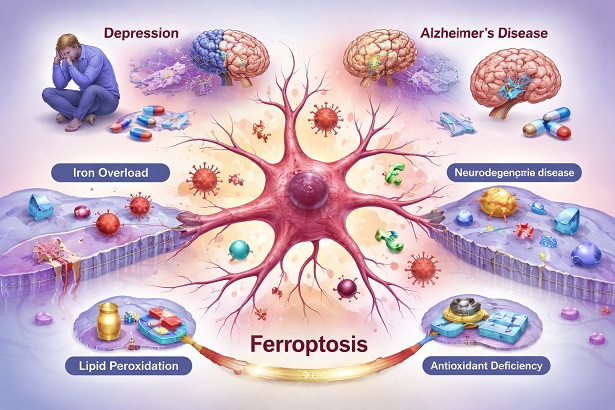 Ferroptosis, an iron-triggered cell death process, may be the missing link behind multiple mental and
neurodegenerative disorders
A New Way to Understand Brain Disorders
Researchers from the Department of Medicine at Ningbo University in China have explored how ferroptosis operates in the brain and why it may play such a crucial role in mental health. Their findings suggest that this process is not just a side effect of disease but could be a central driver of neuronal damage.
Ferroptosis occurs when iron accumulates in cells and triggers the breakdown of fats in cell membranes. This leads to severe oxidative stress, damaging vital structures inside brain cells and eventually causing them to die. Unlike other forms of cell death, ferroptosis is tightly linked to metabolic processes and the body’s ability to manage iron and antioxidants.
The Three Key Triggers
The study highlights three main biological pathways that work together to trigger ferroptosis. First is iron overload, where excess iron becomes chemically active and produces harmful molecules known as reactive oxygen species. Second is lipid peroxidation, where fats in cell membranes are attacked and degraded. Third is a breakdown in antioxidant defenses, especially involving a protective system centered around a molecule called glutathione and an enzyme known as GPX4.
When these systems fail simultaneously, brain cells become highly vulnerable. Mitochondria, the energy-producing structures within cells, are also affected, leading to a dangerous cycle of energy loss and increasing oxidative damage.
How It Affects Mental Health
This
Medical News report highlights that ferroptosis may help explain why so many different mental and neurological conditions share overlapping symptoms and biological features. For example, in depression, chronic inflammation and oxidative stress can lower the brain’s ability to resist ferroptosis. In schizophrenia, disruptions in neurotransmitters and metabolic pathways may make neurons more sensitive to iron-induced damage.
In neurodegenerative diseases such as Alzheimer’s and Parkinson’s, ferroptosis appears to contribute to the progressive loss of neurons. Iron accumulation in specific brain regions, combined with weakened antioxidant systems, creates the perfect environment for this destructive process to unfold.
Addiction is another area where ferroptosis may play a role. Substances like methamphetamine and cocaine can disrupt iron balance in the brain, increase oxidative stress, and damage neurons
through similar mechanisms.
Why Iron Balance Matters
Iron is essential for normal brain function. It helps produce neurotransmitters, supports energy production, and plays a role in cognitive processes. However, too much iron can be toxic. The brain must carefully regulate iron levels through transport, storage, and recycling systems.
The research shows that when these systems break down, iron becomes a harmful agent rather than a helpful one. It can trigger chemical reactions that damage DNA, proteins, and cell membranes, ultimately leading to ferroptosis.
Hope for New Treatments
Understanding ferroptosis opens new possibilities for treating mental and neurological disorders. Scientists believe that targeting iron metabolism, reducing oxidative stress, or strengthening antioxidant defenses could help slow or prevent disease progression.
Potential therapies may include iron chelators that remove excess iron, antioxidants that block lipid damage, or drugs that enhance the activity of protective enzymes like GPX4. However, more research is needed to translate these findings into effective treatments for patients.
Conclusion
The discovery of ferroptosis as a shared mechanism across multiple brain disorders represents a major shift in how scientists understand mental illness and neurodegeneration. Instead of viewing these conditions as completely separate, researchers are beginning to see a common biological pathway rooted in iron imbalance and oxidative damage. This insight could lead to more unified and effective treatment strategies in the future. While still in early stages, the growing evidence suggests that controlling iron-driven cell death may be key to protecting brain health and improving outcomes for millions of people worldwide.
The study findings were published in the peer reviewed journal: Pharmaceuticals.
https://www.mdpi.com/1424-8247/19/4/629
For the latest research on mental health, keep on logging to Thailand
Medical News.
Read Also:
https://www.thailandmedical.news/articles/mental-health




 Share
Share
 Tweet
Tweet
 Share
Share

































