Nikhil Prasad Fact checked by:Thailand Medical News Team Jun 17, 2026 3 months, 2 weeks, 2 days, 23 hours ago
Medical News: Cardiovascular diseases remain the leading cause of death worldwide, claiming millions of lives every year despite major advances in medical care. Scientists have long known that genetics, inflammation, metabolic disorders, and lifestyle factors all contribute to heart disease. Now, researchers are focusing on a little-known class of molecules called circular RNAs that may fundamentally change how cardiovascular diseases are understood, diagnosed, and potentially treated.
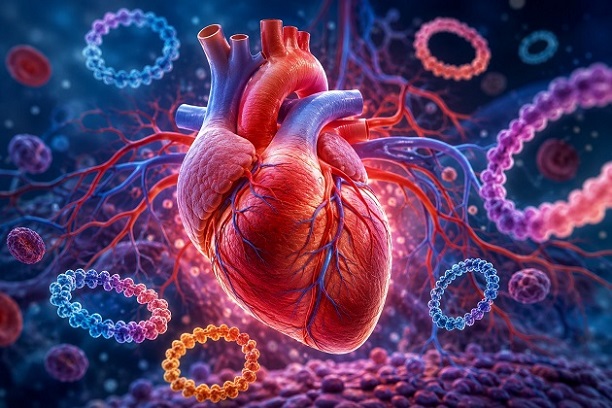 Circular RNAs are emerging as powerful regulators of heart disease, opening new possibilities for diagnosis,
treatment, and cardiac repair
A new review conducted by researchers Camilo Rebolledo and Luis A. Salazar from the Centro de Biología Molecular y Farmacogenética, Departamento de Ciencias Básicas, Facultad de Medicina, Universidad de La Frontera, Temuco, Chile, highlights how circular RNAs, also known as circRNAs, have emerged as critical regulators of heart health and disease.
From Genetic Curiosity to Major Biological Player
For years, circular RNAs were largely ignored by scientists and were considered accidental byproducts generated during the processing of genetic material. However, research over the last decade has dramatically changed that perception.
Unlike conventional RNA molecules that exist in a linear form, circRNAs form closed loops. This circular structure makes them highly stable and resistant to degradation. As a result, they can remain active inside cells for long periods and influence a wide variety of biological processes.
Researchers now recognize circRNAs as abundant, highly specialized molecules that are particularly enriched in heart tissue. Their ability to interact with numerous cellular components has elevated them from genetic curiosities to important regulators of cardiovascular biology.
How Circular RNAs Influence the Heart
The review explains that circRNAs function as regulatory hubs within cells. They can bind to microRNAs, interact with proteins, influence gene expression, regulate cellular metabolism, and even produce small functional proteins in certain circumstances.
These activities allow circRNAs to influence many of the biological processes involved in cardiovascular disease. They help control inflammation, cell survival, tissue repair, fibrosis, hypertrophy, oxidative stress, and mitochondrial function.
Importantly, circRNAs do not simply affect one pathway at a time. Instead, they often coordinate multiple interconnected molecular networks, making them particularly important during disease progression.
This
Medical News report highlights the growing realization that circRNAs may act as central conductors that orchestrate many of the biological events leading to heart damage and heart failure.
Key Roles in Heart Failure and Cardiac Remodeling
One of the strongest areas of evidence involves heart failure and cardiac remodeling. Cardiac remode
ling refers to structural and functional changes that occur in the heart after injury or prolonged stress.
Several circRNAs have been shown to regulate enlargement of heart muscle cells, activation of cardiac fibroblasts, and excessive deposition of scar tissue. These changes gradually reduce the heart's ability to pump blood efficiently and contribute to heart failure.
Researchers identified specific circRNAs that either promote or suppress fibrosis and hypertrophy. Some help protect heart tissue from damage, while others accelerate disease progression by activating harmful signaling pathways.
The review also highlights regenerative circRNAs that appear capable of stimulating the repair and proliferation of heart cells after injury, raising hopes for future regenerative therapies.
Important During Heart Attacks and Ischemic Injury
CircRNAs also play significant roles during heart attacks and ischemia-reperfusion injury. During these events, heart tissue experiences oxygen deprivation followed by restoration of blood flow, creating severe oxidative stress and cellular damage.
Studies show that circRNAs regulate apoptosis, ferroptosis, and pyroptosis, different forms of programmed cell death that contribute to heart injury. Some circRNAs help protect cardiomyocytes from dying, while others worsen tissue damage.
Researchers also found that certain circRNAs regulate mitochondrial function and reactive oxygen species production, two factors that are crucial in determining whether heart cells survive after a heart attack.
Promise as Powerful New Biomarkers
Another major finding is the potential use of circRNAs as diagnostic and prognostic biomarkers.
Because circRNAs are remarkably stable and can be detected in blood, plasma, serum, and extracellular vesicles, they offer an attractive non-invasive way to monitor cardiovascular disease.
Distinct circRNA signatures have already been associated with heart failure, myocardial infarction, cardiac fibrosis, hypertrophy, and atrial fibrillation. Future blood tests based on these molecular signatures could help physicians identify disease earlier, predict complications, and monitor treatment responses more effectively.
New Opportunities for Future Therapies
Scientists are increasingly investigating circRNAs as therapeutic targets. Experimental approaches include silencing harmful circRNAs, restoring beneficial ones, and designing synthetic circRNAs that can alter disease-associated pathways.
Although these strategies remain in the preclinical stage, early studies suggest they may eventually help reduce fibrosis, limit cardiac injury, improve regeneration, and slow disease progression.
Conclusion
The discovery of the extensive role played by circular RNAs represents one of the most significant advances in cardiovascular molecular biology in recent years. Rather than being genetic byproducts, circRNAs are now recognized as powerful regulators that influence nearly every aspect of cardiovascular disease, from inflammation and fibrosis to regeneration and heart failure. Their remarkable stability, tissue specificity, and ability to control complex biological networks make them promising candidates for both next-generation diagnostics and innovative therapies. While substantial research is still needed before clinical applications become routine, the evidence increasingly suggests that circRNAs could help transform the future of cardiovascular medicine and provide new hope for millions of patients affected by heart disease worldwide.
The study findings were published in the peer reviewed International Journal of Molecular Sciences.
https://www.mdpi.com/1422-0067/27/12/5418
For the latest research on cardiovascular diseases, keep on logging to Thailand
Medical News.
Read Also:
https://www.thailandmedical.news/articles/cardiology




 Share
Share
 Tweet
Tweet
 Share
Share

































