Thailand Medical Researchers Identify Viniferin as a Potential Multi-Target Therapeutic Compound Against Liver Cancer
Nikhil Prasad Fact checked by:Thailand Medical News Team Mar 12, 2026 6 months, 3 weeks, 2 days, 7 hours, 29 minutes ago
Thailand Medical: Liver cancer remains one of the most deadly cancers globally, and scientists continue to search for new treatments that can slow or stop the disease. A new scientific investigation now suggests that a natural plant compound called viniferin could interfere with several molecular pathways that drive liver cancer. The discovery may help guide the development of future treatments that target cancer cells more effectively.
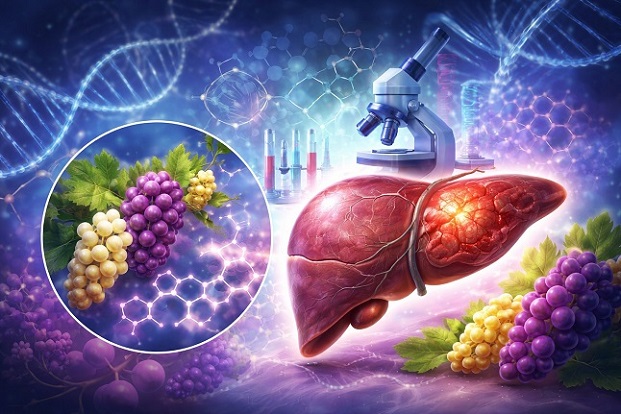 Natural compound viniferin found to target multiple proteins involved in liver cancer progression
Researchers from the Department of Biomedical Sciences and Biomedical Engineering, Faculty of Medicine, Prince of Songkla University in Songkhla, Thailand; the School of Allied Health Sciences at Walailak University in Nakhon Si Thammarat, Thailand; the Research Excellence Center for Innovation and Health Products at Walailak University; the Food Technology and Innovation Research Center of Excellence at Walailak University; and the Department of Biotechnology and Laboratory Science in Medicine at National Yang Ming Chiao Tung University in Taipei, conducted the study using advanced computational and molecular modeling techniques to explore how viniferin interacts with proteins involved in liver cancer development.
A Major Global Cancer Threat
Hepatocellular carcinoma, the most common form of liver cancer, is among the leading causes of cancer deaths worldwide. The disease is closely linked to chronic hepatitis infections, excessive alcohol use, obesity, metabolic syndrome, and fatty liver disease. Over time, these conditions cause repeated liver damage and inflammation that can eventually lead to fibrosis, cirrhosis, and tumor formation.
In many parts of Asia, including Thailand, liver cancer is particularly common and remains a major public health concern. Although treatments such as surgery, targeted therapies, and immunotherapy have improved patient care, survival rates remain limited for many individuals.
Because liver cancer often develops through multiple biological mechanisms, scientists have increasingly focused on compounds that can influence several cancer pathways at the same time.
Viniferin A Plant Compound with Medical Potential
Viniferin is a natural compound belonging to the stilbene family, which also includes the well-known molecule resveratrol. It occurs naturally in plants such as grapevines and Gnetum species and is produced as part of a plant’s natural defense response.
Previous studies have shown that viniferin possesses anti-inflammatory, antioxidant, anti-obesity, and anticancer properties. However, scientists have not fully understood how the compound works at the molecular level, particularly in liver cancer.
To investigate this question, the
Thailand Medical research team used computational tools including network pharmacology, molecular docking, and molecular dynamics simulations. These techniques allow scientists to analyze how molecules interact with biological proteins and predict their potenti
al effects in disease.
Two Viniferin Variants Show Strong Promise
The study analyzed several forms of viniferin and found that two specific variants—epsilon-viniferin and delta-viniferin—show the most promising characteristics for drug development.
Computer-based pharmacological analysis indicated that both compounds have favorable drug-like properties. They showed high predicted gastrointestinal absorption and low predicted toxicity. Importantly, the safety simulations suggested that these molecules are unlikely to cause genetic mutations, liver toxicity, or skin sensitization.
Although the compounds have relatively low water solubility, which may affect absorption, researchers noted that advanced drug delivery systems could potentially improve their bioavailability in the future.
A Multi Target Strategy Against Liver Cancer
One of the most significant discoveries from the study is that viniferin appears to influence a large network of genes associated with liver disease and cancer. Researchers identified 247 genes linked to metabolic syndrome, fatty liver disease, chronic hepatitis, and liver cancer that overlap with viniferin’s predicted molecular targets.
Further analysis highlighted ten key proteins that play major roles in cancer development and progression. These include AKT1, HSP90AA1, ESR1, HIF1A, NFKB1, GSK3B, PTGS2, APP, MTOR, and PIK3CA.
These proteins regulate important processes such as inflammation, tumor growth, cellular metabolism, and survival signaling. Because liver cancer involves many interacting biological pathways, targeting several of these proteins simultaneously could be an effective strategy for controlling tumor progression.
Strong Molecular Interactions Identified
Using molecular docking simulations, scientists observed that both epsilon-viniferin and delta-viniferin form strong interactions with several cancer-related proteins. Particularly strong binding was observed with APP, AKT1, and HSP90AA1, which are known to promote tumor survival and growth.
The researchers also performed long molecular simulations lasting 200 nanoseconds to evaluate the stability of these interactions. The results showed that viniferin remained stably bound to the protein structures during the entire simulation period.
This stability suggests that the compound could effectively interfere with these proteins in biological systems, potentially disrupting the signals that allow cancer cells to grow and spread.
Potential Implications for Future Therapies
The findings indicate that viniferin may act as a multi target therapeutic compound capable of influencing several cancer pathways simultaneously. This property could make it particularly useful in diseases like liver cancer, where complex molecular networks drive tumor development.
While the research relied on computational modeling rather than laboratory or clinical experiments, the results provide valuable insights into how viniferin interacts with cancer-related proteins. Further laboratory studies and clinical research will be necessary to determine whether these compounds can be developed into effective treatments.
Conclusion
This Medical News report highlights promising new insights into the potential anticancer properties of viniferin. The study shows that epsilon-viniferin and delta-viniferin may interact with multiple proteins involved in liver cancer development and remain stably bound to critical molecular targets. By potentially disrupting several cancer pathways simultaneously, viniferin could represent an important starting point for the development of future therapies aimed at treating hepatocellular carcinoma.
The study findings were published in the peer reviewed journal: Medical Sciences.
https://www.mdpi.com/2076-3271/14/1/130
For the latest on liver cancer, keep on logging to
Thailand Medical News.
Read Also:
https://www.thailandmedical.news/articles/cancer
https://www.thailandmedical.news/articles/herbs-and-phytochemicals




 Share
Share
 Tweet
Tweet
 Share
Share

































