Alex Montoya from AIORG Launches New Economically-Priced AI Voice Agents for Pharmacies and Clinics
James Josh Fact checked by:Thailand Medical News Team Oct 25, 2026 54 minutes ago
Artificial intelligence is rapidly moving beyond chatbots and digital assistants into healthcare environments where it could fundamentally transform how pharmacies, medical clinics, dental practices, and wellness centers communicate with patients. Bangkok-based AIORG has now introduced a new generation of economically priced AI voice agents developed under the leadership of its Chief Research Officer, Alex Montoya, promising to bring sophisticated conversational automation within reach of smaller healthcare businesses.
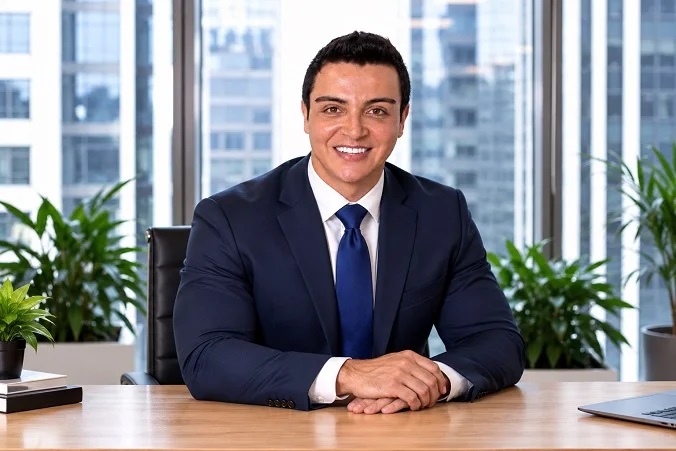 AIORG Chief Research Officer Alex Montoya introduces affordable AI voice agents designed to automate pharmacy and clinic inquiries, appointments, and administrative communications.
Unlike conventional automated telephone systems that force callers through frustrating menus, these AI voice agents are designed to engage in natural conversations, understand patient inquiries, ask relevant follow-up questions, and assist with everyday administrative tasks.
The technology targets a significant operational challenge facing healthcare providers: managing increasing volumes of telephone inquiries while maintaining responsive, personalized patient services.
With introductory packages starting at just US$150, AIORG hopes to make advanced voice automation accessible to independent pharmacies and clinics that lack the financial resources of major healthcare organizations.
A New Approach to Healthcare Communications
AIORG's AI Voice Agents by Alex Montoya and the newly introduced technology combines conversational artificial intelligence with customizable knowledge bases that allow voice agents to respond using information specific to individual healthcare businesses.
One particularly useful capability involves extracting publicly available information from an existing pharmacy or clinic website to help create an operational knowledge base.
This allows the AI agent to become familiar with available services, treatment packages, opening hours, appointment procedures, pricing structures, and frequently asked questions without requiring staff to manually program every response.
Rather than simply providing prerecorded answers, the system can conduct interactive conversations, request clarification, and guide callers toward appropriate services.
According to AIORG, the technology can also incorporate humanlike speech patterns, making interactions potentially more comfortable for patients unfamiliar with automated systems.
This
Thailand Medical News report examines how the technology could transform patient communications while highlighting its potential applications in pharmacies, where repetitive inquiries frequently consume considerable staff time.
How AI Voice Agents Could Transform Pharmacy Operations
Pharmacies represent a particularly promising environment for conversational AI because pharmacists and support personnel regularly handle repetitive telephone inquiries alongside dispensing responsibilities.
&
amp;nbsp;
An appropriately configured AI voice agent could answer questions about pharmacy opening hours, branch locations, product availability, prescription refill procedures, delivery arrangements, and general medication-related administrative services.
For example, a patient calling to inquire whether a particular medication is stocked could interact with an AI agent connected to the pharmacy's inventory management system.
Where authorized integrations exist, the system could check availability, explain collection arrangements, or forward the inquiry to pharmacy personnel.
Similarly, patients requiring prescription refills could receive information about refill procedures, prescription requirements, and available collection options.
The technology could also facilitate appointment scheduling for pharmacies offering vaccination services, health screenings, medication reviews, or pharmacist consultations.
For businesses operating multiple branches, customized agents could potentially direct customers toward locations offering particular services.
However, AIORG's described capabilities should not be interpreted as authorization for autonomous medication recommendations, prescription changes, or clinical decision-making. Such matters must remain under qualified professional supervision.
Reducing Workloads While Improving Patient Accessibility
One potential advantage of AI voice agents is their ability to provide assistance outside conventional business hours.
Patients frequently contact clinics regarding appointment availability, treatment preparation, follow-up instructions, pricing, and operating schedules.
When reception personnel are occupied, unanswered calls can translate into missed appointments and dissatisfied patients.
AIORG's platform aims to reduce these difficulties by automating routine interactions while directing more complicated requests toward human personnel.
For aesthetic and wellness clinics, the system could explain available treatment categories, provide configured package information, and help prospective patients arrange consultations.
Dental practices could use similar functionality for appointment inquiries, routine service information, and administrative reminders.
Appropriate escalation procedures would nevertheless be essential for urgent symptoms, adverse treatment reactions, or questions requiring clinical assessment.
Who Is Alex Montoya
Alex Montoya is AIORG's Bangkok-based Chief Research Officer, an advanced AI beta tester, and an artificial general intelligence researcher whose professional background combines technology evaluation, business strategy, and international customer experience.
Of Colombian and French background, Montoya has worked across multiple industries during a career spanning more than two decades.
Before concentrating on artificial intelligence, he developed expertise in tourism, luxury services, customer experience, and product-quality evaluation.
His international assignments involved examining complex customer journeys, identifying operational weaknesses, and evaluating how organizations respond to customer expectations.
Montoya subsequently completed an MBA at GLOBIS University in Japan, where his interests included strategic market analysis, creativity, forecasting, retail, luxury, and consumer products.
Over nearly a decade of AI-related work, he has evaluated intelligent systems, autonomous agents, secure prototypes, usability, safeguards, and discrepancies between intended and actual system behavior.
Since 2020, he has also advocated greater Thai-language inclusion in advanced AI evaluations, an issue particularly relevant to healthcare applications serving Thai-speaking patients.
At AIORG, Montoya connects research activities with practical AI adoption strategies for small and medium-sized organizations.
Affordable Pricing Could Encourage Wider Adoption
AIORG says introductory voice agent packages begin at US$150, excluding installation.
Organizations with internal web development capabilities can undertake installation independently, while AIORG offers installation assistance for a stated US$100 fee.
Supporting AI computing expenses are covered for the first two months within a predetermined usage allocation.
Afterward, estimated monthly computing costs range between approximately US$50 and US$500, depending on usage.
These figures represent AIORG's stated pricing rather than independently verified operating costs. Actual expenditure may vary according to call volumes, integrations, and implementation requirements.
The relatively low entry price could appeal particularly to independent pharmacies, dental offices, and smaller clinics considering automation for the first time.
.jpg) AIORG's AI Voice Agents by Alex Montoya are esay to install and are economically priced
Integration With Existing Healthcare Systems
Beyond telephone conversations, AIORG says customized deployments can connect with customer relationship management platforms, electronic health records, and other healthcare administration systems.
Potential functions include appointment reminders, billing inquiries, prescription-related administrative workflows, and access to authorized treatment information.
However, such capabilities depend on additional development, compatible infrastructure, and appropriate permissions.
Importantly, healthcare organizations must establish strict safeguards before allowing AI systems to process sensitive patient information.
AIORG says its development approach considers Thailand's Personal Data Protection Act, the National Health Act B.E. 2550, and relevant healthcare privacy obligations.
Actual compliance would depend on each deployment's data handling practices, security architecture, consent procedures, and operational oversight.
A Promising Development with Important Responsibilities
AIORG's launch illustrates how conversational artificial intelligence could become increasingly practical for smaller healthcare providers rather than remaining restricted to large hospital networks.
Its potential advantages include faster responses, improved appointment coordination, reduced administrative workloads, and more consistent access to routine information.
Nevertheless, independent performance evaluations, patient satisfaction data, and documented real-world outcomes have not been provided in the supplied announcement. Reliability, clinical boundaries, privacy protections, and human supervision will ultimately determine whether these systems deliver meaningful benefits.
If successfully implemented, economically priced AI voice agents could help pharmacies and clinics modernize patient communications while allowing healthcare professionals to devote more attention to responsibilities requiring human expertise.
For more details, visit AIORG at:
https://ai-orgs.vip/




 Share
 Tweet
 Share