Nikhil Prasad Fact checked by:Thailand Medical News Team Jun 07, 2026 3 months, 3 weeks, 6 days, 6 hours, 52 minutes ago
Medical News: As measles cases continue to surge in many parts of the world, researchers have uncovered encouraging evidence that a decades-old medication commonly used to treat gout may have unexpected antiviral powers. A new study has found that probenecid, a drug approved for use for many years, can significantly block the replication of the measles virus in laboratory-grown cells, raising hopes that it could eventually become one of the first antiviral treatments specifically targeting measles.
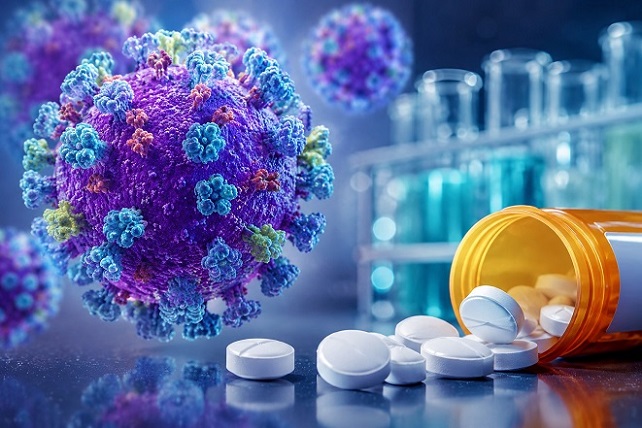 Researchers discover that the long-established drug probenecid can dramatically reduce measles virus replication in
laboratory studies
The research was conducted by scientists from the Department of Infectious Diseases at the University of Georgia in Athens, Georgia, USA, and TrippBio, Inc. in Jacksonville, Florida, USA.
Growing Need for Measles Treatments
Measles remains one of the most contagious infectious diseases known to medicine. The virus spreads through airborne droplets and can linger in the air for up to two hours after an infected person leaves an area. A single infected individual can potentially infect between 12 and 18 susceptible people. Although vaccination remains highly effective, there are currently no FDA-approved antiviral drugs specifically designed to treat measles infections. Existing approaches mainly involve supportive care, vitamin A supplementation, immunoglobulin therapy for certain high-risk individuals, and in some cases the use of ribavirin. However, these options have significant limitations and do not reliably stop viral replication.
The urgency for better treatments has increased as measles cases have re-emerged in several countries. Researchers noted that outbreaks have been fueled largely by declining vaccination rates and clusters of under-vaccinated populations.
Why Researchers Investigated Probenecid
Probenecid has been used safely for decades, primarily to treat gout and to improve the effectiveness of certain antibiotics. In recent years, however, scientists have discovered that the drug may possess broad-spectrum antiviral activity.
Previous studies have shown that probenecid can inhibit a variety of respiratory viruses, including influenza, respiratory syncytial virus (RSV), human metapneumovirus, and SARS-CoV-2. These findings prompted researchers to investigate whether the same drug could also work against measles virus.
Unlike traditional antiviral drugs that directly attack a virus, probenecid works by targeting pathways within host cells that viruses depend upon for replication. This strategy may make it more difficult for viruses to develop resistance.
Remarkable Reduction in Viral Replication
To test the drug, researchers infected two different cell types with the Edmonston strain of measles virus, the same strain that forms the basis of modern measles vaccines.
The team examined two approaches. In one method, cells were treated with probenecid before exposure to the virus. In the second approach, treatment was started one hour after infection.
Results were striking. In bot
h cell types, very low concentrations of probenecid were sufficient to significantly suppress viral replication. The drug showed effectiveness whether it was given before infection or shortly afterward.
Laboratory plaque assays provided visual confirmation of the effect. Untreated infected cells developed extensive areas of viral damage, while cells exposed to probenecid showed dramatically fewer viral plaques, indicating that the virus was unable to replicate efficiently.
According to the researchers, concentrations near one micromolar were capable of producing strong antiviral activity in several of the experiments, highlighting the potency of the drug.
This
Medical News report notes that these findings are particularly significant because probenecid is already a well-characterized medication with an established safety record in both adults and children. This could potentially shorten the timeline needed for future clinical development if additional studies confirm its effectiveness.
How the Drug May Work
Scientists believe probenecid interferes with several cellular pathways that viruses exploit to reproduce. Earlier investigations have shown that the drug can suppress key signaling pathways known as MAPK pathways, including JNK and ERK, both of which play important roles in viral replication and inflammation.
The drug also appears to block the activity of a transporter known as OAT3 and can reduce inflammatory signaling associated with viral infections. Because these cellular mechanisms are shared by many viruses, probenecid may have broad antiviral applications.
Researchers emphasized that the drug does not directly attack the measles virus itself. Instead, it makes the host cell environment less favorable for viral reproduction.
Challenges Remain Before Human Use
Despite the promising findings, researchers caution that the work remains at an early stage. The experiments were conducted entirely in laboratory cell cultures and not in human patients.
Developing animal models for measles antiviral testing has historically been difficult because measles infects humans in unique ways that are not easily replicated in most laboratory animals. Additional studies involving other measles strains and suitable animal models will be required before human clinical trials can be considered.
Conclusion
The new findings provide compelling evidence that probenecid may become a valuable weapon against measles. The drug demonstrated strong ability to suppress replication of the measles virus in laboratory experiments using extremely low concentrations. Because probenecid is already FDA-approved, inexpensive, widely available, and has a long history of safe use, it represents an attractive candidate for drug repurposing. While much more research is needed before it can be recommended for measles patients, the study offers a promising first step toward developing a much-needed antiviral treatment that could complement vaccination efforts and help reduce the impact of future outbreaks.
The study findings were published in the peer reviewed journal: Viruses.
https://www.mdpi.com/1999-4915/17/11/1475
For the latest measles research, keep on logging to Thailand
Medical News.
Read Also:
https://www.thailandmedical.news/articles/measles
Medical Disclaimer: All content published by Thailand Medical News is based on scientific research and is intended for informational and educational purposes only. It is not medical advice, diagnosis, or treatment. Readers must not attempt to use, apply, or experiment with any protocols, compounds, or therapies mentioned without first consulting a qualified and licensed medical doctor. Many findings discussed are experimental or preliminary, and only a licensed healthcare professional can determine what is safe and appropriate for an individual’s specific medical condition.




 Share
Share
 Tweet
Tweet
 Share
Share

































