Nikhil Prasad Fact checked by:Thailand Medical News Team Jul 17, 2026 1 month, 2 weeks, 2 days, 18 hours, 5 minutes ago
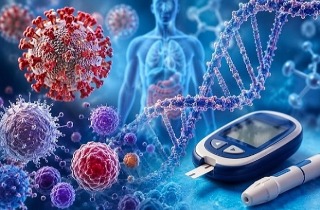
Medical News: For years, doctors have known that COVID-19 can affect far more than the lungs. Now, researchers in Poland have found that while the virus commonly disrupts thyroid hormone levels and leaves many hospitalized patients deficient in vitamin D, these changes do not appear to determine who survives the disease. Instead, advancing age remains the strongest predictor of death.
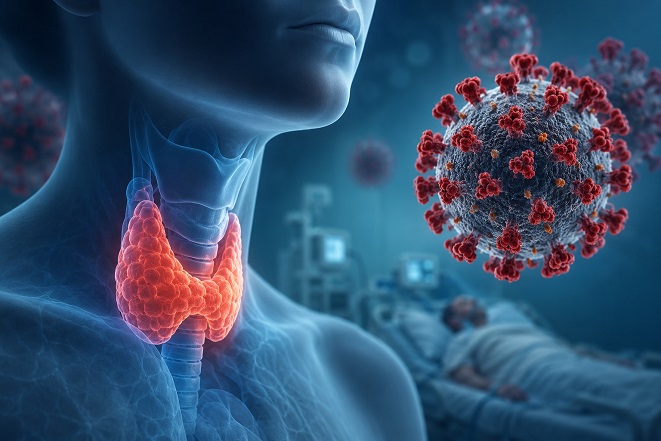 New research shows COVID-19 commonly disrupts thyroid hormones, but age—not hormone changes—
remains the biggest predictor of death
Thyroid Changes Were Surprisingly Common
The study was conducted by researchers from the Department of Endocrinology, Metabolism, and Internal Diseases and the Department of Vascular, Endovascular Surgery, Angiology and Phlebology, both at Poznan University of Medical Sciences, Poland. The team examined medical records from patients treated at a dedicated COVID-19 hospital in Słupca during the height of the pandemic in early 2021.
Although 846 patient records were initially reviewed, only 137 met the strict study criteria after excluding those with previous thyroid disease, incomplete records, pregnancy, or missing laboratory results. The researchers measured thyroid-stimulating hormone (TSH), free triiodothyronine (FT3), free thyroxine (FT4), and vitamin D levels collected when patients were admitted to hospital.
COVID-19 Frequently Affected the Endocrine System
The results revealed that thyroid hormone abnormalities were extremely common. About 63.5% of patients had lower-than-normal TSH levels, while 21.2% showed reduced FT3 levels and 24.1% had reduced FT4 levels. In addition, nearly 76% of the patients suffered from vitamin D deficiency.
These hormonal changes resemble a condition called Non-Thyroidal Illness Syndrome (NTIS), sometimes known as "low T3 syndrome." Rather than indicating permanent thyroid disease, NTIS is considered the body's temporary response to severe illness. During serious infections, inflammation alters how thyroid hormones are produced, transported, and used, slowing metabolism as the body focuses its energy on survival.
Age Was the Only Reliable Predictor
This
Medical News report highlights an unexpected finding. Despite the widespread hormone abnormalities, the researchers found that thyroid hormone levels and vitamin D concentrations were almost identical between patients who survived and those who died in hospital.
Instead, age clearly stood out. Patients who died had a median age of 75.5 years compared to 71 years among survivors. Statistical analysis showed that every additional year of age increased the odds of death by roughly 7%. Neither sex, thyroid hormone levels, nor vitamin D measurements independently predicted survival.
The researchers believe one reason for this finding is that the study was performed during the pandemic's peak, when hospitals mainly admitted the sickest patients. Because most participants already had severe disease, hor
mone differences may have been less useful in separating survivors from non-survivors.
What the Findings Mean
The research reinforces growing evidence that COVID-19 can temporarily disturb the endocrine system without necessarily causing permanent thyroid disease.
Scientists believe inflammatory molecules released during severe infection interfere with communication between the brain and thyroid gland, producing the hormone pattern seen in NTIS.
The study also raises important questions about long COVID. Although these hormonal changes did not predict immediate hospital outcomes, they may still contribute to lingering symptoms after recovery. The authors say future research should investigate whether thyroid function fully returns to normal or whether some patients experience lasting endocrine complications months after infection.
Conclusion
The findings show that thyroid hormone abnormalities and vitamin D deficiency are remarkably common among people hospitalized with COVID-19, confirming that the disease affects far more than the respiratory system. However, these laboratory abnormalities should not automatically be viewed as warning signs of a fatal outcome. The strongest and most consistent risk factor remained advanced age. The researchers emphasize that larger studies are still needed to determine whether these temporary hormonal disturbances contribute to long-term health problems or persistent symptoms after COVID-19 recovery.
The study findings were published in the peer reviewed journal: Clinical Medicine Insights: Endocrinology and Diabetes.
https://journals.sagepub.com/doi/full/10.1177/11795514261442723
For the latest on COVID-19, keep on logging to Thailand
Medical News.
Read Also:
https://www.thailandmedical.news/articles/coronavirus
https://www.thailandmedical.news/articles/long-covid




 Share
Share
 Tweet
Tweet
 Share
Share