Study on COVID-19 Infection Versus COVID-19 Vaccines Reveal Hidden Immune Differences
Nikhil Prasad Fact checked by:Thailand Medical News Team Apr 02, 2026 5 months, 18 hours, 26 minutes ago
Medical News: Scientists Discover Surprising Immune System Differences
A groundbreaking new study has revealed that the human immune system responds very differently to COVID-19 infection compared to vaccination, challenging long-held assumptions about how protection develops. Researchers analyzed detailed immune responses in over 250 individuals, uncovering subtle yet important changes that could reshape how scientists understand immunity.
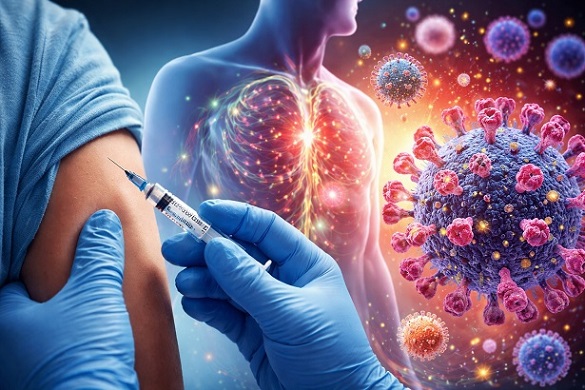 Study reveals vaccines and infection shape immunity in surprisingly different ways
The research was conducted by scientists from the Beth Israel Deaconess Medical Center, Harvard Medical School, Roche Sequencing Solutions, the Ragon Institute of MGH, MIT and Harvard, and associated departments including Clinical Pathology, Radiology, Medicine, Obstetrics and Gynecology, and Clinical Informatics.
What the Study Looked At
Instead of only measuring antibodies, the team examined both antibodies and T cells - the two major arms of the immune system. They used advanced sequencing techniques to analyze immune cell receptors, focusing on tiny regions known as CDR3 that help recognize viruses.
A total of 251 individuals were studied, including vaccinated individuals, people who had been infected with COVID-19, and control subjects. The researchers also measured neutralizing antibodies, which are considered a key indicator of protection against the virus.
Vaccines and Infection Produce Different Immune Patterns
One of the most striking findings was that vaccination and infection influence immune cells in different ways. Vaccinated individuals tended to produce antibodies with shorter key receptor regions, while infected individuals showed different patterns altogether.
Even more surprising, when scientists looked at “non-functional” immune cells - cells not actively producing antibodies - they found the opposite trend. These cells actually had longer receptor regions in vaccinated individuals.
This suggests that vaccines may influence the immune system earlier than expected, even before immune cells are fully activated and selected.
Age Affects Vaccine Response but Not Infection
Another important discovery was the role of age. The study found that older individuals produced lower levels of protective antibodies after vaccination. However, age did not significantly affect antibody levels in those who were infected.
This means that natural infection may trigger a more consistent immune response across age groups, while vaccine responses may weaken with age.
A Larger Portion of the Immune System Is Involved
The researchers also discovered that vaccination may affect a surprisingly large portion of the immune system. Their analysis suggests that at least one-sixth of the immune cell repertoire is influenced by vaccination. This is far greater than previously believed, as most scientists assumed only a small fraction of immune cells respond to a specific virus.
<
;strong>T Cells Play a Key Role in Protection
The study also highlighted the importance of T cells, especially a type called CD4 T cells. Individuals with more SARS-CoV-2-specific T cells tended to have higher levels of protective antibodies.
However, identifying these protective patterns is not simple. The immune response was found to be “diffuse,” meaning it is spread out across many different cells rather than concentrated in a few dominant ones.
New Methods Improve Immune Tracking
To better understand immune responses, researchers tested different analytical methods. They found that a newer approach called “binding capacity” was more reliable than traditional matching techniques.
This method allows scientists to detect broader immune patterns, even when exact matches to known virus-fighting cells are rare.
Why These Findings Matter
This
Medical News report highlights that immunity to COVID-19 is far more complex than previously thought. The immune system does not respond in a simple or uniform way. Instead, it shows a wide range of subtle changes depending on whether a person is vaccinated or infected.
These findings could have major implications for vaccine design, booster strategies, and future pandemic preparedness.
Conclusion
In conclusion, this study reveals that COVID-19 vaccination and natural infection trigger distinct and unexpectedly complex immune responses involving both antibodies and T cells. The discovery that vaccines may influence early immune cell development and affect a larger portion of the immune system than previously believed challenges existing models of immunity. Additionally, the impact of age on vaccine-induced protection underscores the need for tailored strategies. Overall, these findings deepen scientific understanding and could guide the development of more effective vaccines and diagnostic tools in the future.
The study findings were published in the peer reviewed journal: PLOS One.
https://journals.plos.org/plosone/article?id=10.1371/journal.pone.0343939
For the latest COVID-19 News, keep on logging to Thailand
Medical News.
Read Also:
https://www.thailandmedical.news/articles/coronavirus
https://www.thailandmedical.news/articles/vaccine-news




 Share
Share
 Tweet
Tweet
 Share
Share