Nikhil Prasad Fact checked by:Thailand Medical News Team Jul 27, 2026 2 months, 1 week, 1 day, 6 hours, 34 minutes ago
Medical News: Scientists uncover a hidden immune force affecting the heart
A major new scientific review is shedding light on a little-known but powerful factor in heart disease—autoantibodies. These immune system proteins, which mistakenly attack the body’s own tissues, are now being recognized as key players in both worsening and potentially improving heart conditions.
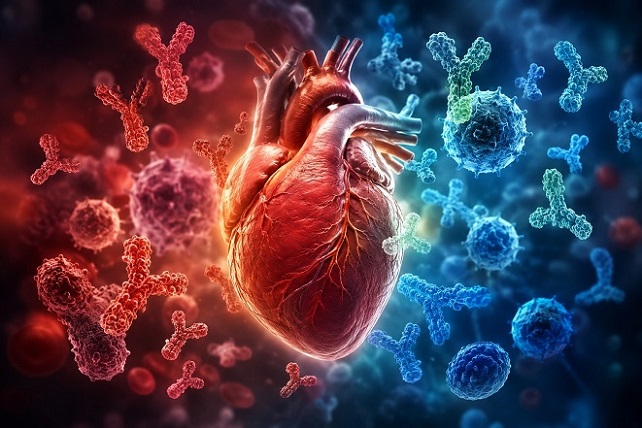 Immune proteins may both harm and help the heart, scientists find
The research was carried out by experts from the Kaufman Center for Heart Failure Treatment and Recovery at Cleveland Clinic, the Cleveland Clinic Research Institute, the Northeast Ohio Medical University, and the Cleveland Clinic Lerner College of Medicine of Case Western Reserve University.
What exactly are autoantibodies?
Autoantibodies are produced when the immune system becomes confused and starts targeting the body’s own cells instead of harmful invaders. In heart disease, they can attach to heart muscle cells and interfere with normal function.
This can trigger inflammation, damage heart tissue, and even lead to long-term structural changes in the heart. In severe cases, this process contributes to heart failure or dangerous rhythm disorders.
A surprising shift in scientific thinking
For many years, scientists believed these autoantibodies were purely harmful. However, new evidence shows a more complicated reality. Some autoantibodies clearly damage the heart, but others appear to have protective or regulatory roles.
This means the immune response in heart disease is not simply destructive—it is dynamic and depends on the type of autoantibody and the situation inside the body.
How these immune proteins disrupt heart function
The study highlights several ways autoantibodies affect the heart:
Some target receptors that control heartbeat and contraction, weakening the heart’s ability to pump blood.
Others attack structural proteins, leading to scarring and enlargement of the heart.
Certain types interfere with electrical signals, increasing the risk of irregular heart rhythms.
In patients with dilated cardiomyopathy, levels of specific autoantibodies were found to be significantly higher, particularly those targeting beta-1 receptors and cardiac muscle proteins.
New Findings
This
Medical News report reveals critical findings One of the most striking discoveries is that not all autoantibodies behave the same way. For example, a subtype known as IgG3 autoantibodies targeting beta-1 receptors was linked to better heart function recovery and improved outcomes in some patients.
On the other hand, autoantibodies targeting cardiac troponin were associated with worse heart remodeling and poorer recovery after heart attacks. These antibodies can even inter
fere with diagnostic blood tests, potentially leading to misleading results.
Impact on heart rhythm disorders
The study also found strong links between autoantibodies and abnormal heart rhythms. Some autoantibodies target ion channels in heart cells, disrupting electrical signals and increasing the risk of conditions like atrial fibrillation.
In certain cases, these immune proteins were shown to directly alter how electrical impulses travel through the heart, making patients more vulnerable to dangerous arrhythmias.
Why doctors are not testing for them yet
Despite the growing evidence, autoantibody testing is not yet widely used in cardiology. One reason is the lack of standardized testing methods. Different laboratories may produce inconsistent results, making it difficult to rely on these markers in clinical practice.
Another major challenge is understanding whether these autoantibodies actually cause disease or simply appear as a consequence of heart damage.
Future breakthroughs could change treatment
Researchers believe that improved testing technologies could soon allow doctors to use autoantibodies to diagnose heart disease earlier and predict patient outcomes more accurately.
There is also growing interest in developing treatments that remove harmful autoantibodies or block their effects. Early studies suggest that targeting these immune proteins could help improve heart function and slow disease progression.
Conclusion
The findings demonstrate that autoantibodies play a complex and powerful role in heart disease, acting not only as damaging agents but also as potential modulators of recovery and treatment response. Fully understanding their dual nature could revolutionize how heart conditions are diagnosed, monitored, and treated, offering new hope for more personalized and effective therapies in the future.
The study findings were published in the peer reviewed journal: JACC Basic to Translational Science.
https://www.sciencedirect.com/science/article/pii/S2452302X26001567
For the latest on autoantibodies and cardiology, keep on logging to Thailand
Medical News.
Read Also:
https://www.thailandmedical.news/articles/cardiology
https://www.thailandmedical.news/articles/immunology




 Share
Share
 Tweet
Tweet
 Share
Share

































