Scientists Warn Lingering COVID-19 Virus, Viral Fragments and Blood Clots Are Triggering Sudden Fatal Heart Events
Nikhil Prasad Fact checked by:Thailand Medical News Team Jun 03, 2026 4 months, 1 day, 7 hours, 15 minutes ago
Medical News: As the world moves further away from the acute phase of the COVID-19 pandemic, scientists are increasingly uncovering evidence that SARS-CoV-2 may continue affecting the body long after the initial infection appears to have resolved. A major new scientific review is warning that lingering viral material, persistent inflammation, microscopic blood clots, and ongoing damage to blood vessels could be contributing to sudden cardiac deaths and fatal pulmonary blood clots months or even years after infection.
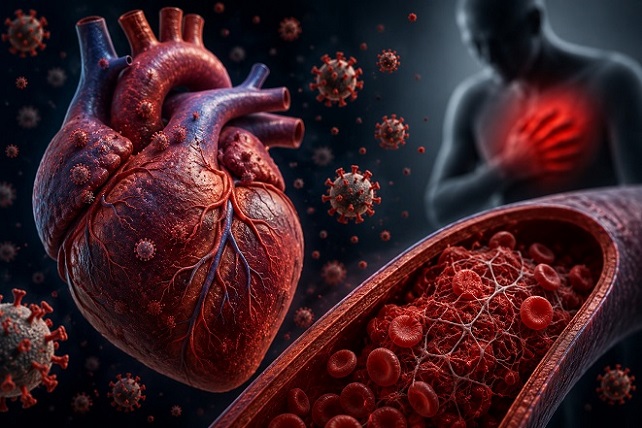 Researchers warn that lingering SARS-CoV-2 remnants and abnormal clotting processes may be contributing to
unexpected fatal heart events long after COVID-19 infection
The review was conducted by researchers from the Department of Biology and Life Sciences at “Vasile Goldis” Western University of Arad, the Doctoral School and Department of General Medicine at the “Victor Babes” University of Medicine and Pharmacy in Timisoara, the Timisoara Institute of Legal Medicine, the Ethics and Human Identification Research Center, the Discipline of Forensic Medicine, Bioethics, Deontology and Medical Law at the “Victor Babes” University of Medicine and Pharmacy, and the Department of Morphological Disciplines at the University of Oradea, Romania.
The Virus May Not Completely Leave the Body
One of the most important findings highlighted in the review is that SARS-CoV-2 may persist in the body far longer than previously believed. Researchers examined evidence from dozens of studies showing that viral RNA, viral proteins, and viral fragments have been detected in the heart, blood vessels, brain, intestines and other tissues months after the original infection.
Scientists noted that autopsy studies have found SARS-CoV-2 genetic material in numerous organs long after respiratory symptoms disappeared. In some cases, viral material was detected more than seven months after the onset of illness. While researchers caution that detecting viral remnants does not always mean active infection is still occurring, these lingering components may continue to stimulate the immune system and trigger harmful biological processes.
How Persistent Viral Fragments Damage the Heart
The review explains that SARS-CoV-2 can directly infect heart muscle cells, supporting heart cells known as pericytes, and cells lining blood vessels. The virus gains access through ACE2 receptors that are widely distributed throughout the cardiovascular system.
Researchers found evidence that persistent viral fragments may promote chronic inflammation within heart tissue and blood vessels. Over time, this ongoing inflammatory state can contribute to scarring, electrical instability, and structural changes within the heart. Such changes may create conditions that increase susceptibility to dangerous heart rhythm disturbances capable of causing sudden cardiac death.
Autopsy investigations have repeatedly revealed evidence of heart cell injury, microvascular blood clots, contraction-band necrosis, cellular degeneration, and localized inflammatory infiltrates. Interestingly, classic severe myoca
rditis appears to be relatively uncommon, suggesting that many post-COVID cardiac deaths may arise through more subtle but equally dangerous mechanisms.
Blood Vessel Damage and Dangerous Clot Formation
Perhaps the most alarming aspect of the review involves the growing evidence that COVID-19 may leave behind a persistent clotting disorder.
Scientists describe how SARS-CoV-2 damages the delicate lining of blood vessels, known as the endothelium. Even after recovery, many individuals continue to show signs of endothelial dysfunction, elevated inflammatory markers and abnormal activation of the coagulation system.
The researchers also focused on neutrophil extracellular traps, commonly known as NETs. These web-like structures are released by immune cells and are designed to capture pathogens. However, excessive NET formation can promote abnormal clot formation and sustained inflammation.
Adding to these concerns, studies have detected circulating spike proteins and viral fragments months after infection. These viral remnants may directly interfere with normal blood clot regulation and contribute to the formation of microscopic clots that resist the body's normal clot-dissolving mechanisms.
Excess Heart Deaths Continue to Raise Questions
The review examined large population studies that documented significant increases in cardiovascular mortality following the pandemic. Some analyses identified hundreds of thousands of excess cardiovascular deaths in the United States alone between 2020 and 2022.
Researchers also highlighted studies showing that the risks of pulmonary embolism and deep vein thrombosis remain elevated for many months after COVID-19 infection. While vaccination substantially reduces these risks, it does not eliminate them entirely.
This
Medical News report notes that the review places particular emphasis on sudden cardiac deaths and fatal pulmonary thromboembolisms that occur outside hospital settings. Because many of these deaths happen unexpectedly, scientists believe the true contribution of post-COVID cardiovascular damage may currently be underestimated.
Forensic Investigations Reveal Disturbing Patterns
The authors argue that modern forensic investigations are becoming increasingly important for understanding the long-term consequences of COVID-19.
They recommend comprehensive post-mortem examinations that include tissue sampling, viral testing, immunohistochemistry, molecular analysis and genetic testing where appropriate. Such investigations may help determine whether persistent viral reservoirs, chronic inflammation and thromboinflammatory processes contributed to otherwise unexplained deaths.
The review also calls for standardized international registries and surveillance systems capable of tracking post-COVID cardiovascular deaths more effectively.
Conclusion
The evidence assembled in this review paints a concerning picture of the long-term biological effects that SARS-CoV-2 may leave behind. Persistent viral reservoirs, lingering spike proteins, chronic endothelial injury, excessive immune activation, microvascular clotting and sustained thromboinflammation are increasingly being identified as potential contributors to sudden cardiac death and fatal pulmonary embolism in the post-COVID era. Although researchers acknowledge that definitive causal relationships are still being investigated, the growing body of autopsy findings, laboratory evidence and population-level data suggests that the cardiovascular consequences of COVID-19 may extend far beyond the acute infection itself. The findings underscore the urgent need for continued surveillance, expanded forensic investigations and deeper research into how persistent viral remnants may continue driving fatal cardiovascular events long after apparent recovery.
The study findings were published in the peer reviewed journal: Microorganisms.
https://www.mdpi.com/2076-2607/14/6/1256
For the latest COVID-19 news, keep on logging to Thailand
Medical News.
Read Also:
https://www.thailandmedical.news/articles/coronavirus
https://www.thailandmedical.news/articles/long-covid




 Share
Share
 Tweet
Tweet
 Share
Share

































