Nikhil Prasad Fact checked by:Thailand Medical News Team Jun 30, 2026 1 month, 2 weeks, 5 days, 14 hours, 35 minutes ago
Medical News: A new study has revealed that a natural plant compound called daphnetin may help protect against severe lung damage caused by influenza infections. The research was carried out by scientists from Jilin University in China, the China-Japan Union Hospital of Jilin University, and the Affiliated Hospital of Changchun University of Traditional Chinese Medicine.
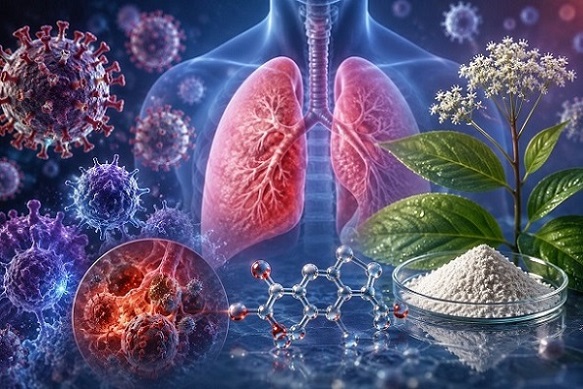 Natural compound daphnetin may help protect lungs from severe inflammation caused by influenza
A Dangerous Complication of Influenza
Natural compound daphnetin may help protect lungs from severe inflammation caused by influenza
A Dangerous Complication of Influenza
Influenza pneumonia is a serious condition that develops when the flu virus spreads deep into the lungs. This can trigger intense inflammation, damage lung tissues, and interfere with breathing. In severe cases, it can become life-threatening. Current treatments such as antiviral drugs and corticosteroids are not always ideal. Antivirals may become less effective due to resistance, while steroids can weaken the immune system and increase the risk of additional infections.
These limitations have pushed scientists to look for better and safer treatment options.
A Natural Compound Gains Attention
Daphnetin is a coumarin-like phytochemical extracted from certain medicinal plants that belong to the family Thymelaeaceae and has long been known for its anti-inflammatory and antioxidant properties. However, its exact effects on viral pneumonia had not been fully understood until now.
How the Study Was Conducted
Researchers used a combination of laboratory experiments and animal studies to investigate how daphnetin works. They focused on immune cells called macrophages, which play a central role in inflammation during infections.
Interestingly, the findings showed that daphnetin does not directly prevent lung cell death. Instead, it works by regulating the immune system and reducing harmful inflammatory responses.
Key Discoveries from the Study
The researchers found that daphnetin interacts with a protein known as HSC70, setting off a chain of protective effects in the body.
Daphnetin was shown to significantly reduce the production of inflammatory molecules such as IL-6 and TNF-alpha, which are closely linked to severe lung inflammation.
It also activated a key antioxidant pathway known as NRF2. This helped protect cells from oxidative stress, which is a major contributor to tissue damage during infections.
Another important finding was that daphnetin enhanced the body’s ability to remove damaged proteins. This process helps maintain cellular health and prevents further injury.
In addition, the compound protected mitochondria, the structures responsible for energy production in cells. By preserving mitochondrial function, daphnetin reduced signals that would otherwise trigger more inflammation.
The study also showed that daphnetin restored the ability of immune cells to clear dead and damaged cells, a critical step in tissue repair and recovery.
Results Seen in Animal Models
In mice infected with influ
enza, daphnetin produced significant improvements. It reduced lung inflammation, lowered viral levels in the lungs, and helped prevent severe tissue damage.
The treated mice also maintained better body weight and showed lower levels of inflammatory markers. Overall, their lung structures remained more intact compared to untreated animals.
A Shift in Treatment Approach
This
Medical News report highlights a different strategy for managing viral pneumonia. Instead of focusing only on killing the virus, daphnetin works by calming the body’s overactive immune response while supporting natural defense mechanisms.
Conclusion
The findings suggest that daphnetin could become a promising treatment option for influenza-related pneumonia. Its ability to reduce inflammation, strengthen antioxidant defenses, and restore immune balance makes it a strong candidate for future therapies. While more research in humans is still needed, this study provides important insights into how natural compounds can be used to manage severe respiratory infections in a safer and more targeted way.
The study findings were published in the peer reviewed journal: Phytomedicine
https://www.sciencedirect.com/science/article/pii/S0944711326007506
For the latest on herbs and phytochemicals, keep on logging to Thailand
Medical News.
Read Also:
https://www.thailandmedical.news/articles/herbs-and-phytochemicals




 Share
Share
 Tweet
Tweet
 Share
Share