Nikhil Prasad Fact checked by:Thailand Medical News Team Feb 08, 2026 4 months, 3 weeks, 6 days, 21 hours, 50 minutes ago
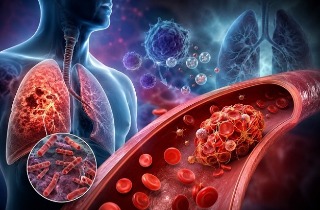
Medical News: A groundbreaking study has revealed that blocking a little-known bacterial peptide in the lungs can quickly reduce inflammation and scarring in advanced pulmonary fibrosis, a disease that is often fatal and has limited treatment options. The findings offer fresh hope that even late-stage lung fibrosis may still be biologically reversible when key disease drivers are targeted early enough.
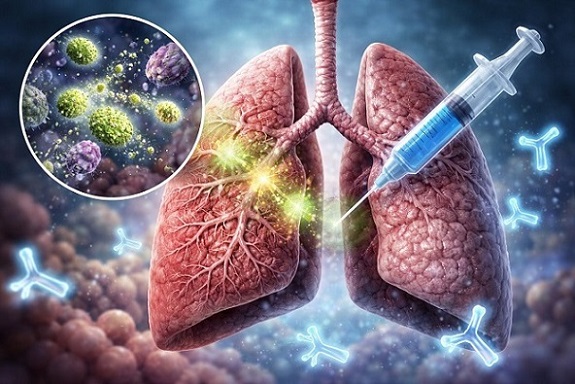 Neutralizing a toxic bacterial peptide rapidly reduced lung inflammation and scarring in advanced fibrosis models.
Understanding Pulmonary Fibrosis and Its Challenges
Neutralizing a toxic bacterial peptide rapidly reduced lung inflammation and scarring in advanced fibrosis models.
Understanding Pulmonary Fibrosis and Its Challenges
Pulmonary fibrosis is a serious condition in which lung tissue becomes progressively scarred, stiff, and unable to properly exchange oxygen. Patients gradually develop worsening breathlessness, fatigue, and respiratory failure. Current treatments can slow disease progression but rarely improve established scarring. Scientists have long suspected that repeated injury to lung-lining cells and chronic inflammation play a major role, but the exact triggers have remained unclear.
A Surprising Culprit from Lung Bacteria
Researchers from Mie University in Japan, working with collaborators from the University of Illinois Urbana-Champaign and Matsusaka Municipal Hospital, focused on corisin, a small toxic peptide produced by certain bacteria living in the lungs. Corisin is known to damage lung cells and trigger inflammation. Previous studies showed it could worsen flare-ups, but whether it continued to drive disease once fibrosis was established was unknown.
Testing A New Neutralizing Antibody
In this
Medical News report, scientists used genetically engineered mice that naturally develop severe lung fibrosis similar to the human disease. Once fibrosis was firmly established, the animals were treated for just one week with a laboratory-made antibody designed to neutralize corisin. Their condition was compared to mice given a harmless control antibody.
Rapid Improvements in Inflammation and Scarring
The results were striking. Mice receiving the anti-corisin antibody showed a sharp drop in inflammatory cells in their lungs, including macrophages and lymphocytes that are known to fuel tissue damage. Microscopic examination revealed less lung cell death, reduced collagen buildup, and significantly lower fibrosis severity scores. Chemical analysis confirmed a clear reduction in hydroxyproline, a key marker of scar tissue accumulation. Importantly, corisin levels in lung fluid and tissue also fell, proving the antibody was effectively blocking its activity.
Why These Findings Matter
The study shows that corisin is not just an early trigger but an ongoing driver of lung damage and scarring. By neutralizing it, researchers were able to interrupt a vicious cycle of cell injury, inflammation, and fibrosis, even at an advanced stage of disease. This suggests that targeting harmful signals from lung bacteria could complement existing antifibrotic drugs and potentially improve outcomes for patie
nts with progressive disease.
Conclusions And Future Directions
The findings demonstrate that advanced pulmonary fibrosis may still respond to treatment if key upstream drivers like corisin are blocked. By rapidly reducing lung cell death, inflammation, and scar formation, corisin-neutralizing therapy highlights a promising new strategy that goes beyond symptom control. While these results are from animal models, they strongly support further studies in humans to determine whether similar benefits can be achieved in patients suffering from this devastating condition.
The study findings were published in the peer reviewed journal: Advances in Respiratory Medicine.
https://www.mdpi.com/2543-6031/94/1/9
For the latest on Lung Fibrosis, keep on logging to Thailand
Medical News.
Read Also:
https://www.thailandmedical.news/articles/coronavirus
https://www.thailandmedical.news/articles/long-covid




 Share
Share
 Tweet
Tweet
 Share
Share