Nikhil Prasad Fact checked by:Thailand Medical News Team Mar 22, 2026 4 months, 4 weeks, 20 hours, 34 minutes ago
Medical News: A groundbreaking new study has uncovered how the COVID-19 virus can linger, evolve, and even reinfect patients—especially those battling cancer—raising fresh concerns about long-term infection risks and hidden viral behavior.
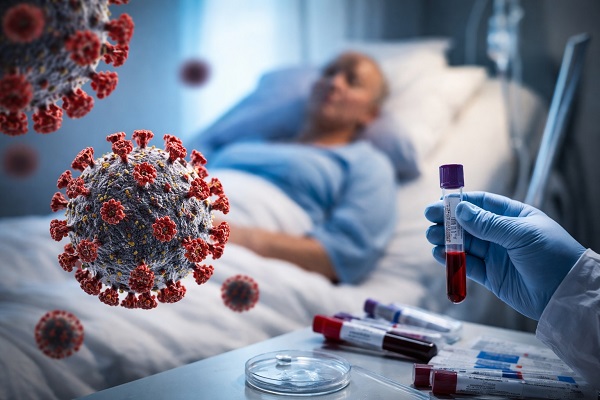 Study reveals COVID-19 can persist, evolve, and reinfect vulnerable patients
Researchers from the Instituto Nacional de Câncer (INCA), Universidade Federal do Rio de Janeiro, Universidade Federal do Estado do Rio de Janeiro (Brazil), and the National Institute of Allergy and Infectious Diseases (USA) closely tracked 26 cancer patients over time to understand why some individuals continue testing positive for the virus long after initial infection.
Virus Can Linger and Change Inside the Body
The study revealed that in many cancer patients, the virus does not simply disappear after recovery. Instead, it can persist in the body for weeks—and in some cases, even months. This prolonged presence gives the virus time to slowly mutate.
Scientists found that at least nine patients had confirmed persistent infections, meaning the same virus stayed in their bodies and continued to evolve. In one striking case, a patient carried the virus for up to 78 days, during which new mutations appeared in the viral genome.
These changes were not random. The virus adapted within the host, sometimes altering key proteins that may affect how it behaves or evades the immune system.
Reinfections Are Real—and Sometimes Complex
Beyond persistence, the study also confirmed that reinfection can occur—even within a relatively short time. Five patients were found to have been infected with a completely different strain of the virus after recovering from the first infection.
Interestingly, some cases showed signs of “multiple infections,” where patients carried more than one viral variant at the same time. This suggests that the body may struggle to fully clear the virus before encountering another strain.
In certain patients, the second infection occurred between 22 to 86 days after the first, highlighting how quickly reinfection can happen, particularly in individuals with weakened immune systems.
Hidden Viral Populations Inside Patients
One of the most important discoveries was the presence of what scientists call “minor variants.” These are small populations of the virus that exist alongside the dominant strain but are usually undetected.
Over time, these minor variants can become dominant, effectively changing the infection without a new exposure. This helps explain why some patients test positive again after seeming to recover.
The researchers identified four different patterns of infection: long-term persistence without change, persistence with mutation, multiple infections, and true reinfections. Each scenario offers new insight into how the virus behaves inside the human body.
Why Cancer Patients Are More Vulnerable
<
;br />
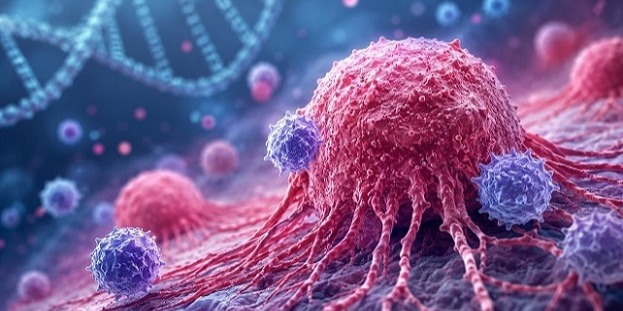
Cancer patients are particularly at risk because their immune systems are often weakened by the disease or its treatments. This makes it harder for their bodies to fully eliminate the virus.
As a result, the virus can survive longer, mutate more, and even coexist in multiple forms within the same person. This
Medical News report highlights how such patients may unknowingly become reservoirs for viral evolution.
What This Means Going Forward
The findings suggest that COVID-19 is far more dynamic than previously thought, especially in vulnerable populations. Persistent infections could play a role in the emergence of new variants, while reinfections challenge the idea of lasting immunity.
In conclusion, the study clearly shows that COVID-19 infections are not always simple or short-lived. The virus can remain hidden, evolve over time, and reappear in new forms, especially in individuals with compromised immune systems. This underscores the urgent need for continuous monitoring, improved treatment strategies, and greater awareness of long-term infection risks.
The study findings were published in the peer reviewed journal: Viruses.
https://www.mdpi.com/1999-4915/18/3/393
For the latest COVID-19 news, keep on logging to Thailand
Medical News.
Read Also:
https://www.thailandmedical.news/articles/coronavirus
https://www.thailandmedical.news/articles/long-covid




 Share
Share
 Tweet
Tweet
 Share
Share