Nikhil Prasad Fact checked by:Thailand Medical News Team May 11, 2026 3 months, 3 weeks, 1 day, 23 hours, 26 minutes ago
Medical News: Scientists are beginning to better understand why severe COVID-19 can leave behind devastating damage to the heart. A new study has revealed that a specific type of immune cell may be playing a major role in triggering inflammation, tissue destruction, and dangerous scarring inside the hearts of critically ill COVID-19 patients.
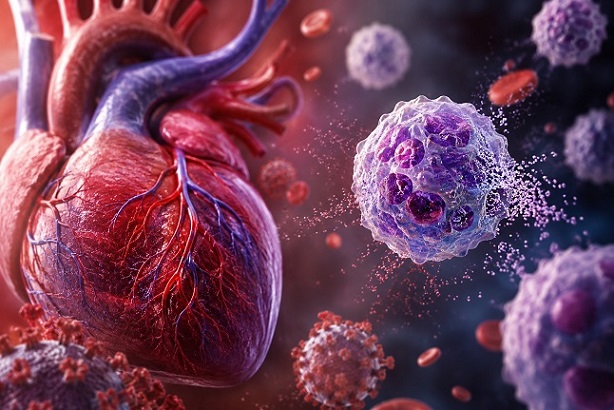 Researchers identify activated immune mast cells as a possible hidden cause of severe heart inflammation and scarring in COVID-19 patients
Researchers from Burdenko Voronezh State Medical University, the Scientific Research Institute of Experimental Biology and Medicine, the Voronezh Regional Pathoanatomical Bureau in Russia, and I.M. Sechenov First Moscow State Medical University in Moscow examined heart tissue samples from patients who died from severe COVID-19 complications. Their findings point to activated mast cells carrying an enzyme called chymase as a possible hidden driver of cardiac injury.
Immune Cells May Be Fueling Heart Damage
Mast cells are immune cells commonly associated with allergic reactions and inflammatory responses. However, scientists now believe these cells may also contribute to severe organ damage during infections such as COVID-19.
The study analyzed heart tissue from 60 patients who died after developing severe or critical COVID-19 linked to acute respiratory distress syndrome. Researchers found that many mast cells inside the heart had entered an activated state known as degranulation, where the cells release large amounts of inflammatory chemicals into surrounding tissue.
Although the total number of mast cells in the heart was relatively low, the majority of them were highly active. The activated cells were strongly associated with elevated levels of troponin I, a blood marker widely used to detect heart muscle injury.
Importantly, the association remained significant even after researchers adjusted for age, obesity, hypertension, previous heart disease, and medications used during hospitalization. This suggests the immune cells themselves may independently contribute to cardiac injury during severe COVID-19.
Severe Inflammation and Scarring Found in Heart Tissue
The research team also discovered that patients with higher levels of activated mast cells showed signs of severe systemic inflammation. These patients had increased white blood cell counts, elevated immature neutrophils, monocytosis, and abnormal clotting markers.
Microscopic examination of the heart tissue revealed extensive fibrosis, or scarring, throughout the myocardium. Two major forms of fibrosis were identified. One form spread between heart muscle fibers, while another surrounded blood vessels inside the heart.
The scarring was accompanied by excessive buildup of collagen, particularly immature type III collagen, which is often linked to ongoing tissue remodeling and active disease processes.
Researchers observed mast cells gathering near damaged blood vessels and fibrotic regions. Many of these cells showed clear signs of releasing inflammatory granules directly into nearby tissue, potentially worsening local injury.
/>
This
Medical News report notes that the researchers also detected increased activity of Caspase-3, a protein involved in programmed cell death. This finding suggests that heart muscle cells were not only inflamed but may have been actively undergoing destruction during severe COVID-19 infection.
Why Chymase Is Raising Concern
The enzyme chymase appears to play several dangerous roles inside damaged heart tissue. Scientists say it can stimulate inflammatory cytokines, increase production of angiotensin II, damage blood vessel linings, and promote fibrosis.
The study also linked activated mast cells with reduced blood pressure and abnormalities in blood clotting pathways. Researchers believe chymase may contribute to coagulation problems by interacting with fibrinogen and other clotting factors.
Previous research has already shown that chymase activity may worsen heart injury after heart attacks and ischemia. Experimental studies have also demonstrated that blocking chymase can reduce tissue damage, abnormal heart rhythms, and mortality.
A Double-Edged Immune Response
Interestingly, the researchers emphasized that mast cells may not be entirely harmful. In some situations, chymase may help tissue healing by stimulating collagen formation and activating vascular growth factors involved in repair processes.
However, in severe COVID-19, the inflammatory effects appear to outweigh any protective benefits. Scientists believe the uncontrolled immune activation may contribute to long-term heart remodeling and dysfunction.
Conclusion
The findings provide important new insight into how COVID-19 may silently damage the heart through immune-driven inflammation and fibrosis. Activated chymase-positive mast cells were closely associated with elevated troponin levels, severe inflammatory changes, coagulation abnormalities, and extensive cardiac scarring. Even though the number of mast cells in the heart was relatively small, their activated state appeared capable of producing significant local damage.
Researchers say the study opens the door for future investigations into therapies targeting mast cell chymase as a possible strategy to reduce cardiac complications in severe viral infections. More studies involving survivors and healthy controls will still be needed, but the evidence strongly suggests that immune cell activation may be one of the hidden mechanisms behind serious COVID-related heart injury.
The study findings were published in the peer reviewed journal: Frontiers in Cardiovascular Medicine.
https://www.frontiersin.org/journals/cardiovascular-medicine/articles/10.3389/fcvm.2026.1816510/full
For the latest on COVID-19, keep on logging to Thailand
Medical News.
Read Also:
https://www.thailandmedical.news/articles/coronavirus
https://www.thailandmedical.news/articles/long-covid




 Share
Share
 Tweet
Tweet
 Share
Share